
Data center insulation board specification in 2026 is driven by three binding constraints: a 100-150 mm thick high-density rock wool or mineral wool envelope for the building shell, a non-combustible core (A/A1/A2-s1,d0) for fire compartmentation, and a thermal conductivity band that keeps the air-side and water-side cooling loops inside the ASHRAE TC 9.9 recommended envelopes [S1].
The category spans two distinct product families that engineers routinely conflate. Building-envelope boards (rock wool, glass wool, PIR, PUR, EPS, phenolic foam) handle heat gain, fire spread, and acoustic attenuation across walls, roofs, and HVAC ducts. Inside the white space, electrical insulation laminates (FR4, GPO-3, SMC, UPGM, EPGC308) carry dielectric strength, arc resistance, and thermal class ratings for switchgear and PDU hardware. The 2026 spec mix in new AI and hyperscale builds treats both as concurrent purchasing decisions, not as one project.
Building Envelope Boards: Where Each Material Earns Its Slot
High-density rock wool board at 100-150 mm thickness is the dominant specification for the data center exterior wall and roof assembly in 2026, offering non-combustible A1-rated behavior, density in the 100-180 kg/m³ band, and lambda values around 0.035-0.040 W/(m·K) [S1].
Mineral wool sandwich panels (steel-faced, rock wool core) are the go-to for modular data hall construction because they combine structural cladding, vapor control, and fire-rated insulation in a single lift, cutting on-site labor versus stick-built assemblies. Glass wool blanket remains the cost-effective choice for HVAC duct wrap and plenum return-air cavities, typically specified at 25-50 mm faced with aluminum foil for vapor sealing. Phenolic foam (PF) boards reach lambda 0.020-0.021 W/(m·K) and tolerate continuous service temperatures near 120°C, but their closed-cell behavior means any water ingress stays trapped, and most European Tier-III+ specifications still treat them as a secondary line. EPS board holds the low-cost slot for non-critical envelope zones, ramp buildings, or sub-floor void fills where the fire rating does not need to clear A1.
Fire Rating and Smoke Class: The Hard Constraint
EN 13501-1 classification A1 or A2-s1,d0 is the baseline fire-performance gate for data center envelope boards in EU jurisdictions, because the combination of non-combustibility and low smoke production is what insurance carriers and the local AHJ actually audit on handover [S1].
Rock wool and glass wool clear A1 by composition (stone or recycled glass, organic binder below 5% by mass). PIR foam typically reaches B-s2,d0 with proper facing, which is acceptable for sandwich-panel cores behind a non-combustible external skin, but rarely accepted as the exposed interior face in a data hall. EPS without flame retardant treatment fails the smoke criterion (s3) and is rejected for occupied data hall envelopes. Smoke index s1 (the lowest smoke-production tier under EN 13501-1, also written as s1 in BS 8414 large-scale tests) is the real discriminator between A2 and B ratings, and it is the most common single point of failure during commissioning. The embedded link on insulation board material grades gives the full fire-class table.
Thermal Performance: Matching Board to PUE Target

A 2026 hyperscale envelope assembly targeting a PUE below 1.15 typically requires an opaque-wall U-factor of 0.15-0.20 W/(m²·K), which translates to roughly 100-130 mm of rock wool at lambda 0.035 W/(m·K) or 70-90 mm of PIR at lambda 0.022 W/(m·K) [S1].
Roof assemblies lose more heat per square meter than walls in single-story data halls, so designers often bump roof insulation to 150-200 mm of mineral wool. For liquid-cooled AI halls where the cooling load is dominated by chip heat rejection rather than envelope gain, the payback on premium insulation narrows and specifiers shift toward 100 mm rock wool plus a high-reflectance roof coating. Vapor permeability matters as much as R-value: closed-cell PIR and phenolic resist moisture ingress but trap construction moisture, while mineral wool breathes but needs a continuous vapor retarder on the warm side. The comparison of polyurethane insulation versus mineral wool in cold-bridge analysis is the second-most-common spec dispute after fire rating. Designers working on cold-chain adjacent data centers (e.g. Nordic sites) routinely cross-reference the EPS board grade table when sub-slab void fills are part of the same tender.
Inside the White Space: Electrical Insulation Boards
FR4 epoxy-glass laminate at 0.5-6 mm thickness remains the standard for PCB substrates and switchgear barriers, with dielectric strength 20-40 kV/mm, glass transition 130-180°C, and UL94 V-0 flame class as the published industrial benchmark [S2][S5].
For PDU busbar supports, MCC compartments, and breaker arc chutes, GPO-3 (UPGM-203) and SMC are the workhorse choices. GPO-3 carries a thermal class of 130°C (B-class), arc resistance above 180 s, and is the most cost-effective polyester-glass laminate for structural switchgear parts. SMC offers higher mechanical impact resistance and is preferred where molded shapes replace machined panels. EPGC308 sits one step above FR4 in temperature endurance, with a Tg above 155°C and is the specified upgrade for high-voltage transformer barriers. The comparison page for masonry insulation boards is a useful cross-reference when the same wall cavity houses both a thermal and a dielectric barrier, and the encyclopedia entry on insulation resistance tester selection covers the QA acceptance protocol after install. For buyers who need to map thickness to dielectric strength, the data logger entry explains the continuous-monitoring side of the spec.
Decision Matrix: Choosing the Right Board for Each Zone
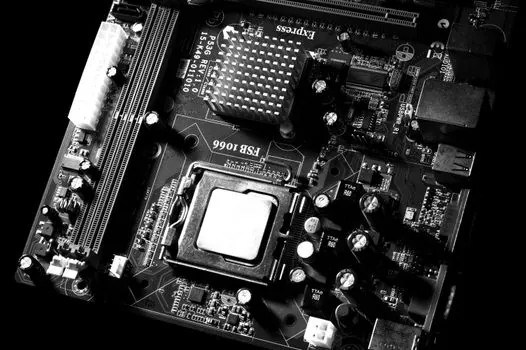
Selection comes down to a four-criteria comparison: fire class, lambda value, water behavior, and cost per R-value. Rock wool wins on fire (A1) and acoustic absorption, PIR wins on space and lambda (0.022 W/(m·K)), EPS wins on cost per m² but loses on fire (typically E or worse without treatment), and phenolic foam wins on lambda but loses on trapped-moisture risk. Inside the white space, FR4 is the default PCB and barrier substrate, GPO-3 is the structural switchgear pick, SMC is the high-impact pick, and EPGC308 is the elevated-temperature pick above 155°C [S2][S3][S5].
The four most common 2026 specification pairs for new AI data center builds are: (1) 150 mm rock wool sandwich panel exterior wall + 200 mm rock wool roof, for A1 compliance and acoustic class 30 dB or better; (2) 80 mm PIR sandwich panel exterior wall + 100 mm rock wool roof, for tight floor plates and PUE below 1.2; (3) 100 mm mineral wool cleanroom panel for modular data halls with internal aisle containment; and (4) FR4 + GPO-3 + EPGC308 stack for the electrical rooms, sized to the switchgear vendor's kV/mm and arc-resistance certificate. Specifiers should reject any board proposal where the fire-class certificate, lambda test report, and density measurement do not all match the same production batch.
Common Specification Pitfalls and How to Avoid Them
Single biggest failure mode is mixing fire classes within one wall build-up: a B-s2,d0 PIR core behind a non-combustible facing can pass the panel-level test but fail the assembly-level BS 8414 or EN 1364 large-scale fire test, and the failure only shows up on the as-built handover report [S1].
Second pitfall is undersizing the roof. A wall at 0.18 W/(m²·K) paired with a roof at 0.25 W/(m²·K) concentrates condensation risk on the underside of the roof deck and forces the BMS to run dehumidification longer than modeled. Third pitfall is specifying EPS in occupied data hall walls because it met the cost target on paper, then losing the fire marshal's sign-off because the smoke index is s3. Fourth pitfall is ordering electrical insulation boards by generic "Class H" label without checking the underlying IEC standard test data, since Class H only confirms a 180°C thermal class and says nothing about arc resistance, water absorption, or dielectric strength. Always pull the OEM test certificate and compare the published values against the application requirement, and run an insulation resistance tester sweep after install.
2026 Specification Signals to Watch
Two trackable signals will reshape the data center insulation spec over the next 12-18 months: (a) the rollout of liquid-cooled AI halls where envelope R-value matters less and reflective roof coatings matter more, and (b) the tightening of EU CPR (Construction Products Regulation) fire-class documentation requirements for sandwich panels, which will push more Tier-III+ builds to A1 rock wool cores over B-class PIR. The reference data sheet on cold storage insulation board is the closest cross-vertical analog, since cold-chain warehouses face the same envelope and fire constraints as a Tier-III data hall, and the write-up on warehouse block and brick selection covers the load-bearing interface where insulation board terminates at the foundation. [S1]