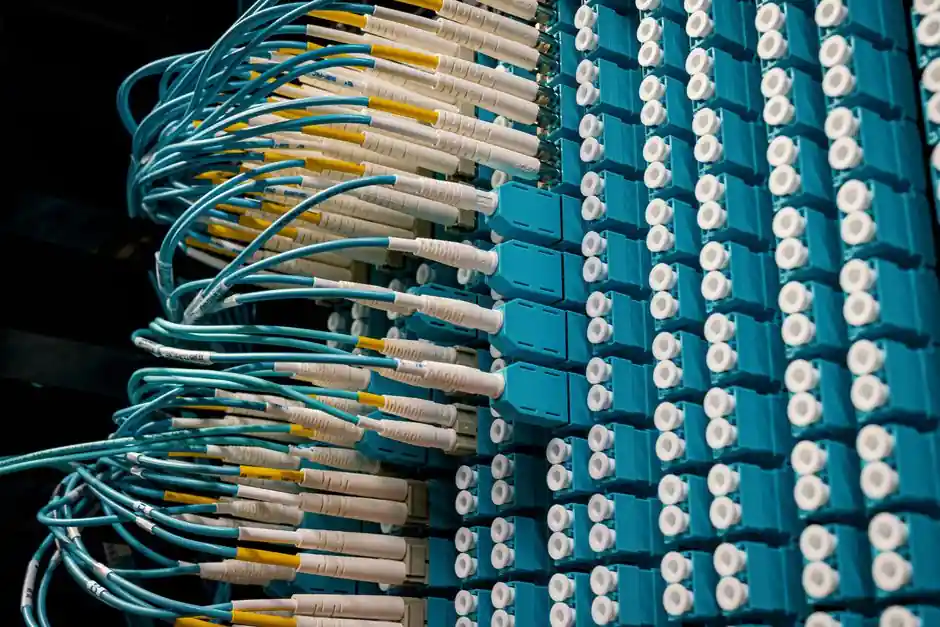
A data logger and a DAQ system overlap technically, but data loggers typically record at 1 sample per second or slower for months or years, while DAQ systems span kHz to GHz-class acquisition with broader I/O and shorter test campaigns [S2][S4].
Data loggers are autonomous recorders with fixed inputs, local non-volatile memory, and battery-friendly operation, whereas DAQ systems are configurable acquisition platforms connected to a PC, storage device, or communication bus for streaming, control, and analysis [S2][S4].
Define the Two Instrument Classes
A data logger is a specific type of data acquisition device. The reverse is not true: a DAQ system is not automatically a data logger because it may stream every sample to an external computer instead of maintaining a self-contained record [S2][S4].
Both classes can include analog-to-digital conversion, signal conditioning, and inputs for quantities such as voltage, current, and temperature. The practical distinction is the operating objective: data logging emphasizes durable, unattended capture, while data acquisition emphasizes flexible measurement, live processing, and test control [S1][S5].
The terms overlap in vendor catalogs, so model-level specifications matter more than labels. The data logger reference covers the standalone recorder form, while electronic load and other test instruments should not be treated as DAQ devices merely because they measure and control electrical quantities.
Compare Speed, Duration, and Triggering
The conventional sample-rate split is a strong screening rule: data loggers are associated with roughly 1 measurement per second or slower, while DAQ systems can operate in the kHz, MHz, or even GHz range [S2][S4]. This is a category distinction, not a universal limit, because lower-cost converters have enabled loggers with sub-second sampling [S4].
Duration is the second decisive variable. Data loggers are commonly deployed for days, weeks, months, and sometimes years, writing to internal RAM, removable media, or non-volatile flash [S1][S2][S4]. DAQ systems are normally used for short-duration tests measured in seconds or hours, with data sent to a PC, network storage, or a direct hard disk [S1][S2].
For structural or transient analysis, ask whether all channels must be sampled simultaneously. DAQ systems can support simultaneous sampling, while that feature is not common in data loggers [S2][S4]. For slow temperature, humidity, pressure, or voltage trends, interval logging is usually sufficient, and a logger reduces the burden of maintaining a continuously connected acquisition computer.
Match Input Flexibility and Channel Count
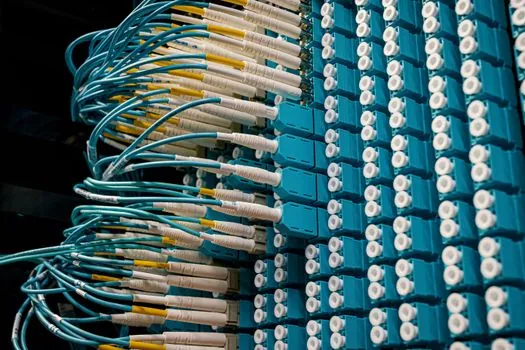
Data loggers generally use relatively slow sample rates, typically taking a measurement once per second or slower.
DAQ systems generally offer higher sample rates, ranging from kHz to MHz or even GHz, and may support simultaneous sampling of all inputs.
Data loggers are generally characterized by relatively slow sample rates, while DAQ systems generally support higher sample rates and options for simultaneous sampling. If the test specification changes after installation, modular DAQ usually reduces redesign work. If the device must stay at a remote location without a computer, fixed-channel logging is easier to support.
Decide Between Local Storage and Streamed Data
Autonomous recorders normally store data in local non-volatile flash and can continue recording without a network or PC.
High-speed DAQ systems usually stream data through Ethernet or a proprietary communication bus to a connected computer, network storage, or direct disk drive. This arrangement supports live visualization, triggering, calculation, and post-test analysis, but it also creates a dependency on power, communications, storage capacity, and the acquisition application [S2][S4].
A logger is therefore the better fit for environmental monitoring, unattended condition monitoring, and long-term field campaigns. A DAQ system is the better fit for laboratory tests, production validation, waveform capture, and experiments requiring real-time feedback. The digital multimeter is useful for point measurements, but neither class should be selected solely because it can display a voltage.
Assess Power, Conditioning, and Deployment
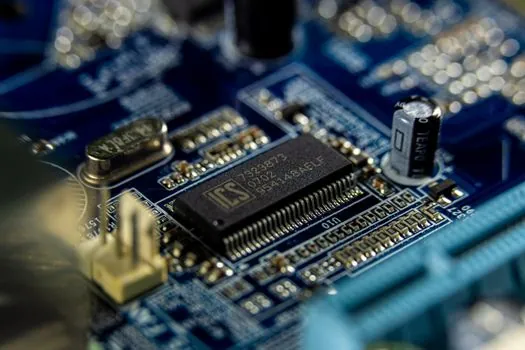
Field-oriented data loggers are designed for autonomous operation and commonly use batteries, rechargeable batteries, sleep modes, and power-saving behavior.
DAQ systems usually require direct wall power or an AC-driven supply during continuous operation.
DAQ platforms generally provide more capable signal conditioning and a higher-performance computing environment, either integrated or connected. Data loggers usually support a narrower set of inputs and simpler controls [S1]. Neither category guarantees sensor compatibility, so procurement should verify input range, excitation, resolution, isolation, and environmental limits against the actual transducer.
Identify Failure Modes Before Deployment
The main logger failure modes are capacity loss, battery depletion, clock error, sensor excitation problems, and loss of access to a remote unit. Overwrite logic protects the record from stopping at full memory, but it can also discard older data unless retention and alarm policies are configured [S2][S4].
The main DAQ failure modes are interrupted data transfer, host or software failure, disk saturation, timing errors, and unsuitable channel configuration. A connected PC does not remove these risks; it shifts part of the acquisition chain from the instrument to the host, network, storage medium, and software configuration [S2].
A hybrid arrangement is often practical: use a logger for independent environmental or condition records and a DAQ system for synchronized dynamic tests. The comparison should not be based on labels alone. Verify the specified sample rate per channel, simultaneous-sampling capability, input count, recording duration, power source, local-memory behavior, communication dependency, and post-processing requirement before approving either device class.
For a traceable comparison, request two written configurations with identical channels and sensors. One should state per-channel rate, simultaneous sampling, memory capacity, recording autonomy, power consumption, and data-retention behavior. The other should state host requirements, data throughput, trigger capability, and storage sizing. That comparison prevents a logger with acceptable nominal accuracy but inadequate timing from being mistaken for a dynamic DAQ platform, and it prevents an unnecessary PC-based system from being specified for a slow, unattended trend.