
A modern data logger measures analog signals through thermocouples, RTDs, thermistors, or infrared sensors and stores readings as digital values, typically at resolutions near 0.056°C (0.1°F), and reacts to temperature changes measurably faster than a mechanical pen [S1]. Paper chart recorders write the same variables on a rotating or linearly moving chart with a mechanical or electromechanical pen, so the trace itself is the primary record [S1].
For a replacement to be considered full, the substitute must preserve the original evidentiary chain: time-stamped continuity, signature authentication, and audit-trail integrity. In nuclear power plants, for example, the recorder's paper output has anchored regulatory documentation for decades, and that legacy is part of why chart recorders remain in daily service at some sites even in 2024 [S2].
Accuracy, Resolution, and Response Time
Data loggers deliver a temperature resolution of approximately 0.056°C (0.1°F) and respond to thermal transients significantly faster than pen-based recorders, which makes them the preferred choice for processes with sudden excursions [S1]. A chart recorder's accuracy is bounded by pen friction, chart-paper dimensional stability, and ink bleed, while a data logger's analog front end converts the sensor signal directly to a digital count with a defined least-significant bit.
In temperature-sensitive cold-chain applications, the comparison is even more pointed: a circular chart recorder's paper chart has a usable diameter range of 3 to 8 inches, and the trace width plus pen-response delay combine to limit practical resolution to roughly 1°C divisions on a weekly chart, while a digital sensor with the same thermocouple can resolve 0.1°C increments over the same interval [S5]. The implication for process records is straightforward: where the audit question is "what was the peak temperature and for how long", only the digital device gives a defensible numeric answer.
Storage, Archiving, and Audit Trail
A data logger records to onboard or removable flash storage in a transferable, backup-friendly format, and capacity is bounded by the silicon, not by the paper roll, which is the limiting factor for chart recorders [S1]. Thermal paper, the consumable most chart recorders depend on, fades over time and typically has to be photocopied onto office paper to preserve the record long term, an operational cost that recurs every charting cycle [S2].
Regulated industries historically valued the chart recorder's hard copy because it was tangible proof of conditions and not vulnerable to digital alteration, and that perception still drives spec decisions in pharmaceutical and manufacturing QA [S4]. Modern audit-trail practice counters that concern: 21 CFR Part 11-style electronic signatures, write-once storage, and cryptographic hash chaining now deliver tamper evidence on digital logs that a paper trace cannot match. For non-regulated process records, a data logger is functionally superior, while for regulated records the replacement is acceptable once the electronic system meets the equivalent evidentiary standard [S3].
Cost, Maintenance, and Consumables
Chart recorders carry a lower acquisition price, lower repair cost, and lower training overhead because they are mechanically straightforward and require no software to read [S4]. The recurring consumable line, however, runs in the opposite direction: pens, ink, and thermal chart paper are an ongoing operating expense, while a data logger has no per-cycle media cost once purchased [S4][S5].
The break-even point depends on logging interval and record retention. A circular chart running 24 hours typically needs daily replacement at a cost in the low single-digit dollars per chart, while a 32 GB microSD card in a modern data logger can hold years of one-minute-interval readings at no marginal cost. Sites that previously specified a paperless recorder as a drop-in panel replacement have reported, in OEM application notes, that the elimination of pen-and-chart maintenance offsets the higher unit cost within 18 to 36 months of continuous service [S2].
Environmental Tolerance and Power Independence
Chart recorders retain a defensible advantage in three operating regimes: locations with unreliable mains power, remote field sites without IT infrastructure, and explosive or classified areas where certifying a complex electronic logger is impractical [S4]. Many mechanical chart recorder models function without a continuous power supply, which makes them useful for unattended outdoor or field installations where power quality is uncertain [S4].
Data loggers, by contrast, depend on battery state-of-charge or stable DC supply, and their operating temperature range is bounded by the electronics, typically 0 to 50°C for commercial-grade units, with extended ranges of -40 to 85°C available on industrial models. For hazardous-area Zone 1 or Zone 0 deployments, a data logger must carry ATEX or IECEx certification for the same group as the chart recorder it would replace; uncertified substitution is not acceptable in those zones. Where explosive atmospheres are absent and power is reliable, a temperature recorder with battery backup and onboard storage is functionally equivalent to a chart recorder for compliance purposes [S1][S4].
Use-Case Selection: Where Each Wins
For pharmaceutical stability chambers, vaccine cold chain, and food storage, a temperature and humidity data logger with calibrated probe, audit-trail software, and PDF/CSV export is now the default specification, and circular chart recorders in those applications are typically retained only as a redundant visual indicator, not as the primary record [S3][S5]. For nuclear and conventional power plant parameter trending, strip and oscillographic chart recorders are being replaced channel-by-channel with multi-channel digital DAQ systems, but the migration is paced by document-control review, not by hardware availability [S2].
The same logic that drives process calibration instrument upgrades applies here: a digital record with timestamp, calibration certificate reference, and electronic signature is more defensible than a paper trace. The replacement is therefore not just possible but preferred, except where the regulator, the customer contract, or the site hazard classification still names "circular chart recorder" or "strip chart recorder" as the record-of-truth. In those cases, paper remains the standard until the specification is formally revised [S2][S4].
Limitations and Failure Modes of Full Replacement
A data logger's failure modes are different from a chart recorder's, not fewer. Battery depletion without alarm, full flash memory, undetected sensor drift, and software-clock drift are the four most common silent-failure modes in unattended logger deployments. Chart recorders, in contrast, fail visibly: the pen stops, the chart tears, or the ink runs out, and the operator sees the loss at the next chart change [S4].
Mitigation is mechanical: specify loggers with low-battery alarms, cyclic memory overwrite with archive, scheduled re-calibration against a reference standard, and NTP or GPS time sync where the network reaches. None of these are exotic requirements, but each must be written into the process control specification, because a logger that silently drops a week of readings is a worse compliance instrument than a chart recorder that visibly ran out of paper [S1][S4].
Specification Checklist for a Drop-In Replacement
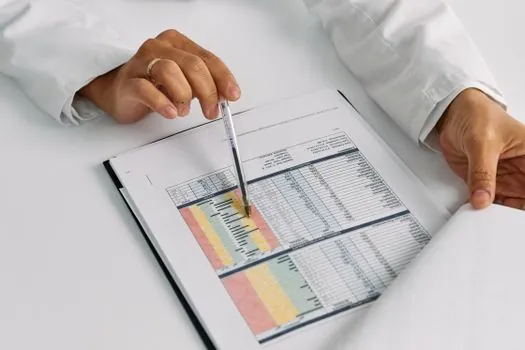
Confirm four items before signing the substitution paperwork: (1) the digital system preserves the same time-stamp granularity as the chart's chart-speed, typically one reading per second or faster for strip-chart equivalents; (2) the data format is exportable to a long-term readable standard, CSV or PDF/A, not a proprietary binary; (3) the storage retention meets or exceeds the chart recorder's archival period, commonly 1 year for process trending and 7 years for pharmaceutical batch records; (4) the replacement is accepted by the regulator or customer whose standard currently names the paper device [S2][S3].
When all four are green, the data logger is a full replacement, not just an alternative, and the chart recorder can be decommissioned. When any item is red, the chart recorder stays as the primary record and the data logger can be added as a redundant, higher-resolution secondary channel [S4].
Track two signals over the next 12 months: (a) the share of new pharma and cold-chain tenders that list electronic data logging as the primary acceptance criterion rather than "or equivalent", and (b) the number of nuclear and conventional power-plant strip-chart channels converted to digital DAQ per quarter. The first measures regulatory acceptance migration; the second measures the slowest-moving industrial segment finally catching up with what pharmaceutical QA standardized years ago [S2][S5].
See also our earlier report, Dry vs Slurry Rotary Drilling for Bored Piles: Field Decision Map.