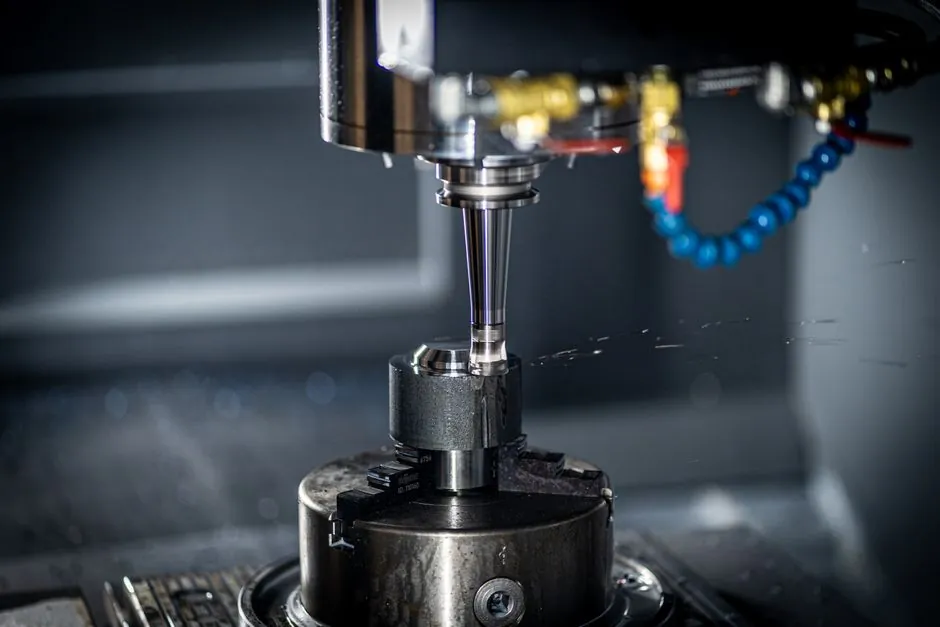
For bored piles above 600 mm diameter, dry rotary drilling with a Kelly bar is the default in stable cohesive soils above the water table, while slurry-supported drilling (bentonite 30-70 kg/m³ or polymer 0.5-3 kg/m³) becomes mandatory once granular or water-bearing strata are encountered [S3].
Modern rotary rigs deliver diameters up to 4,000 mm and depths over 100 m when paired with the right borehole support method, a range confirmed in OEM piling documentation published 2026-09-22 [S3][S4].
Method Definitions and Operating Envelope
Dry rotary drilling is a dry excavation method: the auger or bucket removes spoil, and the borehole stands open under its own soil arching. It applies where the ground is self-supporting, typically stiff clay, cemented sand, or rock above the groundwater table [S3][S5].
Slurry rotary drilling fills the borehole with a thixotropic fluid whose hydrostatic head balances pore-water and lateral earth pressure. Bentonite slurry has specific gravity 1.1-1.5 during drilling and 1.15-1.25 at hole cleaning, which seals pore spaces and suspends cuttings during the reverse or direct circulation phase [S1][S3].
Kelly drilling, the dominant dry rotary variant, suits bored piles from roughly 500 mm diameter upward and combines a telescoping kelly bar with short auger or bucket sections [S4][S6].
Selection Criteria: Soil, Water, Diameter, Depth
Four site parameters drive the choice, and a single mismatch on any of them invalidates the dry method. Soil stability sets the trigger: dry piling is reserved for cohesive, self-standing strata, and any encounter with cohesionless sand, gravel, or soft clay below groundwater forces a switch to wet construction [S3][S5].
Groundwater position is the second gate. Where the water table sits within the pile length, hydrostatic pressure will collapse an unsupported hole, so slurry (or full-length casing) becomes mandatory [S1][S5].
Diameter and depth define the upper envelope. Kelly dry rigs routinely deliver large-diameter bored piles (over 500 mm is typical, 1,500-3,000 mm common in bridge and high-rise work) but lose efficiency past roughly 30-40 m in unstable ground; slurry rigs extend the practical depth envelope to over 100 m and diameters to 4,000 mm [S3][S4][S6].
Comparison: Dry Kelly vs Slurry Rotary on Four Criteria

Cycle speed favours dry Kelly in stable ground: no slurry mixing plant, no desander, and direct auger spoil discharge keep daily production high [S2][S6].
Slurry rotary trades that speed for stability, accepting a desander cycle (vibrating screens plus hydrocyclones) and continuous rheology checks in exchange for the ability to drill through loose, water-bearing soils [S1][S3].
Concrete placement is also different. Dry shafts use free-fall or short tremie pours, while slurry shafts require tremie pipe discipline: initial volume sized to embed the pipe at least 0.8 m, continuous pour with no interruption, and positive head maintained against the slurry column [S1].
Risk profile diverges sharply: dry holes suffer necking, broken-pile defects, and soft-toe contamination when soil conditions are misread; slurry holes face sand entrainment, base sedimentation, and filter-cake soft base if desanding is skipped [S1][S3].
Quality Control Numbers That Drive Acceptance
Slurry density is the single most monitored parameter: 1.1-1.5 specific gravity during drilling to maintain wall seal, tightened to 1.15-1.25 before concrete placement to limit sediment at the pile base [S1][S3].
Concrete mix is typically stepped up one strength class above design for tremie pours, and tremie extraction rate is held at or below 1 m/min to prevent necking in soft soils [S1].
Pile spacing for adjacent wet pours is held to a minimum of 4 pile diameters with jump sequencing, a rule that protects neighbouring fresh concrete from vibration and pressure effects [S1].
Borehole cleaning for wet shafts uses either airlift (around 0.5 MPa) in stable sections or continued slurry circulation in caving formations, with a dedicated cleaning tool run to the base before cage placement [S1][S3].
Equipment and Site Setup Differences
A dry Kelly spread needs only the rig, augers or drilling buckets, a service crane, and a spoil-handling area; mobilisation is fast and site footprint small [S4][S6].
A slurry spread adds a high-turbulence mixing plant sized to bentonite consumption of 30-70 kg per 1,000 L of water (or polymer 0.5-3 kg per 1,000 L), plus desanding skids, slurry storage tanks, and a reserve volume to handle sudden level drops in cohesionless or cavity-prone ground [S3].
For casing-only sites, a third option exists: temporary or permanent steel casing advanced with a double-rotary drive or oscillator, which sits between dry and slurry in cost and is the natural choice for short, unstable sockets or when slurry disposal is restricted [S3][S5].
Failure Modes and Field Limits
Dry holes fail by collapse, necking, or base softening when groundwater is misread; the recovery is to convert the borehole to wet construction, sometimes after backfilling and redrilling [S1][S5].
Slurry holes fail by base contamination if desanding is incomplete, or by filter-cake build-up that reduces skin friction; both are controlled by density limits and a final cleaning pass [S1][S3].
Excessive concrete take, a tell-tale of underground cavities or swelling soft strata, is managed by running a test pile programme in suspect ground rather than by switching methods mid-job [S1].
Decision Rules for Specifying Engineers

Specify dry Kelly where soil logs show stiff clay or competent rock above the water table, diameters stay within the rig's Kelly bar envelope, and depth is modest (typically under 30-40 m) [S3][S4][S6].
Specify slurry rotary where any of the following appear: granular soils, soft clay below the water table, design depth beyond roughly 40 m, diameter above 2,500 mm, or nearby structures sensitive to vibration that rule out impact-driven casings [S3][S5].
For piles passing through a stable upper crust into a water-bearing or cohesionless lower layer, dry-drill to the competent stratum, set a surface casing, then continue in slurry mode for the remainder, a staged approach that combines the speed of dry work with the stability of wet work in the critical section [S1][S3].
Standards, Sourcing, and Trackable Signals
Method selection on European transport and high-rise piling is typically tied to Eurocode 7 (EN 1997) geotechnical categories and to execution-class specifications under EN 1536 for bored piles, with project-specific ground investigation reports setting the dry/wet trigger [S3].
Trackable signals for 2026 procurement include the continued rotation of battery-electric piling rigs in the LBX series (Liebherr, 2026-09) and the rise of digital torque and crowd-pressure telemetry that lets the operator detect soil changes in real time and switch methods before the hole collapses [S4].
Field practice also increasingly requires a documented slurry-management plan, mixing ratios, density log, desander throughput, and disposal route, because environmental regulators have tightened discharge rules on bentonite-rich returns in several jurisdictions; for a related discussion of field-applied equipment selection on construction sites, see this take on concrete vibrator selection by mix stiffness.
Spec-level background on the components involved: rotary drilling rig, dry mortar, and rotary encoder.