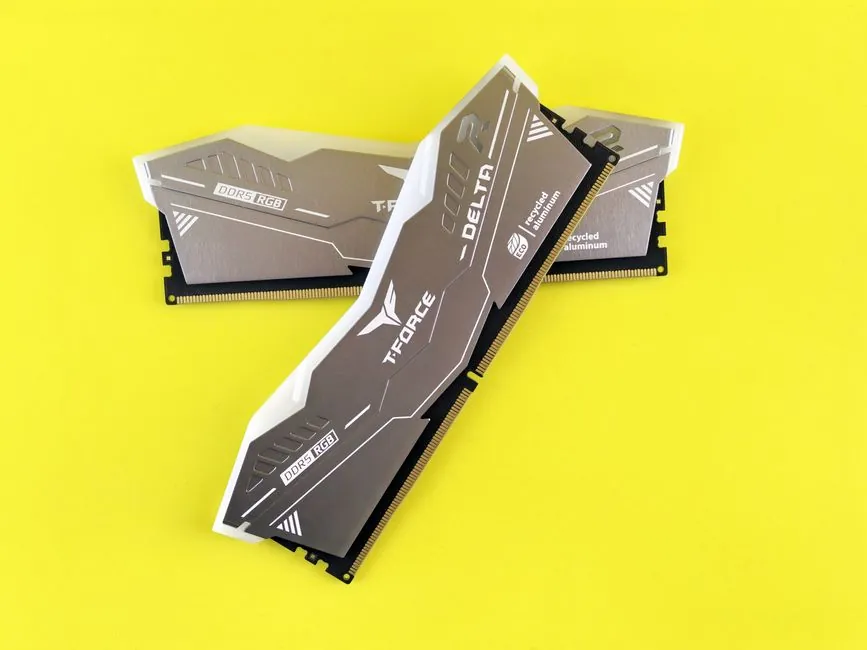
The market spans registered DDR5 RDIMMs for servers, unregistered DDR5 UDIMMs for workstations and compatible desktops, and consumer kits sold as matched 2×16GB configurations; capacity, speed, latency, vendor qualification, and market segment determine the meaningful cost comparison [S3][S4][S5].
What DDR5 RDIMM Price Per GB Actually Measures
Per-gigabyte price is the module price divided by its advertised capacity, but that calculation alone does not make two products equivalent. A 32GB module priced at $4.38/GB equates to $140.16 for the module before taxes, freight, and platform qualification are added [S7].
Server RDIMM pricing must be separated from retail desktop memory pricing because RDIMM modules carry registered-buffer functions for server memory controllers and are validated against specific platform support lists. The server-memory price list states that it covers modules used by HPE, Cisco, Dell, Lenovo and Oracle and was last updated on 4 November 2026.
These figures cover different latency grades and offer structures, so the lower price does not represent a like-for-like DDR5 RDIMM quotation [S5].
RDIMM, UDIMM, and Desktop Kits Compared
RDIMMs fit enterprise servers and require a compatible memory controller and platform qualification; they are not interchangeable with ordinary desktop DDR5 UDIMMs. UDIMMs fit platforms designed for unbuffered memory, while matched 2×16GB desktop kits combine two modules and commonly include performance profiles such as XMP or EXPO [S4][S5].
On a decision basis, RDIMM wins where server qualification is mandatory, UDIMM wins where the platform accepts unbuffered memory, and consumer matched kits win where low acquisition cost and desktop profiles matter. Raw per-GB cost is useful only after capacity basis, module count, speed, latency, and support requirements are normalized [S3][S4][S5].
Why the 2026 Price Trend Turned Upward

Three-month DDR5 contract prices rose 20% through October 2026, while DDR4 contract prices increased 24%, narrowing DDR4's former price advantage [S4]. Barclays data reported in mid-October 2026 showed DDR4 contract prices up 24% over three months, compared with 20% for DDR5.
Retail pricing moved sharply as well. A conventional 32GB 2×16GB DDR5 kit sold for roughly $100–$200 in October 2025, but the starting price reached $350 by November 2026, even where stock was constrained [S2]. The change represents a premium of at least $150 against the former upper end of the cited range, or at least 75%, before accounting for differences among the products compared [S2].
Component pricing also changed materially. Sixteen-gigabyte DDR5 chips moved from about $6.84 in September 2025 to $27.20 by late December 2025, nearly quadrupling the cited chip price [S6].
The WhereIsMyRam page tracks minimum and average prices for 2×16GB DDR5 kits across speed and latency tiers, with live charts and current offers.
Server Procurement and Capacity Tiers
For server buyers, the relevant cost unit is not merely the amount of memory, but usable capacity after population rules, speed configuration, and platform support requirements are applied. A lower-priced module can impose a larger total cost if it is incompatible, reduces supported memory density, or cannot populate the intended number of channels [S3].
Server-memory listings can include OEM-qualified HPE, Cisco, Dell, Lenovo, and Oracle modules, so model-code equivalence matters [S3]. Procurement teams should record the platform, module part number, capacity, rank configuration, speed, and support-list status for every quote. A generic DDR5 RDIMM price is not a substitute for a platform-specific quotation.
Volume is another major price driver, but the cited datasets do not establish a numerical discount schedule for RDIMM volume tiers. Larger order quantities should therefore be evaluated through written supplier quotes rather than an assumed per-module reduction. Warranty, advance-shipping inventory, compatibility testing, and delivery commitments can outweigh a small headline-price difference.
Total Cost Beyond the Module Price
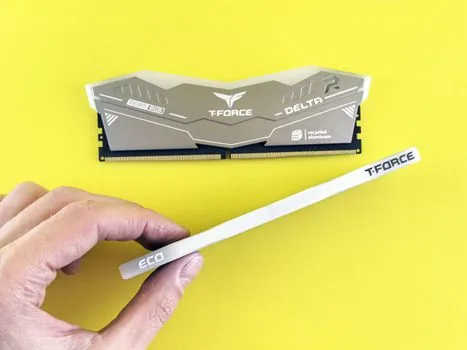
The purchase price is only one component of memory expenditure. Installation, platform qualification, spares, replacement stock, maintenance labour, and energy use should be included when comparing RDIMM with UDIMM or consumer modules over the equipment life [S3].
At $4.38/GB, a 32GB kit has a calculated price of $140.16 before logistics, taxes and qualification costs. For a $473 2×16GB DDR5-6000 CL30 desktop kit, the equivalent calculation is $14.78/GB, but it is for a different segment and includes matched-module retail pricing rather than server support [S5][S7].
Energy cost should be modelled from the server's actual power measurements rather than assigned a generic wattage for DDR5. Likewise, no numerical installation saving can be derived from the research for RDIMM, UDIMM, or desktop kits. The defensible conclusion is narrower: platform-qualified RDIMM avoids the adaptation cost of an unsuitable module, while a desktop kit purchased for an enterprise platform may be unusable and provide no avoided installation cost.
Limits in the Available Price Evidence
The $4.38/GB figure is the cheapest per-GB observation in a 90-day median-price tracker, not a universal DDR5 RDIMM market average [S7]. The dataset's 32GB kit entry also means it should not be generalized to 64GB, 96GB, 128GB, or other RDIMM capacities without a matching quote [S7].
Retail desktop data also mixes speed and latency grades. The $260 and $473 products both use 32GB 2×16GB configurations at 6000 MT/s, but their listed CAS latencies are CL36 and CL30 respectively; comparing them also compares timing grade, vendor, stock count, and retailer structure [S5].
The broader DDR5-versus-DDR4 percentage series describes chip contract prices through October 2026, not retail RDIMM prices, while the spot-price figures are component averages rather than finished-module quotations [S4]. For budgeting, use retail RDIMM quotes for acquisition cost, contract-price data for directional supply pressure, and spot data only as an early indicator of component movement.
How to Build a Defensible DDR5 RDIMM Budget
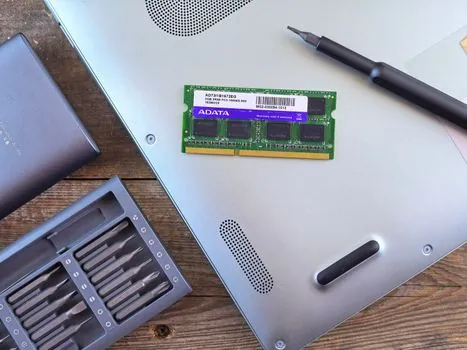
A defensible budget starts with four fixed fields: platform or server model, RDIMM part number, capacity and module count, and support-list status. Add delivered price, tax, warranty terms, and expected lead time to produce a landed cost per populated GB, then maintain one approved alternative for each critical module [S3].
Four signals are trackable in the available evidence: the 90-day median per-GB series, weekly retail price movement, server-module listings updated by part number, and 16Gb DDR5 spot-price direction [S4][S5][S7]. These signals serve different purposes and should not be combined into a fabricated index.
The practical decision is to secure platform-qualified RDIMM where availability and compatibility carry more value than the lowest generic per-GB quote, and to use consumer DDR5 kits only where their 2×16GB capacity, timing grade, and profiles match a compatible desktop platform. A $4.38/GB low can anchor market observations, but it is not by itself a procurement ceiling for qualified enterprise modules [S5][S7].