
Framing lumber cost $499.50 per 1,000 board feet on November 12, 2026, 2.1% below the $510.00 year-earlier price, but its 2026 average remained $578.42 [S3].
A construction-cost index placed Q4 framing lumber at $1,004.40 per MBF, illustrating how delivered lumber, product scope, location, and supplier terms can separate a commodity quote from the cost entered into a builder’s estimate [S4].
Lumber Price Signals Diverge Across Market Measures
The weekly framing-lumber benchmark fell to $449.05 per 1,000 board feet on November 6, 2026, down from the preceding week [S1]. That movement contrasts with the $499.50 lumber price recorded on November 12 and the $578.42 2026 average, so the observation date, benchmark definition, and unit basis must be checked before figures are compared [S1][S3].
Gordian’s national framing-lumber cost index reached $1,004.40 per MBF in Q4 2026 [S4]. These are construction-cost estimates rather than interchangeable spot-price quotations [S4].
A January framing-lumber reading of $872.03 per MBF was 3.44% below Q4 2025 [S6]. By Q4, the same series had climbed $132.37 per MBF from January, showing how cost pressure intensified during 2026 [S4].
Construction Starts Determine Demand, Not the Price Alone
Housing starts therefore affect lumber through both consumption and mill utilization: a demand increase can be absorbed by curtailed capacity and productivity before it requires higher-cost fiber [S5].
Proposals under discussion could have supported up to 1 million entry-level homes in the United States [S5]. These figures represented an early-stage policy scenario rather than realized construction volume, so they should not be treated as a completed starts forecast [S5].
The demand case also depended on housing availability and financing conditions. A December 2025 forecast projected U.S. housing starts at 1.5 million units in 2026, an 8–9% increase from 2025, with single-family construction supporting annual lumber demand growth of 4–8% [S2]. Forecasts and realized starts must remain separate inputs in procurement models.
Comparing Quote Types Before Setting a Lumber Budget

A weekly benchmark, a historical lumber series, and a construction-cost index answer different purchasing questions. The comparison below separates their published values and intended use. [S1]
<strong>Weekly framing benchmark:</strong> $449.05 per 1,000 board feet on November 6, 2026, designed for short-term market monitoring [S1]. <strong>Historical lumber series:</strong> $499.50 per 1,000 board feet on November 12, 2026, with a 2026 average of $578.42 and a 2.1% annual decline [S3]. <strong>Construction-cost index:</strong> $1,004.40 per MBF in Q4 2026, reflecting estimated construction costs rather than a single commodity transaction [S4].
The first two values are suitable for monitoring market direction, while the construction-cost figure belongs in estimating work. Neither the weekly benchmark nor the historical series identifies a delivered price for a specified grade, region, treatment, package size, and order quantity, so procurement teams should request a supplier quotation against the same bill of materials [S1][S3][S4].
Supply Constraints Set the Price Ceiling
That concentration made trade policy a material supply variable: Canadian mill curtailment or weaker competitiveness could tighten the U.S. balance as construction demand rises [S2].
Mill labor was identified as a stabilizing factor for lumber-price stability into 2026 [S7].
Demand does not necessarily produce a proportional price increase. If incremental starts can be supplied through restored capacity, better mill utilization, or productivity, price movement may remain contained. If production must move into higher-cost fiber with weaker operating leverage or unfavorable regional freight conditions, lumber can reprice quickly and remain elevated until supply responds [S5].
Cost Drivers Run Beyond the Board-Foot Price
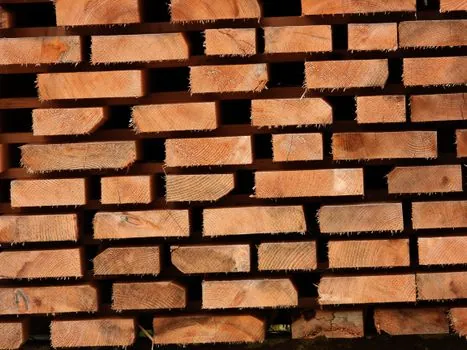
The purchase price is only one component of lumber cost.
Volume tier changes the commercial structure rather than only the unit rate. Elevated inventories carried over from early-2025 stockpiling ahead of tariffs [S2].
Total cost of ownership extends beyond delivered material. Contractors must account for offloading, staging, damage, replacement, cutting waste, labor, and schedule effects from material shortages. Engineered alternatives such as cross-laminated timber and laminated veneer lumber may offer procurement stability, but they also require design review and cannot be evaluated solely against a commodity board-foot quote [S2].
Who Should Use Which Price Signal
Procurement managers with defined framing packages should use a supplier-issued delivered quotation for contracting and a weekly or historical benchmark for escalation checks. NAHB’s $449.05 weekly observation on November 6 provides a directional input, while the $499.50 November 12 series value provides historical context [S1][S3].
Estimators and owners preparing early budgets should use a construction-cost index because it can capture broader project inputs rather than only an isolated lumber transaction. The Q4 value of $1,004.40 per MBF and its 9.67% quarterly increase offer a stronger cost-control signal than a headline commodity price alone [S4].
Large homebuilders planning substantial starts should model mill and regional freight conditions, contract timing, and substitution options before committing volume. Small renovation contractors should not extrapolate a million-unit housing proposal into local availability; the practical variables remain their own quantities, grades, delivery window, and mill certificates. Related construction machinery and equipment procurement follows the same discipline of matching equipment capacity to the actual site schedule.
Budget Controls for a Volatile 2026

Builders can separate market monitoring from commercial commitment by recording three dated values for every package: the board-foot reference, the supplier’s delivered quote, and the indexed estimating rate. The published benchmarks show why all three are needed: $449.05, $499.50, and $1,004.40 describe materially different market views [S1][S3][S4].
Contract terms should state grade, moisture condition, treatment, dimensions, quantity, delivery location, price-validity period, escalation method, and substitution procedure. For large projects, staged delivery can reduce storage exposure, but it must remain compatible with the framing sequence so material arrives before crews create a bottleneck.
The next trackable signals are realized housing starts and weekly framing-lumber prices. A sustained starts increase would raise the chance that mills move into higher-cost supply, while continued weak consumption could keep inventory pressure visible [S5]. The Q4 cost index, with its 9.67% quarterly rise, also provides a measurable benchmark for checking whether builder estimates remain aligned with the construction-cost market [S4].