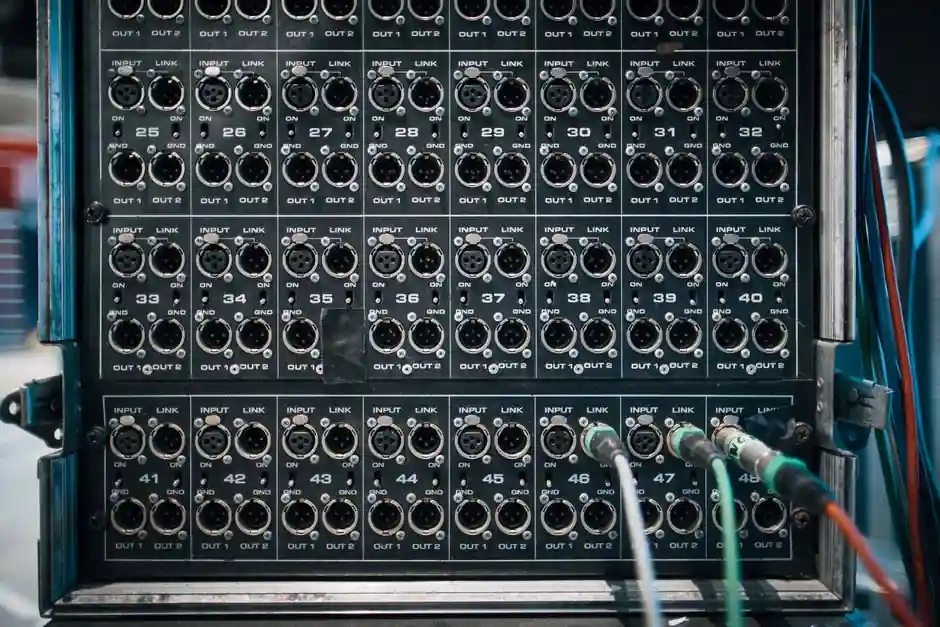
A decade resistance box is a passive substitution standard that lets a technician dial in a known resistance step by step, with each decade adding another significant digit to the synthesised value [S3].
Selection turns on five physical limits: end-to-end resistance range, per-step resolution, accuracy class, continuous power dissipation, and the working voltage the resistor string must survive; matching those to the bench task is the entire job [S2].
What the instrument is, mechanically
Mechanically, a decade resistance box is a chain of rotary dials whose wipers short out unused series resistors, so the output is the sum of the selected step on each decade [S1]. Standard 1-2-3 or 1-2-5 step sequences let the user land on any value between the box's minimum and maximum by adding dial positions [S3]. The contact set, usually silver alloy, defines both long-term stability and thermal EMF, which is why a switch's contact metallurgy is a first-class selection parameter, not an afterthought [S2]. Boxes with three dials already cover 1 Ω to 1.11 kΩ in 0.1 Ω steps; an 11-dial chain reaches the 100 GΩ and beyond domain when high-resistance networks are substituted in [S2].
Accuracy classes and what they actually cost
Mid-grade lab decade boxes such as the IET HARS series quote 0.01% (100 ppm) accuracy with 1 mΩ to 111 MΩ coverage, while the RS substitution series drops to 0.1% to 1% for a wider 0.01 Ω to 100 MΩ range [S2]. The GenRad 1433 line holds 0.01% across 1 mΩ to 111.11111111 MΩ, with 36 models split between 3-dial and 11-dial form factors [S2]. Programmable units such as the PRS-330 quote 70 ppm plus 1 mΩ accuracy over 0.1 Ω to 20 MΩ, roughly 1.5x tighter than a conventional manual decade resistor of comparable range [S2]. A 6.5-digit bench DMM such as the Keysight 3458A will not be limited by a 70 ppm source, but a 3.5-digit hand-held will, so the accuracy of the box should be matched to the readback instrument, not the other way around.
Power, voltage, and high-resistance variants
Power rating, not accuracy, is what blows up most decade boxes in real service. The HPRS high-power series is rated 225 W per decade with a 250 W total ceiling, and runs 1 mΩ to 10 MΩ at 0.5% to 1% accuracy, while the standard HRRS reaches 10 GΩ and the HRRS-5 kV/10 kV series tops out at 11 TΩ across 1 GΩ, 10 GΩ, 1 TΩ and 11 TΩ models with maximum voltages of 5000 V or 10,000 V [S2]. VRS-100 resistance standards cover the 1 kΩ to 10 TΩ ladder in discrete 1-decade steps at up to 20 ppm and 5 kV, used specifically for Megger and high-resistance meter calibration [S2]. If the box will sit on a megohmmeter test lead or in a hipot loop, the voltage rating is the gating parameter, not the resistance range.
Manual dial versus programmable resistor
Manual dial boxes (GenRad 1433, HARS, RS, HPRS, HRRS, OS-260/270) cover every accuracy and power class but require an operator to turn the dials each test [S2]. Programmable boxes (PRS-330, PRS-370) add USB, Ethernet, and IEEE-488 control, and the PRS-370 self-adjusting unit reaches 1 μΩ or 6-digit resolution across 0.1 Ω to 20 MΩ for automated RTD simulation and ATE racks [S2]. The cost gap is roughly 10% between PRS-330 and PRS-370, and a manual box remains the right pick when the test sequence is short, the value rarely changes, or the calibration lab needs a passive source that cannot be commanded remotely [S2]. A bench tech calibrating a single 4-wire RTD loop once a shift will not recover the price premium of a programmable unit; an ATE station cycling 200 channels per hour will.
Comparison of main options against selection criteria
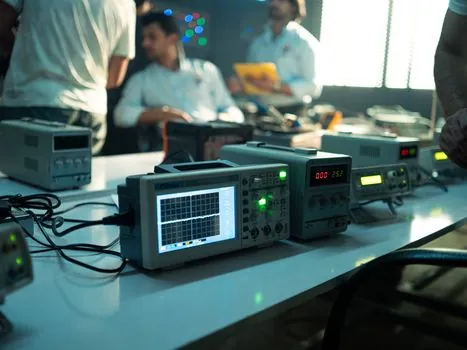
Four mainstream configurations cover roughly 95% of bench and field needs; the right pick depends on which axis dominates the application: range, accuracy, power, or voltage. [S2]
Standard lab decade box (GenRad 1433 / HARS, 0.01%): 1 mΩ to 111 MΩ, 3 to 11 dials, silver-alloy switches; pick this for general metrology and RTD simulation where accuracy drives the test [S2].
Substitution box (RS series, 0.1% to 1%): 0.01 Ω to 100 MΩ, rugged, lower cost; pick this for repair-bench troubleshooting and panel-board checks where 1% is enough and the box will be carried in a tool kit [S2].
High-power decade box (HPRS, 0.5% to 1%): 1 mΩ to 10 MΩ, 225 W/decade up to 250 W; pick this for load simulation on power supplies, battery discharge paths, and shunts where a standard box would overheat [S2].
High-resistance/high-voltage decade (HRRS-5 kV/10 kV, VRS-100): 1 GΩ to 11 TΩ at 5 kV to 10 kV, 20 ppm on VRS-100; pick this only for Megger calibration, insulation resistance tester verification, and high-voltage divider work, otherwise the voltage rating is wasted cost [S2]. The insulation resistance tester test bench, for instance, needs the HRRS-5 kV class; a general-purpose decade resistance box will flash over well below the megohmmeter's output.
Who should NOT pick the mainstream 0.01% lab box
Engineers calibrating Pt100 or Pt1000 RTD loops below 0 °C should look at dedicated RTD Pt100 simulators with built-in linearisation tables, not a raw decade box, because the box has no temperature curve and any read-back error at, say, -40 °C will include the box's own drift on top of the sensor's [S2]. Field service teams needing 250 W load steps should skip the 0.01% lab line entirely; a 1% HPRS at the same resistance will survive continuous duty that would cook a precision lab unit [S2]. Likewise, anyone sourcing 5 kV to 10 kV for high-resistance calibration should not improvise a stack of precision resistors to reach the gigohm range, since creepage and clearance on the dial switches will fail well before the resistors do.
Use cases that drive the shortlist
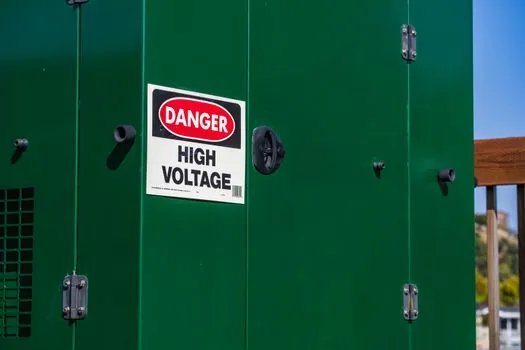
Calibration of 4-wire ohmmeters and handheld DMMs to 0.01% uses a HARS or GenRad 1433 with traceability to a 6.5-digit or 8.5-digit reference [S2]. RTD simulation on a temperature calibrator is best served by the OS-260/270 ohm-SOURCE at 0.01% accuracy with 0.01 Ω resolution, although it is manual-only with no computer interface [S2]. Automated production test of resistance temperature detectors or strain-gauge shunts goes to the PRS-330 or PRS-370 programmable units with USB and Ethernet, where a test sequence of 100 points per device would otherwise tie up an operator [S2]. Insulation tester verification uses the HRRS-5 kV or VRS-100 with discrete 1-decade values to 10 TΩ, since the insulation resistance tester output itself is the high-voltage source [S2]. For practical metrology workflows that pair resistance sourcing with dimensional checks, see the caliper, micrometer, and dial indicator shortlist for how the same selection logic applies across instrument families.
Maintenance, traceability, and procurement signals
Switch contact wear is the dominant failure mode, which is why IET publishes a 5-year warranty on the PRS-330 programmable series as a benchmark for low long-term maintenance cost [S2]. Specifying silver-alloy contacts and per-decade power rating in the purchase order, rather than just the headline accuracy, prevents the common "lab-precise but under-rated" failure pattern in industrial service [S2]. Procurement teams should also confirm whether the box ships as a 3-dial, 7-dial, or 11-dial unit, since adding dials later is not field-recoverable on most resistance decades.
Trackable signals over the next procurement cycle: a move from manual dials to programmable units with Ethernet/IP or PROFINET gateways in 24 V ATE panels, and a growing demand for 10 kV-class high-resistance boxes tied to insulation tester recalibration cycles on insulation resistance tester fleets. Watch for vendor disclosures on switch-cycle counts (silver-alloy targets above 100,000 operations) and on-board PT100 RTD Pt100 linearisation tables as differentiators in the next datasheet revision.