
A defect-dataset workflow should combine an agreed defect taxonomy, task-specific geometry, human review, and measured model feedback, because inconsistent labels introduce noise that can distort training and evaluation [S2].
The workflow must fit the inspection target: 2D boxes support part tracking, polygons and masks describe surface defects, instance segmentation separates individual objects, and frame-by-frame video annotation records process sequences [S3].
Define the Defect Labels Before Annotation
Data labeling assigns meaningful tags or annotations to raw observations so that machine-learning systems can learn the intended pattern, and a defect project requires a controlled vocabulary before annotators draw any geometry [S2].
A useful taxonomy separates the product state from the defect class, location, severity, and inspection context. Manufacturing annotation examples include cracks, chips, scratches, pits, misalignments, incomplete assemblies, and surface irregularities, while process-oriented datasets can add tool positions, equipment states, and workflow steps [S3][S5].
Prevent synonyms from becoming separate targets: one annotator using “crack” while another uses “fracture” creates conflicting supervision and makes annotation consistency harder to maintain [S2]. Write acceptance examples for each class, specify whether a category is mutually exclusive, and record whether overlapping defects require one combined mask or multiple instances.
Surface-inspection projects can borrow an established industrial classification where appropriate. One defect-annotation application built its steel surface taxonomy from ISO 8501-3:2006 for visual assessment of steel and other surface cleanliness [S5]. This is a domain taxonomy reference, not a substitute for project-specific acceptance rules.
Select Annotation Geometry by Inspection Task
The annotation geometry determines what the model can learn: bounding boxes encode location, polygons outline irregular regions, segmentation masks describe pixel-level extent, and keypoints capture marked positions or poses [S4].
For surface defects, polygon labeling or segmentation masks provide a tighter boundary than a rectangular box when the defect boundary is irregular [S3]. Bounding boxes remain practical for part detection and tracking when the required output is a product location rather than a defect contour [S3].
The labeling machine should therefore be evaluated against the physical image geometry, while the coding machine should support traceable dataset identifiers rather than being treated as the defect-labeling interface itself. Practical checks include image scale, minimum visible defect size, camera perspective, and whether occlusion hides the relevant boundary.
Video adds a temporal requirement. Frame-by-frame annotation can preserve process steps, human movement, and tool usage, but the sampling interval must be defined before labeling because missing intermediate frames can hide a state transition [S3]. Avoid using temporal labels for defects that are only visible in a single exposure unless the training objective explicitly requires that behavior.
Automate Repetitive Work Without Removing Review

AI-assisted labeling can automate repetitive work, while review workflows support quality control.
A display-panel study used an enhanced SegGPT architecture, domain-specific training techniques, and a scribble-based annotation mechanism. Its two-stage training approach increased average intersection over union by 0.22 and recall by 14% across multiple product types while maintaining approximately 60% auto-labeling coverage [S1].
That result supports a specific operating model: let the model propose candidate regions, let the annotator correct or accept them, and route uncertain cases to review. The study found that models trained on its auto-labeled data matched the performance of models trained on human-labeled data, but the evidence comes from industrial display-panel datasets rather than every material, camera, or defect class [S1].
Active annotation and learning with subject matter experts can continuously improve defect-detection accuracy. One manufacturing annotation application combines an algorithm-based predictive model with active annotation and learning led by subject matter experts.
Route Work Through Annotators and Reviewers
A production workflow should assign explicit roles for annotators, reviewers, and project owners and use labeling guidelines and quality controls.
Subject-matter experts should define ambiguous cases such as a scratch that meets a chip, a stain that resembles a coating defect, or a crack whose visibility changes with illumination [S5]. Those examples should be added to the guideline as edge cases, with the decision linked to the affected class rather than stored as an undocumented personal judgment.
Compare Workflow Options Against Four Criteria
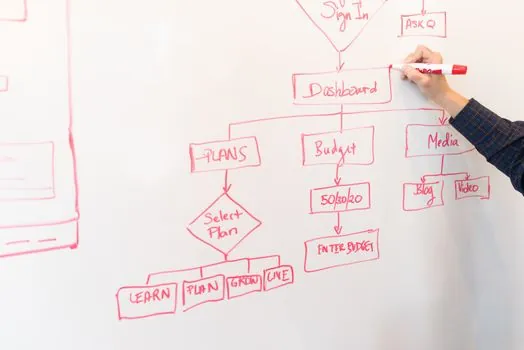
Tool selection should be judged by annotation fit, automation with supervision, quality-control depth, and pipeline integration, because support for one data type does not establish suitability for a defect-specific production dataset [S4].
Human-only annotation gives annotators direct control over boundaries and class names, but its throughput and consistency depend on staffing, instructions, and reviewer capacity [S2]. AI-assisted annotation can reduce repetitive drawing effort, as the 60% auto-labeling coverage demonstrated for display panels, but its performance still depends on domain adaptation and human correction [S1].
General-purpose platforms may combine bounding boxes, polygons, masks, keypoints, image classification, and video segments, while purpose-built inspection workflows can add defect taxonomies, subject-matter review, edge-case repositories, and process-specific operations [S4][S5]. Exportability through APIs, SDKs, or cloud integrations matters because annotations must reach training without manual reformatting [S4].
For high-volume fixed-camera inspection, an integrated annotation platform should support repeatable geometry, review queues, version history, and direct export. For diverse projects spanning images, text, audio, or time series, a multi-modal platform may reduce tool fragmentation, but each defect class still needs its own instruction set and validation criteria [S2][S4].
Control Dataset Splits, Rebalancing, and Edge Cases
A train, validation, and test split must be defined before model-assisted labeling expands the dataset, because duplicate or near-duplicate frames can leak inspection conditions across partitions and inflate measured performance [S2][S4].
Split by physical part, production run, camera, time period, or production line where those variables affect appearance. A model validated on frames from the same part it trained on has not demonstrated performance on a new unit, and a test set dominated by one lighting setup cannot establish robustness across manufacturing conditions.
Track rare defects separately. Cracks, chips, scratches, pits, blemishes, and dimensional inaccuracies can have very different sample counts, so a dataset may appear adequate in total images while remaining weak in the classes that drive quality decisions [S5].
Use automated suggestions to find under-labeled classes, but keep an untouched review set for final measurement. Track annotation coverage, reviewer disagreement, class distribution, correction rate, and the share of samples accepted without modification. These are workflow metrics rather than model metrics, and they show whether the dataset is becoming more reliable before deployment begins.
Verify the Labels Before Model Evaluation

Release criteria should combine label accuracy, class coverage, geometric quality, traceability, and dataset separation, because a visually convincing annotation set can still contain ambiguous classes or leakage between data splits [S2][S4].
For each defect class, inspect representative positive samples, hard negatives, mixed-defect images, and edge cases under the same illumination and camera settings used in production. Validate box tightness, mask boundaries, clipping at image edges, overlap rules, and temporal continuity where video is used [S3].
Run a controlled model comparison before accepting auto-labeled data at scale. The display-panel study provides a concrete benchmark pattern: report average intersection over union, recall, auto-label coverage, and performance against human-labeled training data rather than relying on one accuracy figure [S1].
Keep a change log for every guideline revision, reviewer override, new defect class, and dataset version. If model errors reveal a missing distinction, add the case to the guideline, revise affected annotations, and rerun the relevant validation set before expanding the next labeling batch [S2][S5].
The next verifiable checkpoint is a versioned pilot containing one production defect family, a written class dictionary, and held-out samples reviewed by a domain specialist. Track annotation time per image, correction rate, reviewer agreement, and mask or box quality against the agreed criteria before scaling the case-packing machine workflow to additional defect classes.