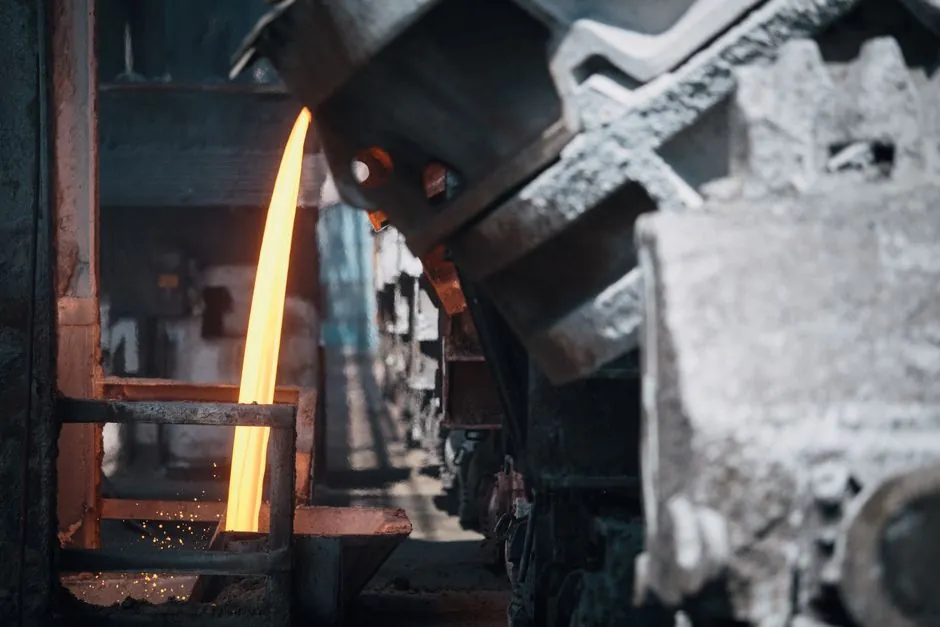
Telecom enclosure dies in 2026 are picked for five gates at once: A380/A383/ADC12 aluminum (or Zn/Mg hot-chamber alloys for small RF shields), H13 or SKD61 tool steel for cavity life beyond 100,000 shots, ±0.05 mm flatness on the lid-mating face, IP67 gasket groove integrity, and a continuous EMI/RFI shield path from cover to body [S2][S4].
Outdoor 5G remote-radio-head (RRH) and small-cell enclosures are the dominant volume driver; they must combine weatherproofing, heat-sink geometry, and electromagnetic shielding in a single cast body, so die-casting beats extrusion whenever the housing has to do more than act as a cover [S7][S8].
Alloy Choice by Telecom Sub-Application
A380, A383 and ADC12 dominate telecom enclosure work because they combine high fluidity, low hot-cracking tendency, and a thermal conductivity in the 90–110 W/(m·K) range, which lets the same cast skin double as a heat sink for base-station and 5G radio modules [S2][S6]. For RF connector shields and small EMI cans where thin walls and tight tolerances matter, hot-chamber zinc and magnesium alloys are common because they fill 0.5 mm wall sections cleanly and run at lower melt temperatures, reducing solder-joint stress on adjacent electronics [S2].
Semi-solid (SSM) aluminum at 40–60% solid fraction is increasingly specified for EMI-sensitive enclosures because the laminar fill reduces porosity that would otherwise create RF leakage paths, while vacuum die-casting claims up to 90% porosity reduction for high-strength structural telecom brackets and antenna bases [S2]. Squeeze-cast variants target mission-critical infrastructure where near-zero porosity is required; high-pressure variants hold ±0.05 mm tolerance for heat-sink-integrated housings that mate directly to RF modules [S2][S4].
Die Steel, Cavity Layout, and Shot-Life Gates
H13 (DIN 1.2343) is the workhorse for telecom aluminum dies, while SKD61 is the JIS equivalent and is widely used by Asian tool shops serving global OEM programs; for high-volume A380 runs above 100,000 shots, nitrided H13 with vacuum heat treatment is the default, and the cavity steel hardness typically lands in the 46–50 HRC range after surface treatment [S2][S6]. For hot-chamber zinc and magnesium tools, SKD61 or H11 with copper-beryllium inserts in high-wear slides gives longer life at the lower melt temperatures involved.
Cavity count and gating are tied to enclosure size: small RF shields under 150 mm run as 2-cavity or 4-cavity dies with overflow and biscuit gating, while RRH and small-cell enclosures between 300 and 600 mm are typically 1-up or 2-up dies with a single hot-chamber or cold-chamber shot, side-gated or tab-gated, and a runner designed to keep the lid-sealing face untouched by the gate vestige so IP67 gasket integrity is preserved [S2][S8]. Cooling channels are mirrored around the heat-sink fin region to manage the thermal gradient between thick wall sections (5–8 mm) and thin (0.5–1.5 mm) cover areas, which controls flatness on the gasket face [S2][S6]. Draft is held to a minimum (often 0.5–1°) on internal features, because the die-casting die designer wants every mating face as flat as possible for the EMI gasket to seat across its full width.
Tolerance, Flatness, and Sealing-Surface Spec
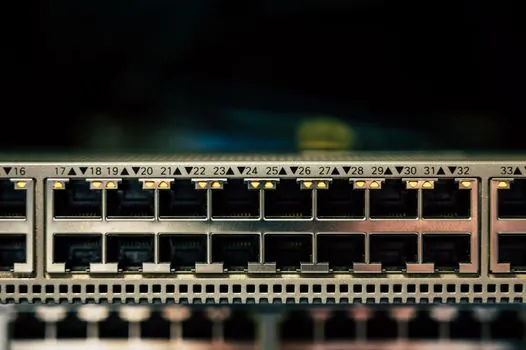
Telecom enclosure dies are usually contracted to ISO 8062 CT6 or tighter, with ±0.05 mm typical on critical mating features and ±0.1 mm on non-critical bosses, per the tolerance band that JUFENG publishes for its high-pressure process and that telecom-grade machine finishing then holds in the fettled part [S2]. Lid-mating flatness under 0.1 mm across a 300 mm span is a common procurement gate, because a 0.2 mm bow on the cover is enough to break the IP67 gasket line once the enclosure is torqued down.
Sealing surfaces are protected during finishing by machining only the seal groove to final dimension and leaving the gasket land as-cast, which avoids disturbing the dense surface skin that die casting produces. The same dense skin contributes to EMI/RFI shielding: a continuous cast skin with no through-porosity is what gives a die-cast aluminum body shielding effectiveness typically 60 dB or better at frequencies from 30 MHz to 1 GHz when mated to a conductive gasket, a value published across multiple telecom-die-casting references [S2][S4][S9].
EMI Shielding, Thermal Management, and Finishing
Shielding and thermal performance are not separate features on a telecom enclosure die, they are co-designed: integrated heat-sink fins are cast directly into the cavity so that the same aluminum body that conducts heat from the RF module also carries the shielding current; this is one of the key reasons die-casting replaces extrusion for many 5G housings, because the die-casting machine can deliver a finished net-shape body with fins, bosses, and gasket features in one shot, while extrusions need secondary welding or machining to add those features [S2][S4][S7].
Finishing is specified on the print, not left to the foundry: chromate-free chemical film (Type II/III anodizing or RoHS-compliant conversion coating) for outdoor corrosion resistance, powder coat for color and UV stability, and selective conductive coating (tin or nickel-based) on the gasket contact areas to maintain shielding after painting [S2][S4][S8]. Hot-chamber zinc parts avoid chromate in most programs and instead use zinc-nickel or trivalent passivation to meet the same outdoor life requirement at lower cost. CMM inspection on first article and 100% leak testing to IP67 or NEMA 4X are the standard acceptance gates, and many telecom-OEM drawings now cite IEC 60529 (IP code) and ASTM B85 (aluminum die-casting alloy) for material and seal definitions [S1][S4].
Process Selection: Hot-Chamber vs Cold-Chamber vs Vacuum

Process choice follows the alloy and the enclosure volume: hot-chamber for zinc and magnesium RF shields and connector bodies (fast cycle, 0.5 mm walls, long die life), cold-chamber for A380/A383 aluminum telecom enclosures above roughly 200 mm where larger shot volume and longer fill time are needed, vacuum die-casting when the design is strength-critical and porosity will compromise shielding or pressure-tightness, and low-pressure casting for waveguide and RF component parts where surface finish dominates [S2][S4].
For 5G base-station and small-cell housings, the dominant 2026 recipe is cold-chamber A380 with vacuum assist, integrated heat-sink fins, chromate-free chemical film plus powder coat, and 100% leak test; this combination is what supplier pages from multiple regions reference for outdoor 5G, RRH, and antenna-integrated enclosure work [S2][S6][S8]. Engineers comparing this with extrusion should note the cost premium of die-casting is offset by eliminated welding, eliminated EMI gaskets on seam joints, and the ability to combine cover, body, and heat-sink into one part, and a closely related decision map for electronics housings (where the same alloy and tolerance logic applies) is laid out in Die Casting Die Selection for Electronics Housings.
Verification Gates and Supplier Watchouts
Five verification points separate a good telecom-enclosure die from a scrap one: (1) first-article CMM against ISO 8062 CT6 on the seal face and bosses, (2) X-ray or metallographic check for porosity on a sample part to confirm vacuum-assist effectiveness, (3) 100% leak test to IP67 on the production run, (4) shielding-effectiveness bench test at the OEM's specified frequency band (commonly 800 MHz to 6 GHz for cellular, higher for 5G mmWave sub-assemblies), and (5) 100,000-shot die-life trial with wear measurement on the slide inserts and ejector pins [S2][S4][S6].
Common failure modes that show up in the first 5,000 shots are soldering of aluminum to the steel cavity (cause: poor cooling balance and lack of release coating), erosion at the gate area (cause: gate land too short for A380 velocity), and cracking of cores around heat-sink fin slots (cause: radii below 0.5 mm and inadequate core cooling); all three are caught only by a disciplined tryout and PPAP cycle, and any supplier that skips the pilot run before tool release should be replaced [S2][S6]. A wider selection view that also covers magnesium structural parts and the relevant machine class lives in magnesium die casting machine and the main die casting entry, which carry the same gating, draft, and steel logic at a more general level.
Trackable signals to watch through the rest of 2026: new 5G mmWave enclosure programs moving to semi-solid (SSM) aluminum for lower shielding leakage, and tighter OEM calls for chromate-free finishes with documented 1,000-hour salt-spray ratings. For related process guidance on lighting-fixture die selection (where IP65 gasketing logic is similar but alloy decisions differ), see Die Selection for Lighting Fixture Castings.