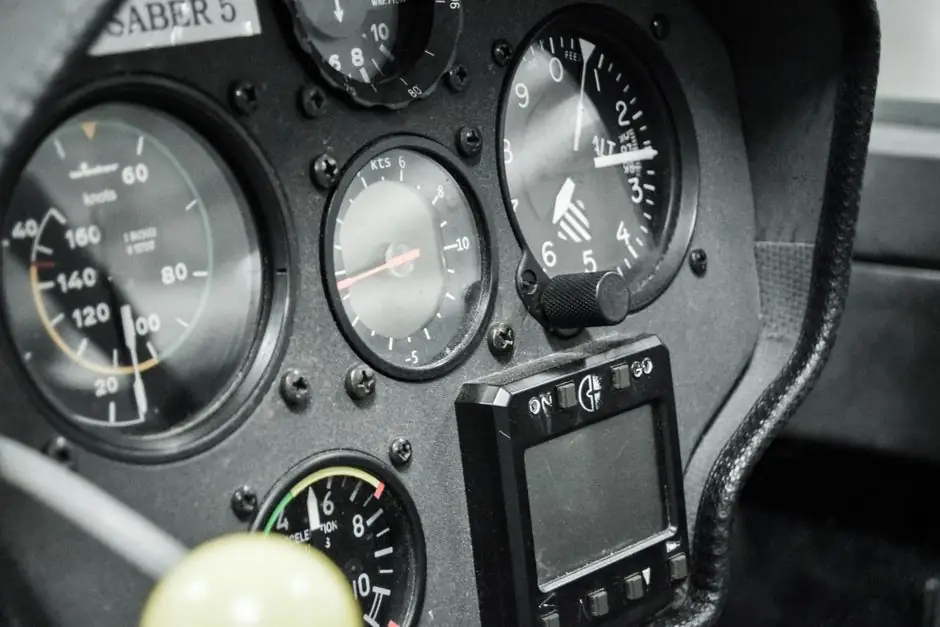
Digital panel meter selection is driven by six engineering choices made in a fixed order: measurement function, panel cutout size, input signal type, accuracy and resolution, display technology, and finally power plus environmental sealing. Get the first three right and the rest usually fall out of the catalog.
The dominant form factor on industrial control panels remains the DIN 43700 family. Common digital panel meters span 1/32 DIN (24x48 mm) up through 1/8 DIN (96x48 mm) and 1/4 DIN (96x96 mm), with ANSI 4.25-inch square cases still common on US-spec switchgear and generator sets [S2]. Anything outside that envelope exists, but is treated as a specialty order.
Start With Function, Not Size
Function drives the input card, the firmware, and the agency approvals, so it has to be locked before cutout. The recurring catalog buckets are DC volt and ammeter, true-RMS AC volt and ammeter, process meter (4-20 mA or 0-10 V), frequency or rate meter, totalizer or counter, timer, temperature meter (thermocouple, RTD, thermistor), strain and load cell meter, and scale or weight meter [S3]. Picking the wrong bucket is the single most common reason a meter is returned.
For DC measurement, a general-purpose digital panel meter typically covers five DC voltage ranges from ±200.00 mV to ±600.0 V and four DC current ranges from ±2.0000 mA to ±5.0000 A, factory calibrated and user-selectable between ranges [S3]. A 4-20 mA process loop is the most common industrial input, and a process meter that accepts 4-20 mA or 0-10 V with user-scalable display up to ±99,999 counts handles roughly 70 percent of the panel-meter installs on a typical process skid. For weighing and force, a load cell meter with 4- or 6-wire sense, 5 V or 10 V excitation, and a most-sensitive full scale of ±20 mV will drive up to four 350-ohm load cells in parallel [S3].
Cutout, Bezel, and What Fits Where
Panel real estate is finite, so the cutout decision is usually made once and lived with for the life of the panel. A 1/32 DIN meter (24x48 mm) fits a single instrument loop on a dense annunciator; a 1/16 DIN (48x48 mm) is the workhorse for skids; a 1/8 DIN (96x48 mm) is reserved for primary process variables where reading distance exceeds 3 m; and 1/4 DIN (96x96 mm) and 4.25-inch square ANSI are used for switchgear mains and generator instrumentation [S2].
Bargraph and analog meters still earn their slot in some applications, but the digital variant dominates new design. The Omega DPi Series illustrates the modern small-format digital panel meter family at 1/8, 1/16, and 1/32 DIN with color-changing displays sized for legibility at typical control-room viewing distances [S5]. If the panel already has a mismatch of bezels, standardize on one DIN size before specifying a new meter. Mismatched cutouts are a far more expensive retrofit than the meter itself.
Input Card: Match the Transducer, Not the Cable
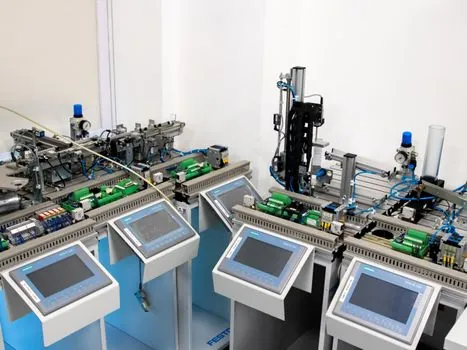
The input card has to match the transducer, and the catalog wording hides important details. A temperature meter that lists only "thermocouple" without naming types is a non-starter; a usable instrument accepts at least J, K, T, E, N, S, and R with selectable °C or °F and resolution of 1° or 0.1° [S3]. For RTDs, the spec must call out Pt100 alpha (DIN 43760 or ANSI), and ideally Ni120 and Cu10 if the plant mixes sensor types. Universal-input meters such as the OMEGA DPPT PLATINUM series accept nine thermocouple types (J, K, T, E, R, S, B, C, N), Pt RTDs at 100, 500, or 1000 Ω on 385, 392, or 3916 curves, thermistors at 2250 Ω, 5 kΩ, and 10 kΩ, plus DC voltage, DC current, and bridge inputs, with bipolar scaling to any engineering unit and a selectable decimal point [S5].
Process inputs need excitation. A usable process or totalizer meter ships with a user-selectable excitation output of 5 V, 10 V, or 24 V so the same instrument can power a 2-wire 4-20 mA transmitter, a 0-10 V transducer, or a passive signal source without an external supply [S3]. Watch for ground-loop damage on plant retrofits: any new process meter that shares a 4-20 mA loop with a legacy recorder should be galvanically isolated, and isolation voltage is a number to ask for, not a checkbox to assume.
Accuracy, Resolution, and Read Rate
Accuracy is the headline number on every datasheet, but it is also where suppliers fudge the most. A spec of 0.1 percent of reading plus 1 digit at 23°C, 30 to 90 percent RH, is a defensible figure; a spec of 0.1 percent of full scale is roughly four times worse at 25 percent of range and is not interchangeable. For DC and process meters, 0.01 percent reading accuracy is achievable and 0.05 percent reading is the common industrial baseline. The resolution follows the meter: a 4-digit meter with 9,999-count resolution is adequate for most process displays, while a 5-digit 99,999-count or 6-digit 999,999-count unit is mandatory for scale, totalizer, and laboratory service [S3].
Read rate matters more than most buyers expect. A panel meter that updates at 2.5 readings per second looks sluggish on a flow loop; a 10 to 60 readings per second meter is the comfortable range for fast process variables. High read rates also help with peak capture and batch totalization, where a slow meter will under-read at the start and end of a batch. For a related buyer-facing walkthrough of how aerospace programs pressure-test the same isolation and accuracy claims, see the aerospace digital panel meter selection map.
Display, Power, and Environmental Sealing

Display technology is a service-environment call, not a preference. Red LED remains the default for indoor control panels, with green, amber, or blue available where operator color-coding matters; high-brightness LEDs are the right pick for direct sunlight on a generator set or a marine bridge wing. LCD with backlight is mandatory below -20°C because LED brightness drops sharply in cold; an OLED or color TFT is reserved for high-visibility primary readouts where the meter cost is justified [S2][S5]. Digit height should be selected for the worst-case viewing distance, not the ideal one: a 14 mm (0.56 inch) digit is readable at roughly 5 m, while 20 mm (0.8 inch) digits are needed for 7 to 9 m viewing distance.
Power and sealing are the two specs that get skim-read at the buyer's peril. Most industrial panel meters accept 85-264 VAC or 90-300 VDC line power, plus an isolated 24 VDC loop-power option for 4-20 mA loops. For the front face, a panel-mount seal to NEMA-4X or IP-65 from the front is the minimum for washdown or outdoor enclosures; an IP-66 rating is preferred for food-and-beverage panels, and an IP-67 or NEMA-6 rating is reserved for hose-down and marine decks [S3]. A useful sanity check on a sealing claim is the gasket material: silicone gaskets survive UV and ozone where EPDM does not, and Buna-N is wrong for any hydrocarbon exposure.
Output, Comms, and the Smart-Meter Cutover
Any new digital panel meter that does not at least offer a scalable analog retransmission is now an outlier. The minimum useful output is 4-20 mA or 0-10 V proportional to display, with dual 5 A Form C (SPDT) relays for alarm or control [S5]. Above that baseline, the smart-panel-meter decision is dominated by four filters: required accuracy, how the meter connects to the circuit, how it communicates, and how it is powered [S7].
For higher-level integration, expect at least one of RS-485 Modbus RTU, Ethernet/IP, PROFINET, or EtherCAT; BACnet MS/TP shows up in building-automation panels and PROFIBUS PA in older process plants. Totalizers should support a pulsed output or a Modbus register that the plant historian can poll. The smart-panel-meter category is converging fast with digital multimeter functionality on the AC side, but the panel meter retains the form factor, the relay outputs, and the front-panel NEMA-4X seal that a handheld DMM cannot match. For bench and field troubleshooting of the same signals, see the digital multimeter reference page.
Options Comparison: Which Meter Fits Which Job
For a quick selection pass, four options cover roughly 90 percent of panel-meter asks. (1) A 1/8 DIN 4-digit process meter with 4-20 mA input, 24 VDC loop power, 0.05 percent reading accuracy, red LED, NEMA-4X front seal, and dual SPDT relays fits a general-purpose process loop. (2) A 1/16 DIN 5-digit temperature meter accepting J, K, T, E, N, S, R thermocouples plus Pt100 RTD, with 0.1°C or 1°C resolution, fits a furnace or oven zone. (3) A 1/8 DIN 6-digit totalizer or scale meter with 4- or 6-wire load cell input, 5 V or 10 V excitation, and a most-sensitive ±20 mV full scale, fits a batching scale or a force-test stand [S3]. (4) A 1/32 DIN 3-1/2-digit DC voltmeter with five DC voltage ranges from ±200.00 mV to ±600.0 V fits a compact annunciator slot where space is at a premium.
The mainstream option is wrong when the panel sees frequent washdown (spec IP-66 or IP-67, not IP-65), when the input is a strain or bridge signal (spec a load cell meter with sense leads, not a process meter), when the readout is a totalized flow in cubic meters per day (spec a 6-digit totalizer with pulse output, not a 4-digit process meter), or when the operator reads the value from more than 9 m away (spec a bargraph or 20 mm display, not a 14 mm LED). For a deeper walk on paperless recorders and related panel instrumentation that often share the same panel real estate, see the 2026 paperless recorder lineup and selection map. Track the next nodes as IEC 61010-1 third-party test certificates and explicit surge-withstand (IEC 61000-4-5) levels become standard ask-for items on RFQ packets through the rest of 2026.
For component-level specifications, see digital panel meter, and linear guide.