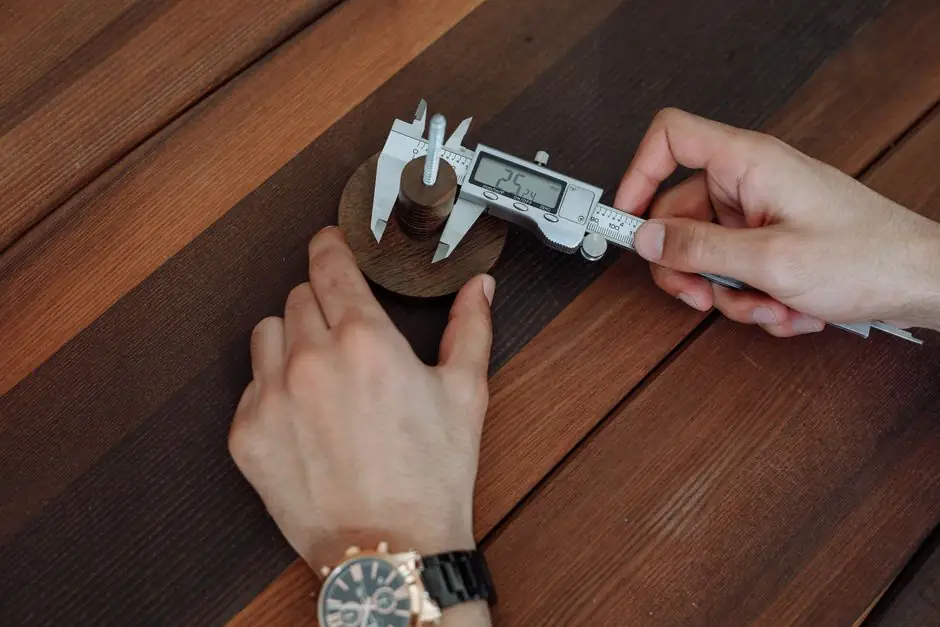
A digital panel meter is specified by five hard constraints: the input signal type and range, the number of display digits, the accuracy class, the supply voltage, and the panel cutout plus ingress protection; the rest of the datasheet is secondary until those are fixed [S4][S7].
Digit count is the first filter. 3½-digit units (display range 1999, with a leading "1" only as the polarity sign) handle most DC voltage, current, and process loops, while 4½-digit units (19999) give the extra decade for laboratory, energy metering, and low-signal transducer work; 3-digit and 4-digit meters exist for cost-driven OEM applications [S5]. LED and LCD remain the two practical display options, with LED readable in direct sunlight and LCD preferred for low-power panels, since backlighting improves LCD visibility in dim enclosures and digit height should be matched to the operator's viewing distance [S1].
Match the input first: signal, sensor, and range
Before evaluating accuracy or communications, lock down what the meter is actually measuring. The three input families are: (1) direct electrical signals (V AC/DC, A AC/DC, frequency, wattage, resistance); (2) sensor inputs (thermocouple, RTD, strain gauge, RPM, process loop); and (3) transducer-scaled signals where a shunt, CT, or PT converts a primary quantity into a low-level secondary that the meter then scales to engineering units [S1][S4].
Process and temperature meters with analog or temperature inputs accept a wide range of signals including voltage, RTD, and thermocouple, and commonly expose alarm relays plus analog or serial retransmission for downstream control [S7]. For current measurement on switchgear, the typical path is a 5 A secondary CT feeding a 0–5 A or 0–1 A meter input, with the ratio entered as a scalar in setup; choosing a meter that can be field-scaled avoids custom dial printing later [S1][S3]. Resolution (decimal position) and full-scale range must be specified together: a 0–500.0 V range at 3½ digits gives 0.1 V resolution, while the same meter on 0–50.00 V gives 0.01 V [S1].
Accuracy, digits, and what they actually mean
Digital panel meters generally offer higher accuracy than analog meters and can resolve to several decimal places, while analog meters are limited by graduated-scale resolution and the operator's pointer-reading skill [S2]. A practical engineering rule: 3½-digit meters typically quote accuracy as ±0.5% of reading ±1 count, 4½-digit units ±0.05% to ±0.1% of reading ±1 count, and laboratory-grade 5½-digit and 6½-digit units drop into the ±0.01% to ±0.005% range. Always read the accuracy spec as (% of reading) + (% of range) + count error, and apply it to the operating point, not to full scale, because a meter with ±0.1% of reading error drifts less across its range than one specced at ±0.1% of full scale.
Digital meters also provide unambiguous readouts that eliminate parallax and interpolation errors inherent to moving-coil analog movements [S2]. For panel applications where a logged or trended value matters more than instant readability, consider routing the same signal to a digital multimimeter class instrument on the bench and keeping a 3½-digit panel meter at the door for operator status.
Display, digit height, and readability

Digit height is a selection attribute, not a styling choice: the Weschler selection guide ties digit height directly to expected viewing distance, and bargraph meters span 1/16 DIN up to 12 inches high for long-aisle visibility [S1]. Common digital panel sizes run from 1/32 DIN (24×48 mm) to 4.25-inch square ANSI, with smaller and larger sizes available but less common; dual- and triple-display meters exist for higher information density on a single cutout [S1].
LED colors are typically red, with green, amber, or blue as options; high-brightness LEDs are specified for direct sunlight [S1]. LCD panels ship as either dark digits on a light background or light digits on a dark background, and LCD visibility in low light depends on backlight intensity, so outdoor or unlit-cabinet applications usually move to LED rather than paying for a brightened LCD [S1][S4]. Display attributes in the DigiKey panel-meter selection filter include display type, characters per row, and display character height, and the filter is the right place to confirm that a candidate meter has the readout geometry you need before evaluating price [S4].
Power, environment, and mechanical fit
Supply voltage is treated as a hard constraint: the DigiKey selection vocabulary calls it "Voltage - Supply, typically represented as a range," and operation outside that range can damage the device and surrounding system components [S4]. Most process meters accept 24 V DC, 85–265 V AC, or both; some loop-powered 4–20 mA meters draw their supply from the loop itself, which simplifies wiring but caps display current and backlight brightness. The panel cutout dimension, mounting type (panel clamp, DIN rail, or rear stud), and termination style (screw, quick-connect, or wire lead) all have to match the existing enclosure before price is even discussed [S1][S4].
Ingress protection ratings such as IP20, IP65, and IP67 define solid and liquid ingress, with the first digit covering solids and the second covering liquids; IP65 (dust-tight, jet-water) is the common minimum for washdown panels, and IP67 (immersion to 1 m for 30 min) is the right floor for outdoor enclosures or food and beverage areas [S4]. EMC and surge immunity are not optional on industrial switchgear: switchgear rooms routinely produce fast transients on the auxiliary bus, and a meter without declared IEC 61000-4-4 / 61000-4-5 surge immunity will fail in the field. Sourcing from a manufacturer that publishes a defect-rate metric and a factory-audit trail materially lowers the risk of a bad batch on a high-volume build [S3].
Outputs, alarms, and control-panel integration
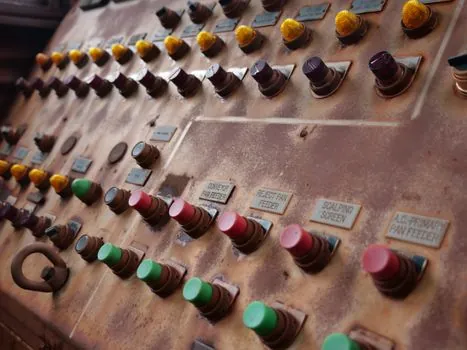
Digital panel meters usually outclass analog meters on integration, exposing analog outputs (4–20 mA or 0–10 V retransmission), digital protocols (Modbus RTU over RS-485 is the most common), alarm relays, and programmable setpoints; analog meters are typically limited to displaying the instantaneous value [S2][S7]. Two practical rules: (1) if the meter drives a downstream PLC or SCADA tag, specify an isolated RS-485 Modbus port rather than a non-isolated one, because non-isolated ports pick up ground loops on long cable runs; (2) if the meter must close a contact on over-range, specify at least one form-C relay rated for the actual coil load, not the generic "5 A" stamp, because inductive DC loads need a derating factor.
Selection of digital vs. analog is not a question of technology fashion; the HMI panel approach. For high-volume procurement, the control panel component datasheet review and the supplier's quality data are where most field failures are actually avoided [S3]. When the reading is purely for an operator's quick check on a non-critical motor, a low-cost analog meter is still the right call because it requires no power, is intuitive to read, and tolerates supply loss without confusing the operator [S2].
Selection criteria: digital vs analog vs smart
For a side-by-side decision, three meter families can be lined up against four criteria. Analog meters win on upfront cost and on the ability to read trend direction at a glance, but they lose on accuracy, on integration with automation, and on long-term durability because their moving-coil or iron-vane mechanisms wear and are sensitive to vibration [S2]. Digital meters win on accuracy, on unambiguous numerical readouts, and on integration with automation systems, and they are solid-state so they tolerate shock and vibration better; they lose on upfront cost and on needing a power supply [S2].
Smart or multifunction meters layer on top of digital meters: they add logged energy, power factor, harmonics, and protocol-based data exchange, which is overkill for a simple status display but mandatory when the meter's reading must feed billing, load studies, or a plant-wide historian [S3]. For non-critical visual checks pick analog; for measurement-grade process loops pick a 3½- or 4½-digit digital; for energy or power-quality billing pick a smart or multifunction meter with the protocol your SCADA already speaks [S2][S3].
Who should NOT pick the mainstream digital option
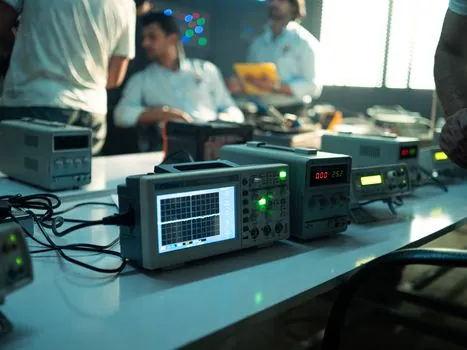
Three cases argue against the default digital panel meter. First, intrinsically safe or classified hazardous areas: the meter must carry the right ATEX/IECEx certification and the enclosure must preserve the IS barrier; a general-purpose digital meter installed in a Zone 1 panel is a safety incident waiting to happen, regardless of how accurate the ADC is. Second, pure visual trend applications: a 4½-digit numerical display cannot show "current is rising toward trip" the way a bargraph or analog sweep can, so for motor or load monitoring where trend matters more than absolute value, an analog or bargraph meter still wins [S1][S2].
Third, ultra-low-power or remote sites: a 4–20 mA loop-powered digital meter draws 3.6 mA at 24 V (about 86 mW) just for itself, leaving less headroom for the loop; an analog meter that needs no auxiliary power is the right call when every milliamp of the loop is spoken for by the sensor [S2]. The same logic applies on solar-powered RTU cabinets where parasitic meter current matters.
Verification, standards, and supplier checks
Two procurement signals catch most field failures before shipment. First, insist on a traceable calibration certificate with measured accuracy at three or more points across the operating range; a spec sheet that quotes only "±0.1% of range" is weaker than one that publishes the actual NIST-traceable test data [S3]. Second, evaluate the supplier on production capacity, defect-rate metrics, and factory-audit transparency, particularly for high-volume or mission-critical builds; a meter that fails QA at 0.5% on a 5,000-unit run is a 25-unit field failure, and the audit trail is what tells you whether to expect that rate again [S3].
For specific process loops, the ALC panel architecture will dictate whether the meter is a simple readout or part of a closed-loop controller. The display spec itself is governed by generic industrial panel-meter practice rather than a single IEC standard, so the practical references are the IP rating tables (IEC 60529) for ingress, IEC 61000-4 for EMC immunity, and the meter's own published accuracy vs. reading/range split. Where the meter is fitted into an architectural metal enclosure, the same thickness and joint logic covered in Cold Storage Metal Panel Selection applies to the surrounding structure, even though the meter itself follows electrical rather than structural spec rules. Track next: confirm the meter's actual tested accuracy at your operating point, and verify the supplier's published defect rate against your incoming-inspection sample size before signing off on a production batch [S3].