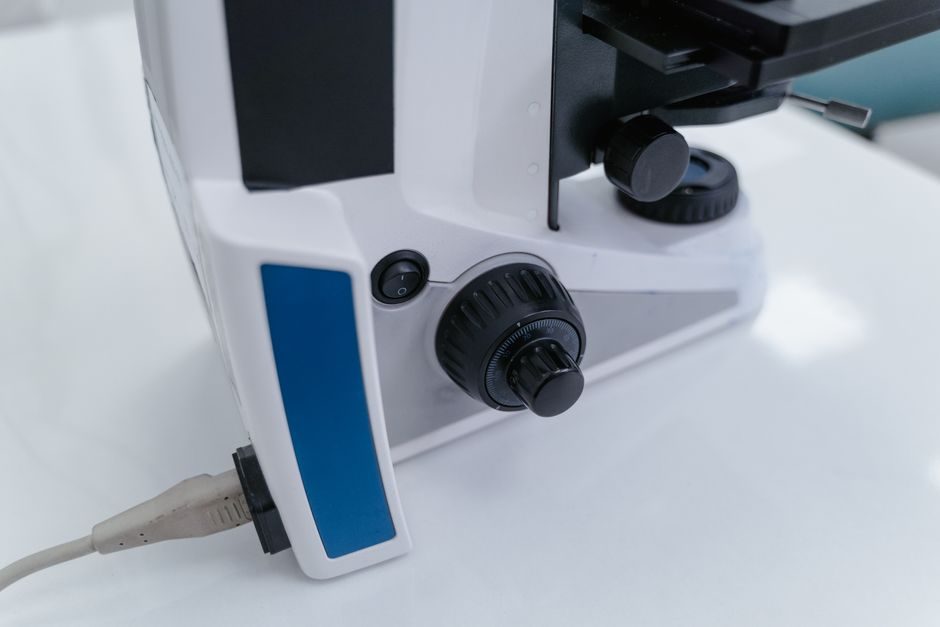
Specifying the wrong analyzer is a recurring root cause of water-quality audit findings: dissolved oxygen (DO) meters report mg/L or % saturation of O2 dissolved in aqueous streams, while moisture analyzers report ppm, %, or dew point of H2O in solids, gases, oils, and solvents, and the two cannot be cross-substituted because the analyte, units, and sensing chemistry are entirely different [S5][S9].
This comparison covers industrial and lab DO meters shipping as of 2026-06-22, with portable, benchtop, and online form factors priced from roughly USD 66.77 for entry-level pocket units to several hundred USD for Bluetooth and industrial online systems, and benchmarks them against moisture analyzers used in the same plants [S3][S6][S8].
What each instrument actually measures
A dissolved oxygen meter quantifies molecular O2 dissolved in water or aqueous process streams, with measurement ranges that span ppb to 40 mg/L depending on the electrode pairing and reported as mg/L, ppm, or % saturation [S5][S8][S9]. The benchtop DO meter offered by YK Scientific Instrument lists automatic temperature, salinity, and air-pressure compensation plus GLP compliance, three measuring modes (stable, timed, continuous), and is aimed at laboratory water-quality workflows [S1].
The two instrument families answer different process questions: DO meters answer "how much oxygen is in my water," while moisture analyzers answer "how much water is in my product or gas."
Sensor technologies inside the 2026 DO meter market
Polarographic and galvanic membrane electrodes dominate the DO meter market, both producing a current proportional to oxygen diffusing through a gas-permeable membrane; the CX-LDO-1605 lab DO meter accepts a DOS-808F polarographic electrode for ppb-to-ppm range work, while the CX-IDO-1304B industrial DO meter applies the same principle to boiler-feed and wastewater service [S4][S5]. Online DO analyzers such as those from YK use the same polarographic electrode family to deliver continuous ppb-to-ppm output for power-station and wastewater streams [S9].
Optical (luminescent) DO sensors are now standard in the portable segment: METTLER TOLEDO's InTap portable DO analyzer targets ppb-level measurement in brewery at-line work, and Bante's S60 Bluetooth DO meter pairs an optical sensor with selectable BOD, OUR, and SOUR modes for Android data logging at 0.2 mg/L accuracy, versus the 0.5 mg/L accuracy of the entry-level DOscan10 pocket tester with 1- or 2-point calibration [S3][S6]. Process engineers evaluating a dissolved oxygen meter should match the electrode chemistry to the application: polarographic for high-temperature boiler service, optical for low-drift portable work.
DO meter form factors and use cases in 2026

Pocket testers address education and aquaculture at low cost, exemplified by Bante's DOscan10 with 0.5 mg/L accuracy and a six-option setup menu [S3]. Benchtop units, including the YK benchtop model with GLP-compliant data handling and the Shanghai Cixi CX-LDO-1605 with 100-point memory and print output, fit QA/QC labs running BOD, COD, and feedwater checks [S1][S5].
Industrial online systems such as the CX-IDO-1304B and the YK ppb-to-ppm online analyzer with 4-20 mA output serve boiler-feed, condensate, and environmental wastewater loops, with parameters including elevation and salinity settable from the keypad [S4][S9]. Portable Bluetooth units like the Bante S60 and METTLER TOLEDO InTap cover brewery cellar, hatchery, and field calibration work where the operator must walk the line and log to a mobile device [S3][S6][S10]. Nanning Nobo's NPT-DO601 is the aquaculture-specific entry in the mid-range portable segment, marketed with a USD 88.00/case FOB price for hatchery operators [S2].
Moisture analyzer territory: when the right answer is not a DO meter
If the analyte is H2O in a non-aqueous matrix, a moisture analyzer is the correct instrument class, and DO meters will give meaningless readings because they cannot resolve water in oil, solvent, or powder. Moisture analyzers use loss-on-drying (infrared halogen heating + weighing), coulometric Karl Fischer titration, or vapor-phase techniques to deliver %, ppm, or dew point outputs, with a reference entry point on our moisture analyzer encyclopedia page. [S1]
None of these can be performed with a membrane-electrode DO meter, regardless of brand, because the membrane only admits O2, not H2O vapor in a non-conducting medium.
Selection criteria: a side-by-side decision matrix
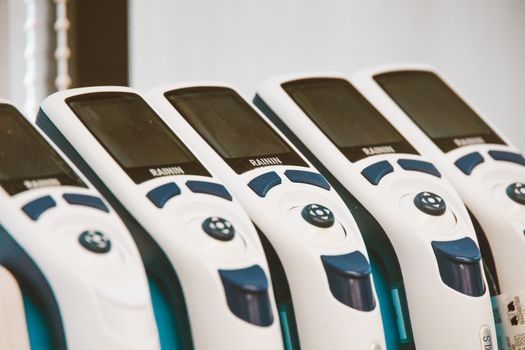
Four criteria separate the two instrument classes cleanly. (1) Analyte: DO meters quantify O2 in water; moisture analyzers quantify H2O in non-aqueous matrices. (2) Units: DO meters output mg/L, ppm, or % saturation; moisture analyzers output %, ppm, or °C dew point. (4) Calibration: DO meters are air-saturated-water or N2-purged calibrated with salinity and pressure compensation, while moisture analyzers use sodium tartrate dihydrate, certified water standards, or NIST-traceable dew-point generators [S1][S3][S5][S9].
Engineers should also map accuracy to the spec: Bante's DOscan10 pocket DO meter is specified at 0.5 mg/L, the S60 at 0.2 mg/L, and the CX-LDO-1605 lab model targets ppb-level accuracy with the polarographic electrode, which is a 10-100x tighter envelope than a typical halogen-loss moisture analyzer at 0.01% repeatability on a 50 g sample [S3][S5]. For breweries weighing in-line dissolved oxygen and surface finish QA in the same plant, the power meter vs energy meter surface finish process tuning comparison covers the adjacent electrical side of the same workflow.
Who a DO meter is for, and who should be looking at a moisture analyzer
DO meters fit aquaculture operators tracking fish-pond oxygen, water-treatment plants monitoring aeration basins, breweries measuring in-package and in-line O2 for shelf life, power stations verifying deaerator performance, and environmental labs running BOD/OUR/SOUR on wastewater [S2][S3][S4][S6][S10]. A METTLER TOLEDO white paper frames the portable DO meter as the calibration tool of choice for brewery in-line sensors, citing traceability between at-line and inline readings as the primary engineering driver [S10].
Moisture analyzers are the right call for QA/QC on incoming powders, in-process drying of bulk solids, custody-transfer water-in-crude and water-in-diesel measurements, compressed-air and natural-gas dew-point verification, and pharmaceutical residual moisture testing. Mixing the two, for example using a DO meter to "check water content" in a solvent, returns the current produced by any dissolved O2 in the solvent rather than the H2O mass, which is not the quantity the operator actually needs.
Common failure modes and limitations
DO meter drift is dominated by membrane fouling, electrolyte depletion in galvanic cells, and air-calibration errors when barometric pressure is not entered, all of which are explicitly addressed by the auto-temperature/salinity/pressure compensation built into modern meters like the YK benchtop unit [S1]. Optical DO sensors remove membrane maintenance but introduce photobleaching of the luminophore and stirring/sensitivity trade-offs below 0.1 mg/L [S3][S6].
Specifying the wrong analyzer for a given matrix is the dominant root cause of bad data in both categories, not sensor noise.
Sourcing, standards, and trackable signals
Procurement can validate a DO meter spec against ISO 5814 (dissolved oxygen determination by electrochemical probe) and ASTM D888 (DO by luminophore and by electrometer) for lab and field work, with manufacturer documentation such as the Bante DOscan10 accuracy statement (0.5 mg/L) and S60 statement (0.2 mg/L) used as acceptance evidence [S3]. Brewery and power-station deployments should additionally require GLP-compliant data handling, which the YK benchtop meter and CX-LDO-1605 both claim [S1][S5].
For moisture analyzers, USP 731 (loss on drying) and ASTM D6304 (water in petroleum by coulometric KF) are the typical reference points; verifying the unit is matched to the standard prevents rework during audits. The next trackable signals to watch are (a) wider adoption of optical DO sensors replacing membrane types in portable segments, exemplified by the Bante S60 and METTLER TOLEDO InTap launches, and (b) the migration of online DO analyzers such as the YK ppb-to-ppm and CX-IDO-1304B into IIoT platforms with 4-20 mA plus digital output, mirroring the pH meter vs online pH analyzer transition that is already visible across the water-quality instrument family [S3][S4][S6][S9].
Related: clamp meter.