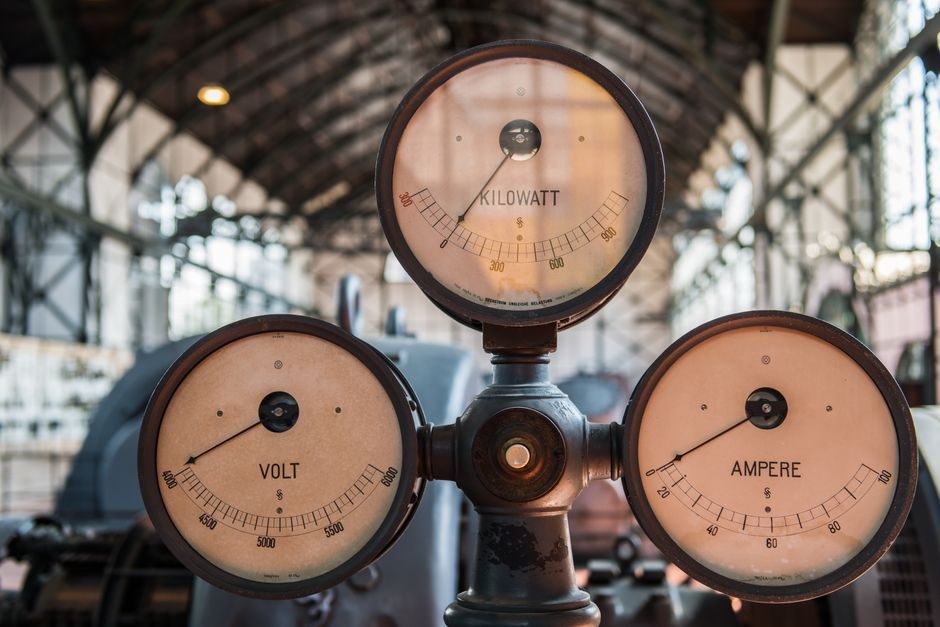
A power meter outputs instantaneous electrical power in kW (or W), while an energy meter integrates that power over time into kWh — and surface-finish lines use both, but for different jobs. On a CNC grinder, a power meter on the spindle drive exposes wheel-dress cycles as 0.3–0.8 s dips; on a laser-polishing cell, the same instrument catches a 2% drift that would push Ra above the print [S2][S5].
Energy meters do not see those transients. They sit on the cell feeder, totalize kWh per shift, and feed cost/ISO 50001 energy reviews. Pairing the two — power on the process load, energy on the facility feed — is now standard practice in finishing cells that quote to tight Ra or Rz tolerances [S3][S7].
Why surface-finish engineers need both, not one
Surface roughness Ra is a function of energy delivered per unit length of cut or per pulse of laser. NIST surface-metrology work shows the power spectral density (PSD) of a ground surface is broadband and quasi-random, so any power drift in the spindle drive shows up as waviness (Wc) and longer-wavelength form error rather than as Ra shift alone [S1]. A kWh totalizer cannot diagnose that — it only sees net consumption.
Power-quality meters add a third axis: harmonic distortion, voltage sags, and crest factor on the feed. Data-center studies cited by Verdigris argue waveform-level visibility is required where even brief sags cause process drift; the same logic applies to polishing and buffing cells where variable-frequency drives feed the spindle [S8].
Selection criteria: what to specify per application
First, fix the measurement window. Surface-finish runs last seconds to minutes; the meter must sample faster than the shortest relevant event. Spindle dressing on a cylindrical grinder pulses every 0.3–0.8 s, so a meter with 100 ms update and 0.2% accuracy class is the practical floor [S2].
Second, fix the integration boundary. Energy meters should match the billing or reporting period — a 15-minute interval aligns with ISO 50001 energy reviews, while a per-part counter aligns with cellular cost roll-ups [S3]. Third, fix the signal chain: 4–20 mA analog, Modbus RTU, or Ethernet — most finishing OEMs now expose Modbus TCP on the cell PLC so a single power transducer can publish to both the dashboard and the energy roll-up [S7].
Comparison: power meter vs energy meter vs power-quality meter
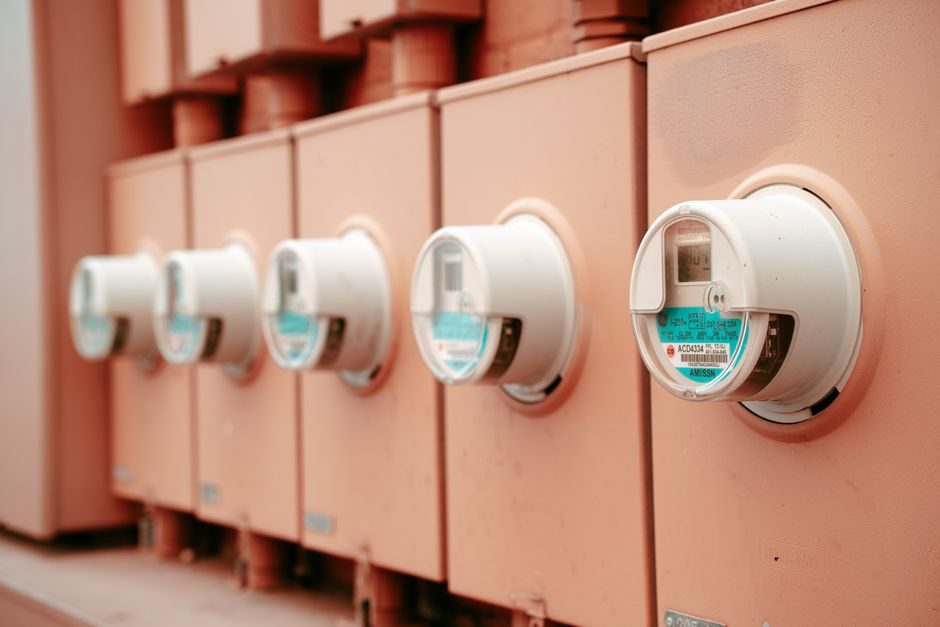
Three device classes, three decision axes. Power meters win on time resolution (sub-second) and process diagnostics; energy meters win on cost allocation, billing, and cumulative kWh for ESG/ISO 50001 reporting; power-quality meters add THD, sags, and transients that correlate with waviness defects on ground or honed surfaces [S2][S3][S8].
For procurement, the rule is straightforward: specify a power meter on every finishing load that touches tolerance (grinder, EDM, laser polisher, superfinisher); specify an energy meter on every feeder and submeter where cost is allocated; specify a power-quality meter only where the upstream supply is known to be dirty (welding, large VFDs, shared bus). A plant that skips the power meter cannot diagnose Ra drift; a plant that skips the energy meter cannot defend its kWh-per-part number [S4][S7].
Who it is for — and who it is not for
This dual-instrument approach pays off in cells where energy-per-part drives cost and where surface roughness is a release criterion: aerospace blade finishing, medical implant polishing, gear honing, and additive-manufacturing post-processing. Aim Dynamics and Eastron both note that power meters are aimed at operational monitoring, while energy meters are aimed at billing and historical analysis — the two audiences rarely overlap on a single instrument [S5][S7].
It is overkill for a deburring cell running 30 seconds per part with a hand-held grinder — a single kWh sub-meter on the bench feeder is enough. It is also the wrong tool for lab metrology: a stylus profilometer or optical confocal is what measures Ra directly; the electrical meter only correlates with the surface outcome [S10].
Limitations and failure modes
Power-meter readings on VFD-fed spindles can be misleading if the meter is installed upstream of the drive — the drive draws apparent power, not the real mechanical power delivered to the wheel. Always meter on the DC bus or at the motor terminals for spindle-power-based process control [S2]. Energy meters that average across a 15-minute window will mask a single bad part produced in a 90-second cycle; pair them with the per-part counter, do not replace it [S3][S7].
Laser-finishing cells add a third pitfall: a laser power meter measures optical power at the workpiece, not electrical power drawn from the wall. A 2% optical drift can double Ra on a sensitive coating while electrical consumption stays flat — so a laser power meter is the relevant instrument for surface finish, not the electrical submeter [S6].
Standards, sourcing, and integration notes
Surface-roughness callouts on drawings should still reference ASME Y14.36M surface texture symbols; the electrical meters do not replace the symbol, they support the process that achieves it [S10]. For energy reporting, ISO 50001 energy reviews and most utility rebate programs require interval data of 15 minutes or better — verify the meter you buy supports that interval over Modbus or BACnet before purchase [S3][S7].
For surface-finish correlation, log power-meter output alongside the in-process Ra signal and inspect with the NIST-style PSD approach when a chronic waviness issue appears — the PSD curve separates periodic dressing marks from random grit interaction, which a single Ra number cannot [S1][S9]. MES integration is now common: power and energy streams publish to the cell historian, where predictive-maintenance models flag drift before parts go out of spec [S6].
Trackable signals to watch: (1) more VFD and servo-drive vendors exposing DC-bus power over EtherCAT or PROFINET, which lets a single transducer cover both spindle and feed-axis power; (2) energy meters with built-in ISO 50001 reporting templates reducing integration cost; (3) growing adoption of laser-power meters on polishing and additive cells where the electrical kWh is the wrong variable for surface-finish control [S6][S7].
Related: pressure transmitter, flow meter, industrial valve.