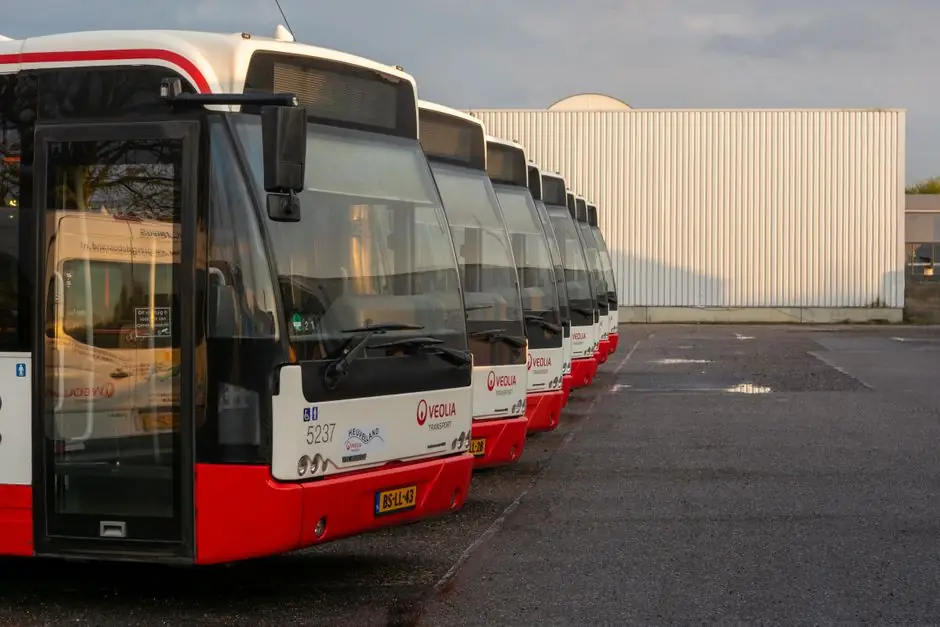
An AGV fleet management system is generally required once more than one vehicle must coordinate traffic, tasks, charging, or system connections in a shared operating area [S4][S7][S8].
The practical threshold is not the vehicle count alone, but whether separate AGVs can interfere with each other or receive conflicting assignments [S4][S8].
When One AGV Can Operate Without Fleet Management
A single AGV does not inherently require fleet management software if it has one defined task, one controlled route, and no shared vehicle traffic to coordinate [S2][S8]. The vehicle controller can execute commands and report its operating state without dispatching work among competing units [S8].
This arrangement suits a point-to-point transfer, a dedicated production-line loop, or a low-traffic application with no second vehicle entering the operating space [S2][S3]. AGVs are used for raw-material staging, work-in-process transport, and finished-goods movement, and a dedicated unit can perform one of these functions without fleet-level arbitration [S2].
Even without multiple vehicles, the installation still needs vehicle-level safety controls, route design, charging procedures, and emergency-stop planning.
Why Two AGVs Change the Control Problem
Two or more AGVs create shared-resource problems that a single-vehicle controller does not resolve, including intersection priority, narrow-aisle access, docking conflicts, and deadlock avoidance [S4][S7]. A flexible manufacturing system containing more than one AGV may require traffic control so vehicles do not run into one another [S7].
Fleet management provides four concrete coordination functions: task dispatch, traffic management, charging management, and integration with systems such as warehouse management systems and manufacturing execution systems [S4]. Dispatching considers vehicle availability, load capability, lifting height, task priority, travel distance, available routes, and battery status [S4].
That changes the engineering basis of the project. Instead of sizing a vehicle against one route, the operator must size fleet capacity against shared bottlenecks, charging demand, and transport priority. Adding vehicles without that coordination can create congestion rather than additional throughput [S4].
Single AGV versus Multi-AGV Control
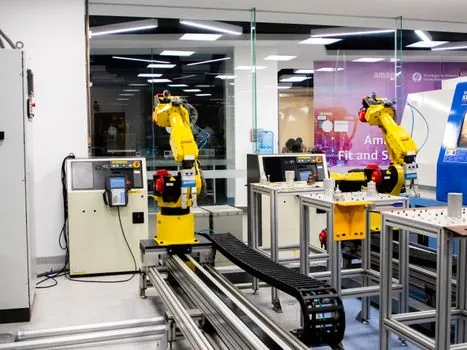
Comparison criterion: a single AGV is normally simpler to commission, while a multi-AGV installation needs centralized dispatch, traffic control, charging allocation, and equipment integration [S4][S8].
For broader context on AGV fleet sizing, see AGV and AMR fleet sizing and integration.
Do Two Vehicles Always Need Full Fleet Software?
Two AGVs do not automatically require a large enterprise fleet-management platform, but they do require an engineered traffic-control method whenever their routes or work areas can conflict [S4][S7]. A fixed, physically segregated layout with no shared aisle or intersection may permit simpler local control, while a shared production environment generally needs centralized arbitration [S7].
Traffic coordination can use route reservations, intersection priorities, traffic rules, or dynamic path planning [S4]. A system that combines fixed AGVs and more flexible AMRs may also require controls capable of handling both vehicle types and their different fleet-software requirements [S6]. The comparison is not simply one robot versus many, because each additional vehicle changes congestion, charging, and dispatch conditions [S4].
There is no defensible universal cut-off at two, three, or ten vehicles. The cut-off is operational interdependence. If another vehicle can delay a task, occupy a charging position, enter a shared intersection, or take over work after a failure, fleet-level coordination has operational value [S4][S8].
Traffic and Elevator Capacity Are Separate Constraints

AGV fleet management does not remove infrastructure capacity limits.
PG 18-10 is a 15-page AGV and AMR System Design Manual dated May 1, 2023.
For facilities combining robotic transport with vertical circulation, the distinction between shuttle systems and AGVs is operational rather than cosmetic. Each handles movement in a different way, but shared lifts, queues, and traffic priorities still have to be engineered into the material-flow design [S1].
What Fleet Management Must Coordinate
An AGV fleet management system integrates three defined modules: task management, battery recharge management, and path planning [S8]. Task management allocates transport work, recharge management coordinates vehicle availability with charging needs, and path planning determines movement through the operating environment [S8].
Commercial fleet-management guidance adds a fourth layer, system integration, connecting vehicles with workflows and enterprise systems [S4]. Dispatch decisions can match a request to a vehicle based on availability, equipment capability, task priority, travel requirements, and battery status, rather than assigning work merely by proximity [S4].
This architecture is valuable because vehicles, workflows, and infrastructure do not fail or become available independently. A low-battery vehicle cannot accept a distant task, a congested route can increase travel time, and a charging conflict can leave dispatch with fewer viable units [S4]. For mixed vehicle fleets, the AMR robot comparison becomes relevant because navigation autonomy changes the coordination requirements each vehicle places on traffic and route planning [S6].
Safety and Standards Do Not Replace Fleet Coordination

Fleet management software is not a substitute for the applicable safety standard, and software coordination does not make AGV and AMR installations equivalent in every jurisdiction [S1][S3]. The VA manual cites ANSI/ITSDF B56.5 (2012) for AGV installations and states that ANSI/RIA R15.06 does not apply to or satisfy requirements for autonomous mobile robots [S1].
North American material discusses ANSI/ITSDF B56.5 and ANSI/RIA R15.08 as the relevant driverless industrial truck framework, while ISO 3691-4 is identified as the international standard for driverless industrial trucks [S3]. These documents address safety, not the operating logic that chooses which vehicle receives the next task or which vehicle enters a contested intersection [S3][S4].
The project therefore needs both layers: a compliant vehicle and installation design, plus verified control logic for traffic, dispatch, charging, and fault response [S1][S4]. Interoperability can improve the software choice. VDA 5050 version 3.0, released in March 2026, supports orchestration of mixed-brand AGV and AMR fleets through one fleet manager [S3].
How to Set the Requirement for a Project
Set the fleet-management requirement by testing the operating scenario against four questions: Can two vehicles request the same aisle or intersection, Can charging create resource contention, Can tasks have different priorities, and must the system exchange work with a WMS, MES, elevator, or other automated equipment [S4][S8].
If the answer to all four is no, a dedicated single-vehicle controller may be sufficient. If any answer is yes, specify centralized traffic and dispatch functions, then define dispatch inputs, charging policy, route rules, deadlock response, system interfaces, and operator visibility [S4][S8].
Validate the result with measured traffic rather than vehicle count. Record trips by hour, peak queue length, intersection occupancy, charger utilization, deadlocks, task completion time, and battery-related dispatch constraints. Compare those values with the target takt and route capacity before adding vehicles, because a larger fleet without coordinated traffic can reduce material-handling performance [S4].
The trackable signal is not the installation date or a purchased robot count, but the first operating report showing dispatch assignments, charging conflicts, blocked intersections, and reassigned tasks after another vehicle is added [S4].