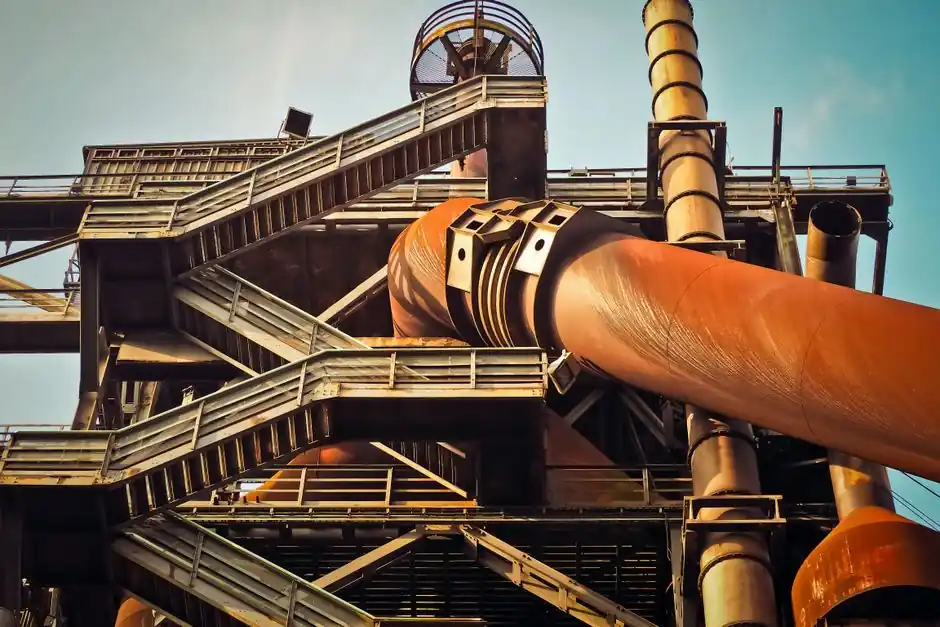
A pneumatic conveying line generally requires a receiver that separates solids from conveying air, normally by combining a collection hopper with filtration.
The practical question is not whether dust collection exists, but whether the receiver needs a full dust collector, a bin vent filter, or a separate filter downstream of a cyclone.
Why the Receiving End Must Separate Solids and Air
Pneumatic conveying moves powders, granules, pellets, and other dry bulk solids through an enclosed pipeline using pressure differential and gas flow. A complete system includes an air mover, feeder, conveying line, receiving or termination vessel, and dust collection system [S3]. The receiver is therefore not merely an outlet, because solids must discharge from the system while the conveying air continues to a defined filtration endpoint [S2][S3].
That requirement applies to pressure and vacuum arrangements. In a pressure system, an air mover at the line inlet pushes material toward the receiver. In a vacuum system, an air mover at the line outlet pulls material and air toward the receiver [S3]. Dense-phase systems commonly place the fan after the dust collector, producing negative pressure at the collector and separating the material before the air mover [S6].
The basic reason for filtration is containment. Closed conveying lines reduce dust release along the route, but they do not remove the dust carried in the exhaust air. A filter or equivalent separation device is needed to retain airborne fines before the air is discharged or recirculated [S2][S7].
Receiver Configurations Compared by Decision Criteria
The simplest receiving arrangement is a material collection hopper equipped with a filter. The air and solids enter below the filter elements, solids accumulate in the hopper, and remaining dust reaches the filter media. A pulse-jet cleaning system dislodges deposited dust so that the cake can fall back into the product stream [S5].
For layout purposes, a bin vent filter can be mounted directly on a receiving vessel, while a standalone hopper and filter can be placed where access and structural support are easier. Air-Cure describes enclosed horizontal or vertical pneumatic lines, commonly using 4–6 inch pipe for distances up to 1,500 ft, with collection equipment relocated to grade for easier maintenance where practical [S1].
Selection Criteria for the Dust Collector
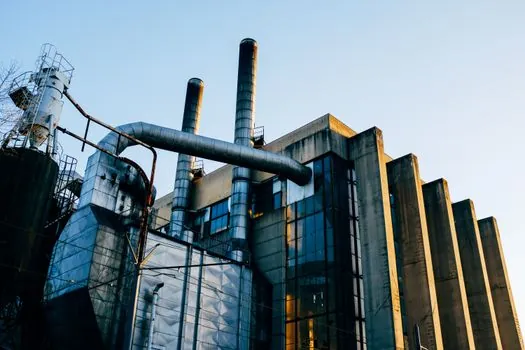
Collector sizing should begin with the solids arrival rate, conveying-air flow, particle size, bulk density, and the required discharge pressure. These variables determine whether the receiver can perform both separation functions or whether a cyclone should remove the bulk solids before the final filter [S3][S5]. Material flow and air flow cannot be evaluated independently because the receiver must accept the full conveying stream without causing recirculation, filter blinding, or loss of pneumatic transport.
Filter location also affects wear. The preferred inlet places the material stream below the filters so that the free area beneath the elements allows most solids to disengage before reaching the media. A top or side inlet can be used, but clearances must prevent direct impact between entrained solids and filter elements, because impact can wear the media and produce early leakage [S5].
For dense-phase service, positioning the fan after the collector creates a negative-pressure arrangement that can suit fragile products [S6]. This is a layout decision, not proof that filtration can be omitted. Air still passes through the conveying line and receiver, and the material-air mixture must be separated before the product is discharged [S3][S6].
Where the System Fits and Where It Does Not
Pneumatic conveying is suited to dry powders, flakes, pellets, grains, food ingredients, minerals, and many chemical products. Typical examples include flour, sugar, cement, sand, and plastic pellets [S2][S3]. Its enclosed conveying line can route material around plant equipment and allows collectors to be located at grade or in locations with easier maintenance access [S1][S2].
Wet pastes, slurry, and paste-form products are generally unsuitable because the carrier flow cannot move them as freely flowing solids [S2][S3]. A dust collector also does not make an unsuitable material conveyable. Material conditioning, feeder selection, and line design must be resolved before collector sizing begins.
The system is not automatically the better choice where power consumption dominates. A pneumatic conveying system requires energy to move material and includes a motive air source, such as a fan or blower [S3].
Open mechanical systems may generate dust at transfer points, while pneumatic lines are enclosed, but the pneumatic route shifts the dust-control problem toward the receiver and air mover [S2][S3]. That is the central trade-off, not a free reduction in emissions.
Real Application Patterns
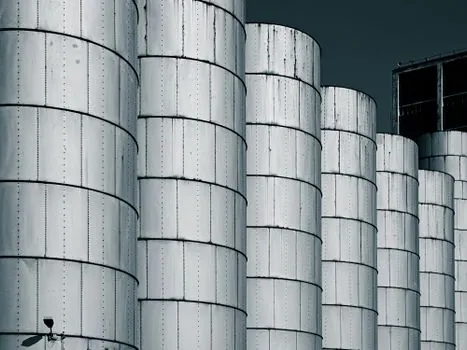
A pneumatic transfer arrangement can move collected dust through an enclosed line to a plant silo, yard silo, or crusher surge bin. A mechanical separator such as a cyclone deposits the dust at that destination, and the conveying air is then vented to a local dust collector [S1]. This configuration separates removal of dust from a dust collector, transportation of that dust, and final air filtration into distinct stages.
The arrangement also changes handling practice. Direct pneumatic transport to a discharge point away from a conveyor belt eliminates re-entrainment and end-of-run purge dusting at that belt [S1]. Collectors can be positioned at grade for easier maintenance, which may avoid the structural supports needed to place them above a conveyor for gravity discharge [S1].
Fine coal dust can be agglomerated before transport, although the process adds complexity. Water and dust must enter the mixer consistently, so a surge hopper sized for end-of-run purge is required, together with pressure-relief venting, fire detection, suppression, and level indication. Agglomeration equipment also requires a heated building for freeze protection [S1].
For process duties, the filter can sometimes be mounted directly on equipment such as a dry mixer or a larger hopper, allowing rapid loading. However, a clearly defined solids-and-air separation assembly remains preferable when downstream material quality, isolation, or maintenance access is critical [S5]. The selection comparison between dilute and dense pneumatic conveying becomes relevant when product fragility and receiver pressure dictate whether a fan-downstream, negative-pressure layout is preferable.
Failure Modes, Dust Control, and Sourcing
The common failure mode is not merely a dirty receiving vessel. It is loss of containment caused by filter damage, poor inlet clearance, an unsuitable discharge valve, or an air mover placed in the wrong hydraulic position. Direct solids impact on filter media can cause wear and early leakage [S5]. A hopper that cannot isolate collected solids from pressurized air can also compromise continuous operation, which is why continuous service may require a rotary airlock [S5].
Dust streamers and visible emissions at the receiver can also result from poor pneumatic configuration and inadequate separation. Coperion identifies receiver design, air balancing, and available retrofit options as controls for reducing dust and streamers [S8]. Dust collection equipment should therefore be specified with the conveying system, not added after startup.
For procurement, request the full material specification rather than a generic dust collector: conveying direction and pressure profile, air-flow range, solids rate, particle-size distribution, bulk density, hopper and filter volume, inlet arrangement, outlet pressure, valve type, cleaning method, and material of construction. These fields connect directly to the receiver architecture described for pneumatic conveyors, while avoiding the incorrect substitution of a mechanical belt conveyor receiver arrangement.
Track two verifiable signals before purchase: the calculated air-to-solids ratio at the receiver and the expected filter loading with and without a primary cyclone. If either value is unavailable, collector sizing remains provisional.