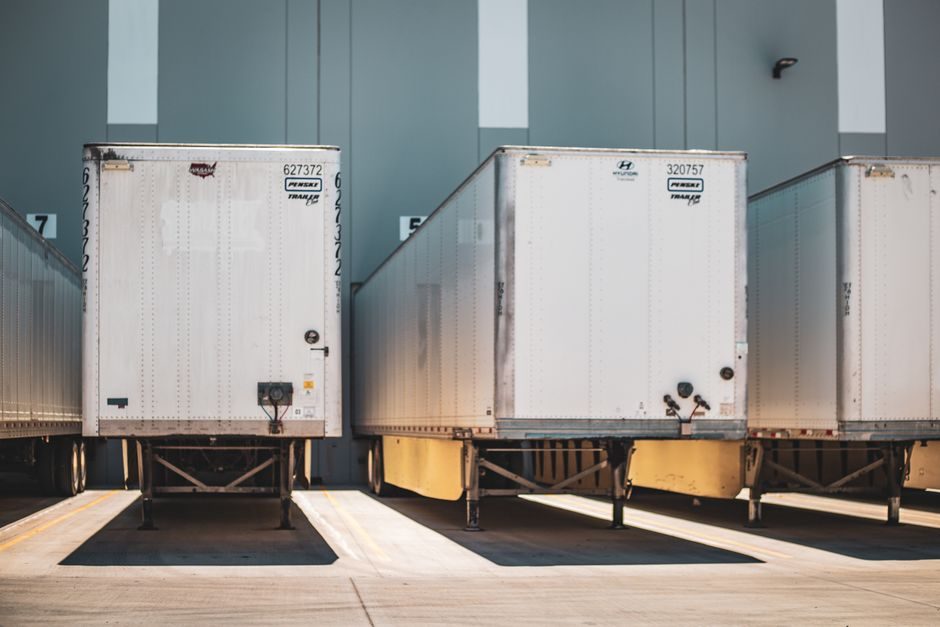
Installation sequence for a dock leveler is driven by three decisions made before the slab is poured: capacity class, operation mode (hydraulic / mechanical / air-powered), and lip geometry (swing-lip vs. articulated vs. telescopic) [S1][S2].
Onder Grup's HR-series hydraulic levelers ship rated from 2 tons to 12 tons and are specified for closed-pit layouts only, with the rear of the frame requiring support from beneath and the front suspended on curb angles [S1]. Rite-Hite's RHH-5000 carries ANSI MH30.1 certification for three capacity offerings and integrates a Safe-T-Strut through-the-lip design rated to withstand forklift impacts at 4 mph [S2].
Pre-Install Pit Geometry and Capacity Class
Closed-pit installations for hydraulic levelers in the 2–12 ton range demand a fully welded, self-supporting frame suspended on curb angles at the front, with rear support cast or shimmed from below the pit floor [S1].
Width and length are matched to the leveler deck plus a minimum 6 in. (152 mm) lip-extension clearance at the pit nose; the Constant Radius Rear Hinge on the RHH-5000 maintains a ~1/3 in. (8 mm) gap to the warehouse floor to reduce whole-body vibration during forklift transit [S2]. Capacity class is the first selector: light-duty warehouses (≤6 ton) typically take mechanical pull-chain units such as the RHM-4000, while high-frequency heavy-load sites step up to hydraulic piston models [S2][S4]. When the spec is wrong for the truck mix, the failure mode is a hogged-out front hinge within the first 12 months — replace, do not shim.
Anchoring, Front Curb Angles, and Rear Support
Anchor-bolt pattern follows the OEM frame drawing; the HR-series bolts through the curb angle at the front while the rear is supported from beneath, not from the pit wall, which is the most common installer error [S1].
Four-sided rectangular box construction with interlocking welded stringers and two extra I-beams under the deck is the modern baseline for hydraulic units, and the formed front header must bear on a continuous curb angle, never on point shims [S2]. Rite-Hite specifies a PitMaster X under-leveler seal option to block energy loss and debris at the side and rear gaps; if specified, install the seal before the first leveler cycle, not after the first forklift incident. Field acceptance is a 0.062 in. (1.6 mm) maximum shim stack at any corner; anything beyond that calls for re-grouting the curb angle.
Lip Deployment: Swing-Lip, Articulated, and Telescopic
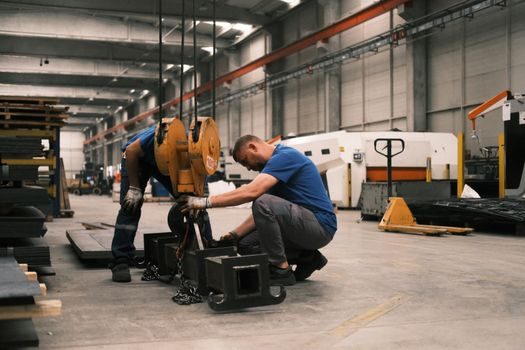
Articulated and swing-lip geometries deploy automatically on a hydraulic unit and need only electrical hook-up of the electro-mechanical control cabinet to CE spec; the lip hinge stop is factory-set and should not be field-adjusted [S1].
Lip chamfer geometry directly affects dock-shock transfer: the RHH-5000 ships a 3 in. extended lip chamfer versus a traditional ~1 in. chamfer, and pairs with Two-Point Crown Control to remove the "speed bump" effect at the front hinge [S2]. Safe-T-Lip barrier (5 in. or 7 in.) is a slot-lip design that blocks a 4 in. vacant drop-off while still allowing end-loading with a slotted lip — specify when the trailer population includes a high share of air-ride suspension units. For a comparison of how the three main lip styles behave under load, see the dock leveler types and classifications breakdown.
Hydraulic, Mechanical, and Air-Powered Setup Compared
Hydraulic units are the only choice for capacities above ~6 ton or for any site running more than ~50 trucks per day; mechanical pull-chain levelers such as the RHM-4000 suit low-frequency economical docks and need only a manual pull-chain deployment, no power [S4].
Air-powered levelers from Chinese OEM lines ship at 3,000 SET/month production capacity, MOQ 1 SET, and use plant air to inflate a bellows instead of hydraulic fluid — a useful option for cold stores where glycol hydraulic fluid would thicken [S7]. Trade-off summary: hydraulic (highest cap, highest safety-device density, ~20-year structural warranty on premium builds), mechanical (lowest capex, highest operator-injury risk on uneven trailer beds), air-powered (mid capex, lower energy, but bellows replacement at 5–7 year intervals). For broader material handling equipment selection context, the same front-hinge geometry rules apply.
Safety Devices, Velocity Fuses, and Lip Restraints
A non-adjustable velocity fuse on the hydraulic cylinder must stop a free-fall within 3 in. (76 mm) under full platform load — this is a bench-test value, not a field-set value, and any installer that "tunes" it has voided the cert [S2].
Safe-T-Strut must be inspected before first live load: visually confirm the strut runs through the lip hinge over the full operating arc, then cycle the lip 10 times with no load. The STR-4200 trailer restraint is recommended for any high-capacity install and uses hydraulic cylinders to stabilise air-ride suspension trailers against the dock; the restraint is a separate circuit, not a branch of the leveler hydraulics. Visible inside-building maintenance view ports are now standard on premium hydraulic units and are mandatory for any OSHA-equivalent jurisdiction that requires positive lockout verification.
Commissioning Tests, Acceptance Criteria, and First-Load Sign-Off
Acceptance testing follows the OEM checklist plus ANSI MH30.1 performance testing for any hydraulic unit rated above 6 ton, with three documented cycles at 100% rated load before the first revenue truck [S2].
Step-by-step: (1) verify pit dimensions against the leveler submittal drawing, tolerance ±3 mm; (2) check curb angle level across full width, max 1.5 mm/m slope; (3) torque anchor bolts to OEM value in two passes (50% then 100%); (4) cycle lip 10 times unloaded, then 3 times at rated load; (5) measure Constant Radius Rear Hinge gap (target ~1/3 in., 8 mm); (6) test velocity-fuse free-fall stop (must arrest within 3 in. / 76 mm); (7) confirm Safe-T-Lip drop-off barrier blocks a 4 in. probe; (8) energise control cabinet to CE spec and verify interlock with dock door [S1][S2]. Sign-off should reference the OEM installation manual revision, the rated load (e.g. 6,800 kg / 15,000 lb for the HR-series mid-band), and the technician's name. For facilities juggling a dock upgrade alongside other warehouse capex, a total-cost-of-ownership lens on wear-service drivers translates directly into lip-cycle budget. Once the leveler is signed off, register it with the OEM connected-platform service (Dok-Commander / Rite-Hite ONE) for real-time alerts and uptime tracking, and log the velocity-fuse test certificate in the maintenance file before the first shift uses the dock.
For component-level specifications, see dock leveler, linear guide, and crossed roller guide.