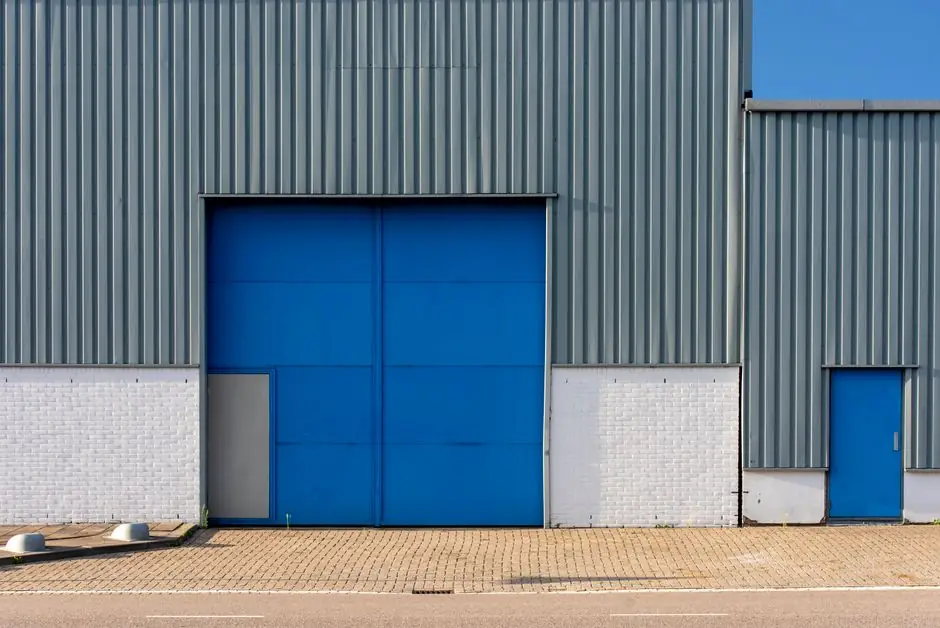
A perimeter brush seal is the lowest-cost layer in a dock leveler envelope strategy, and it works by stuffing dense nylon filaments into the side and rear gap between the leveler deck and the poured concrete pit wall so conditioned air stops leaking past the platform [S1][S3].
Unsealed perimeter gaps cost roughly $400 per dock position per year in heated/cooled air loss, and rodent entry into a regulated food or beverage facility has been valued at up to $10M per incident, so the brush seal is sized and selected against both infiltration and pest criteria [S2].
Why a brush, not a foam or vinyl wiper, for under-platform infiltration
Brush seals stop roughly 99% of air infiltration at the dock perimeter and run up to 3x more effective than equivalent vinyl seals, because the filament matrix conforms to irregular concrete and tolerates the deck pivoting during above- and below-dock cycling without scraping the pit wall [S1][S6].
A brush assembly on a factory-installed perimeter system uses a triangular open-cell foam primary seal covered in reinforced black vinyl and held by a 1" aluminum retaining bar, plus a downward-angled secondary seal that maintains contact up to 9" above dock level when the deck is parked high [S1]. The brush layer is a tertiary addition on top of that pivoting foam pair, fitted with dense nylon in an aluminum track so the filament bundle can be replaced in the field without disturbing the structural seal [S1].
For a leveler that stores below dock level, the brush is mounted to the side of the platform and slides in or out of a galvanized channel welded to the leveler, which means the seal is set by the gap measured between the deck edge and the pit wall, not by the deck length [S2].
Gap-driven sizing: filament length, holder, and channel selection
SEALEZE catalog data exposes filament lengths from 0.41" (A190CLA04BL) up to 5.00" (F590CLA505BL), with seven holder sizes (A through G) and exposed filament lengths at 0.5", 0.94", 1.0", 1.19", 1.5", 1.61", 2.0", 2.5", 2.53", 3.0", and 4.0" to match typical 1" to 2" side gaps plus wider mis-poured pits [S3].
Rite-Hite splits the same logic into two SKUs: NB-1 brush for a 1" gap, NB-2 brush for a 2" gap on Rite-Hite Jumbo Levelers and for pits poured out of tolerance, both sliding in a galvanized channel welded to the side of the leveler [S2].
Weldable kits ship as 96" sections and pair the brush with a T- or L-shaped steel holder (for example BT90CLA10BLKIT8 and DD90CLA30BLKIT8) so the installer can weld the holder directly to the leveler frame where a slide-in channel is impractical [S3]. For comparison across the dominant options on a single decision matrix:
Decision criteria for a perimeter brush seal, lined up against the main installation types in current OEM catalogs:
1. Gap size match: Rite-Hite NB-1 (1") vs NB-2 (2" gap, jumbo levelers and mis-poured pits) [S2]; SEALEZE A through G holders cover 0.41" through 5.00" exposed filament, with multiple filament lengths inside each holder family for fine tuning [S3].
2. Mounting method: slide-in galvanized channel welded to the leveler side (NB-1, NB-2, fabric, PT-2 vinyl) vs weld-on T/L steel holder with brush or PVC flap (SEALEZE weldable kits) vs tek-screw mounted teardrop foam [S2][S3].
3. Replacement and maintenance: brush filament in aluminum or galvanized track is field-replaceable; foam-and-vinyl pivoting seal rotates with the deck and is marketed as no-maintenance but cannot be field-re-tensioned once the foam takes a compression set [S1][S3].
4. Pest and cold-storage suitability: brush is recommended against rodents where vinyl seals are not, because rodents can pass through vinyl creases and chew the plastic; teardrop and fabric seals hang below the deck for below-dock operation but do not match brush on rodent exclusion [S2].
Where the brush goes: sides, rear hinge, and pull-chain openings
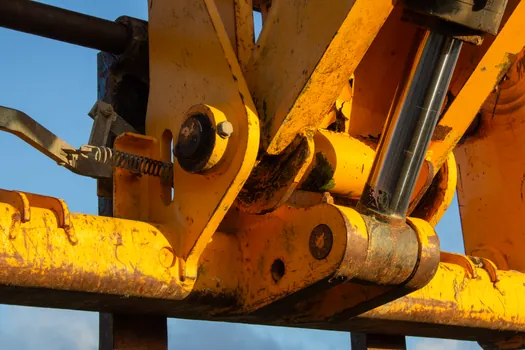
Brush and rubber seals fill the gaps between the leveler deck and the curb angles along the sides and rear, and they are the only category that can be wrapped around the rear hinge geometry where the deck pivots, typically paired with a 2"x3" foam block or 1" diameter neoprene rope at the hinge line [S3][S7].
The rear hinge on a pit-style leveler is a separate leak path because the hinge leaf moves every cycle, and SEALEZE ships a HINGE-SEAL foam block (2"x3"x8') plus a 3/8"x7' steel stabilizer pipe (HINGE-SEAL-PIPE) and a cut-to-order RS10NEOPR 1" neoprene rope as alternatives for that hinge gap [S3].
For levelers with pull-chain operation, a circular brush ring seal fits over the chain opening in the deck to block air, dust, debris, insects, and rodents through what is otherwise a fixed-diameter hole in the platform; the same hole is sealed from below on levelers that use a lanyard cup by a durable polyurethane cup seal [S2][S4].
Specifying against the deck, not just the gap
Brush and rubber seals are referenced as a kit that includes the side seals, rear seals, and the rear hinge seal, and the kit is matched to the leveler manufacturer and model rather than to a generic gap dimension, because the curb angle geometry, hinge style, and lip engagement differ between hydraulic, air-powered, mechanical, and edge-of-dock levelers [S7][S8].
An Energy Guard style system is factory installed on new equipment, with the perimeter seal rated up to 9" above dock level, no under-deck parts or pit-floor assemblies, and unrestricted pit access for cleaning and inspection, so specifying a brush-only retrofit on a leveler that was not designed for a factory perimeter kit will not deliver the same pivoting-seal behavior [S1].
A dock leveler deck plate is typically specified separately from the seal kit, and the deck plate thickness and steel yield grade set the platform's conductive heat loss while the brush seal sets the perimeter convective loss, so a full envelope spec needs both decisions on the same drawing. A perimeter platform scale installed in the same pit has its own gap geometry and is sealed with a different kit, which is why dock leveler seal kits are not interchangeable with pit scale seals. A suspended platform used at the same dock for maintenance access is sealed at its own perimeter and does not share a brush part number with the leveler.
Limits, failure modes, and what a brush will not do
Brush seals do not seal the underside of a stored leveler the way a lanyard cup or full under-leveler curtain does, because the brush only contacts the side and rear curb angles, so the front of the pit and any below-dock depression remain open paths unless a separate under-leveler seal is added [S1][S2].
Filament bundles take a permanent compression set over years of cycling against a concrete pit wall that drifts out of plumb, and the seal is only as good as the aluminum or galvanized track; once the track deforms, the brush must be replaced as a unit, not refilled, which is why brush kits ship as full 96" sections rather than as bulk filament [S3][S5].
Vinyl and teardrop foam seals fail in cold storage against rodent pressure even when they pass an air-infiltration test, so a brush is the correct call where the audit risk is pest entry, but a brush alone will not stop conductive heat loss through the steel deck plate, which has to be addressed at the deck plate spec stage rather than at the perimeter seal stage [S2][S7].
Standards, sourcing, and what to put on the drawing
There is no single federal or ISO standard that pins a dock leveler brush seal to a numeric leakage rate, so the spec is driven by the OEM kit cross-reference, the measured gap, and the operating envelope (above-dock, below-dock, cold-storage, food-grade) [S3][S7].
For a retrofit on an existing pit-style leveler, the worksheet asks for the leveler manufacturer, model, serial number, side gap measurement at multiple points along the curb angle, rear hinge type, and pull-chain or no pull-chain deck, because each of those variables changes which SEALEZE product code or Rite-Hite NB-1 / NB-2 / PT-2 / teardrop / fabric / rear-hinge-foam / lanyard-cup combination is quoted [S2][S3].
A complete perimeter spec for a new hydraulic or air-powered pit leveler typically lists: an Energy-Guard style pivoting foam-and-vinyl primary/secondary perimeter seal rated to 9" above dock level, a brush seal in an aluminum track as the tertiary dust and insect layer, a rear hinge foam block or 1" neoprene rope at the hinge, and a brush ring or polyurethane lanyard cup at the pull-chain opening, each ordered against the leveler model rather than as generic weatherstrip [S1][S2][S3][S4].
Track next: confirm whether your OEM has published a 2026 cross-reference for the leveler model in service, since SEALEZE updated its dock leveler seal catalog page in May 2026 and Rite-Hite's weather-seal guidance was last refreshed in October 2023 [S2][S3]. For a deeper look at how the deck plate itself is sized under the seal, see the dock leveler deck plate thickness vs steel yield strength spec map.