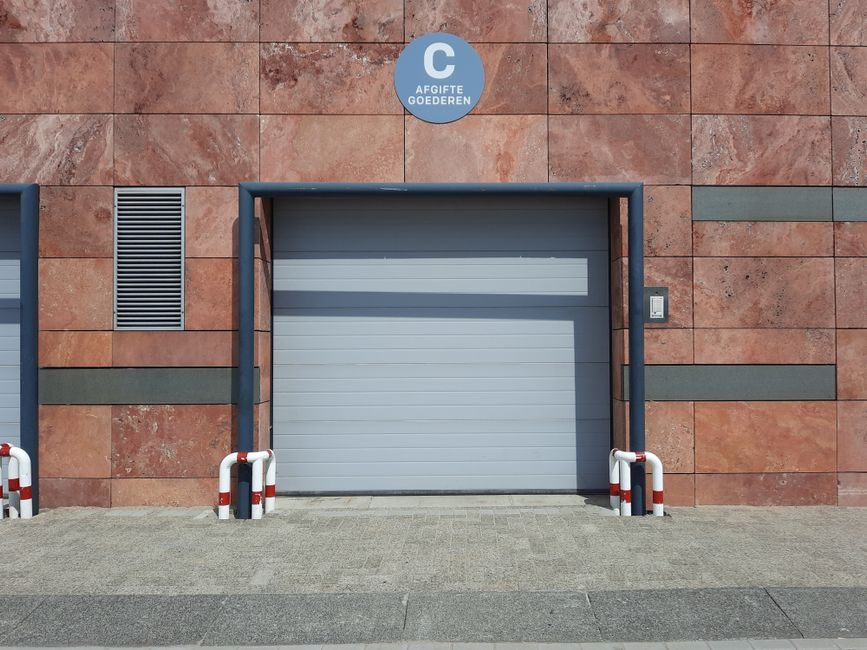
The four numbers that drive every dock leveler selection are rated capacity, deck length and width, pit dimensions, and the working height band above and below the dock floor — typically 12 in. up and 12 in. down from the at-rest position [S1][S3].
Dock levelers in current North American catalogs span roughly 6,000 lb to 100,000 lb capacity, with 25,000-45,000 lb being the dominant band for general warehouse, food, and parcel operations; heavier 60,000-100,000 lb units are built for steel coil, container drayage, and air-freight docks [S2][S3]. Deck length runs 6 ft, 8 ft, 10 ft, and 12 ft, with 8 ft being the most common in new pits because it covers the swing radius of a 53 ft swing-door trailer [S1].
Capacity, Deck and Pit: the Four Starting Numbers
Capacity is selected at the heaviest single-axle forklift you intend to run through the leveler with load — most spec writers add 25% to the forklift's rated lift capacity and round up to the next standard band (20K, 25K, 30K, 35K, 40K, 45K) [S3].
Deck length is chosen from the worst-case truck combination: a standard 53 ft trailer sits roughly 48-54 in. above grade when loaded, and the leveler must bridge the gap between the pit lip and the trailer floor without exceeding the manufacturer's stated max rise (commonly 12 in. above dock floor) or max drop (12 in. below) [S1][S2]. Pit width is fixed by the building foundation — standard widths are 6 ft and 7 ft, with a continuous sub-frame of formed C-channel or I-beam welded to the leveler's pit curb angles [S3].
Three Lift Mechanisms: Hydraulic, Air-Powered, Mechanical
Hydraulic dock levelers use a single-acting lift cylinder plus a separate lip-extension cylinder, delivering smooth push-button operation and the widest capacity range — Kelley, Blue Giant, Rite-Hite, Poweramp and Pentalift all publish 25,000-80,000 lb hydraulic units as their core catalog [S2][S3].
Air-powered (pneumatic) levelers — notably the Kelley aFX air-bag design — store energy in a high-volume low-pressure air bag to lift the deck, then use the operator's weight (or a return spring) to actuate the lip, giving one-person push-button deployment without hydraulic fluid [S1][S3]. Mechanical levelers rely on a pull-chain release that lets the deck drop under a stored-energy spring; they are the lowest-cost option, common on low-duty edge-of-dock (EOD) levelers where deployment frequency is below roughly 50 cycles per day [S1].
Edge-of-Dock vs Pit-Style: When Each Fits
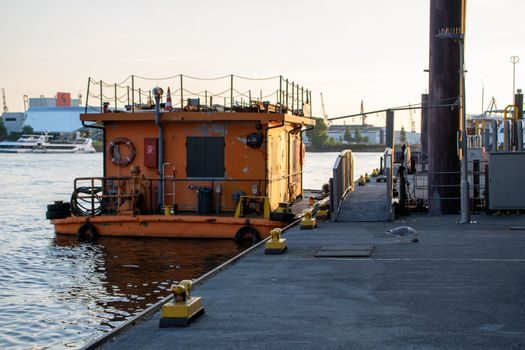
Edge-of-dock (EOD) levelers mount directly to the face of the dock face and add roughly 6 in. of rise — useful for retrofit on existing buildings with no pit, but limited to a 5-7 in. working range and lower (typically 20,000-30,000 lb) capacities [S1][S2].
Pit-style levelers are recessed into a formed pit in the dock floor, give the full 12 in. up / 12 in. down travel band, and accept the wider capacity and trailer-height range that class 8 tractor-trailer combinations need [S2][S3]. If the building is new construction, spec the pit; if it is a retrofit on a slab without a pit, spec an EOD or a vertical-storing leveler that sits flush with the floor when not in use [S2].
Safety Add-Ons: Restraints, Bumpers, Seals and Shelters
Vehicle restraints (wheel-locking or hook-style, hydraulic or mechanical) hold the trailer against the leveler during loading; they are mandatory by most U.S. state OSHA dock-safety programs and by Canadian forklift-handling rules [S2]. Bumpers (typically 4 in. thick laminated rubber, 10 in. high x 12 in. wide) mount on the dock face to absorb the 30,000-40,000 lb impact load of a backing trailer [S2]. Dock seals and shelters use foam side seals and a header curtain to reduce infiltration; they cut fan-energy cost in temperature-controlled warehouses but add 8-12 in. to the overall pit-to-trailer distance and must be factored into deck-length selection [S3].
What a Dock Leveler is NOT For
A dock leveler is not a lift table or scissor lift — its deck is designed to bridge a moving vertical gap, not to raise a load to a fixed work height; for the latter, spec a linear actuator vs lead screw comparison or a hydraulic lift table with positive locking [S4].
It is also not a forklift or a powered pallet truck, even though some adjustable heavy-duty dock levelers (e.g. Noveltek's Dock Leveler Series ELT) are cross-listed with material-handling lift platforms — those are loading aids for container floor-level loading, not fixed pit installations, and have very different duty cycles [S4]. A dock leveler also does not replace a vehicle restraint: the leveler handles the load, the restraint handles the truck; specify both.
Selection Criteria Summary: Hydraulic vs Air-Powered vs Mechanical
On duty cycle: hydraulic handles 200+ cycles/day cleanly, air-powered sits at 80-150, and mechanical is rated for under 50 [S1][S2][S3]. On installation cost (USD, North America 2025-08): a 30K mechanical EOD is the cheapest entry, a 30K hydraulic pit-style is mid-range, and a 30K air-powered aFX-style unit sits at a slight premium but removes hydraulic-fluid service [S1][S3]. On cold-temperature operation: hydraulic fluid must be down-rated below roughly -20 °F; air-powered units keep working to -40 °F with the right seals; mechanical units are cold-tolerant as long as the pull-chain stays ice-free [S1][S3]. On maintenance: mechanical has the fewest moving parts but the most operator fatigue complaints; air-powered has a rubber air bag rated for roughly 200,000 cycles before replacement; hydraulic has the most serviceable parts but a defined 4,000-hour fluid interval [S1][S2][S3].
Standards, Sourcing Floors and What to Confirm on the Quote

North American dock levelers are typically specified against ANSI MH29.1 (the U.S. safety standard for dock levelers) and CSA B335 (the Canadian safety standard for lift trucks operating at loading docks); confirm the exact revision cited on the submittal, not just the standard name [S2][S3].
For sourcing, expect a 6-10 week lead time on standard 25K-45K hydraulic units from North American OEMs, and 12-16 weeks on 60K+ or custom-pit units [S1][S2][S3]. When a related platform trolley spec band is being written for a power-gen site, the dock leveler usually sits at the receiving end of the same cargo flow and shares capacity and deck-width selection logic. Two signals to track: the next revision of ANSI MH29.1 (commonly updated on a 5-7 year cycle, last published revisions in the 2017-2020 window per public records) [S2], and the ongoing shift from mechanical to air-powered units in mid-duty food and cold-storage facilities [S1][S3].
For component-level specifications, see linear guide, and crossed roller guide.