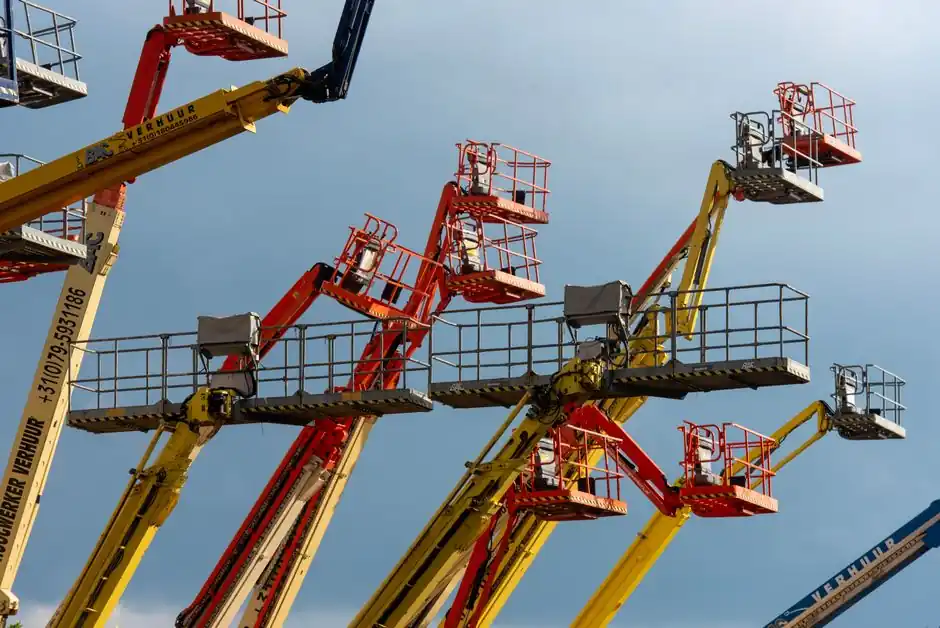
Many standard pit levelers cover about 12 inches above and below dock height, while many edge-of-dock units cover about 5 inches [S8].
A dock lift is the stronger choice when the trailer floor is below dock elevation and you need a level loading platform; a below-grade pit leveler is suitable only where its full vertical range and pit geometry fit the site [S1][S6].
Separate Below-Grade Height Difference from the Dock-Building Gap
Both equipment types address a height mismatch, but they do not perform the same function. A dock leveler is permanently installed at an elevated loading dock and bridges the gap between the dock floor and trailer bed. A dock lift raises or lowers freight between two elevations, including ground level and dock height, and can serve vehicles from step vans through high reefer trailers [S1][S2].
The physical distinction is easy to miss below grade. The typical 8–10 inch space at a dock face is the truck-to-building gap, including dock bumpers, not the full difference between the trailer floor and dock surface [S5]. If the trailer bed is 20 inches below the dock, a leveler with only a 5-inch downward range cannot reach it, regardless of how well it bridges the horizontal gap.
The selection question therefore has two measurements: vertical mismatch and horizontal reach. Record dock elevation above finished grade, the loaded or empty trailer-bed elevation, the dock-face clearance, and the trailer position. For vehicles with materially different bed heights, size for the operating range rather than the average trailer [S7].
Compare the Three Candidate Configurations
A pit leveler may be appropriate for a below-grade trailer when the dock already contains a pit and the height mismatch falls within the unit’s designed vertical range. Standard pit levelers commonly provide about 12 inches above and below dock height [S5][S8]. An edge-of-dock leveler needs no pit and commonly reaches about 5 inches above and below dock height, making it suitable for shallow height differences rather than a substantial below-grade condition [S4][S5][S8].
A dock lift has a wider vertical role because it supports loading at a controlled platform elevation and transfers goods between the vehicle and another level. It suits grade-level buildings, mixed delivery fleets, and docks without a permanent pit [S1]. Its disadvantages are a larger equipment footprint and a slower cycle than a leveler at a dedicated dock position [S1].
Use a hydraulic or air-powered pit leveler when loading frequency makes operator effort important, because powered units raise and lower by control rather than a manual chain cycle. Mechanical levelers have lower acquisition cost and fewer maintenance items, but the operating cycle takes more time and effort [S5]. For a dedicated lane handling repeated trailers, the operating-speed advantage generally favors a powered leveler when the measured height range is within its limits.
Use a Dock Lift When the Trailer Is Too Low for a Leveler
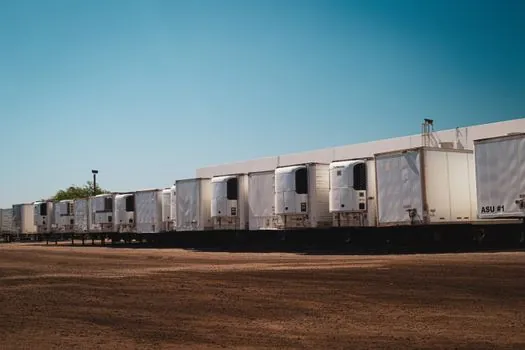
A dock lift is appropriate when the trailer bed sits materially below the dock, the fleet has wide height variation, or the site has no conventional raised dock. It changes freight elevation rather than merely bridging the dock face, allowing operators to work from a level surface without manually lowering pallets from trailer height [S1][S2].
Compared with manual unloading or an unstack-and-restack operation using skate conveyor, a dock lift lets operators remain on a level platform while goods move vertically. One equipment comparison states that two operators with pallet jacks can unload a 53-foot trailer in less than half the time required for the manual skate-conveyor method [S2]. Treat that as a vendor-documented workflow example, not a guaranteed production rate.
Space planning must include more than the platform. This footprint difference can make a dock lift the practical choice even where its per-cycle operation is slower.
Match Handling Equipment and Load Conditions
Forklift and pallet-jack access must be evaluated separately. Dock levelers create a transition between the dock floor and trailer bed for material-handling equipment, but a portable ramp retains its grade below the transition [S1][S3].
For a fixed pit leveler, confirm the deck, lip, and selected leveler model are rated for the actual forklift and carried load. Do not transfer that range to a pit leveler without checking the selected manufacturer’s rating.
The operating position also matters. For trailer restraint decisions, see Dock Leveler Derating for Off-Center Forklift Loads before treating nominal deck capacity as the allowable load at every position.
Plan for the Cycle, Maintenance, and Site Constraints
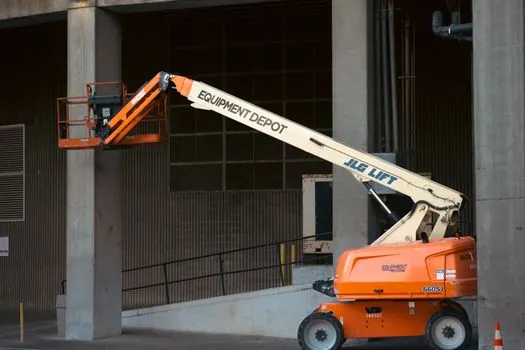
A leveler offers the fastest transition for repetitive loading at a fixed dock, but its useful range is bounded by the model, trailer-bed height, lip geometry, and pit or dock-face condition. A dock lift provides more elevation flexibility, but it introduces a lift cycle, guarding, platform structure, and additional maintenance points that a simple lip transition does not have [S1][S4].
Mechanical levelers minimize acquisition cost and maintenance, while hydraulic and air-powered systems improve operating consistency at the cost of higher acquisition price and more components that can require service [S5]. Vertical-storing levelers can preserve a tighter building envelope in sanitation-sensitive facilities, but that installation form does not enlarge the vertical operating range [S1].
The lift approach must also control vehicle movement and platform separation. If below-grade trailers require a dock lift, prevent drivers from approaching an unsupported platform edge until the lift is positioned and secured. A leveler’s lip should not be treated as a substitute for a vehicle restraint, and a dock lift’s gate or platform must remain within its manufacturer-rated operating geometry.
Specify from Measured Conditions and Applicable Standards
Dock levelers used for loading dock service should conform to ANSI MH30.1-2022, which covers performance and testing requirements for dock leveling devices. OSHA 29 CFR 1910.26 requires dockboards to support the maximum intended load and include run-off protection that prevents transfer vehicles from leaving the platform edge [S4].
These requirements do not create a universal below-grade travel range. The selected leveler’s published operating range, capacity, pit dimensions, lip geometry, and structural rating control the installation. For the dock leveler, these data determine whether it can reach the measured trailer bed and safely carry the intended vehicle and load.
For a dock lift, specify the required vertical stroke, platform dimensions, rated load, approach clearance, vehicle interface, guarding, controls, and maintenance access. The comparison should include the dock-lift alternative to a manual pallet jack, because the real decision depends on whether palletized freight must travel on a slope or can be transferred on a level platform.
Before ordering, complete a site survey using at least the lowest, highest, and most common trailer-bed heights in service. Verify finished dock elevation, pit depth, horizontal approach, dock-door clearance, trailer bumpers, turning envelope, and the load-transit path. If the trailer is outside the verified leveler range, specify a dock lift or revise the dock elevation rather than relying on an oversized lip or an improvised plate.
The trackable procurement record should show one selected concept, the measured height band, the model capacity and operating range, the applicable ANSI MH30.1-2022 compliance statement for levelers, and any unresolved conflict between trailer geometry and manufacturer limits.