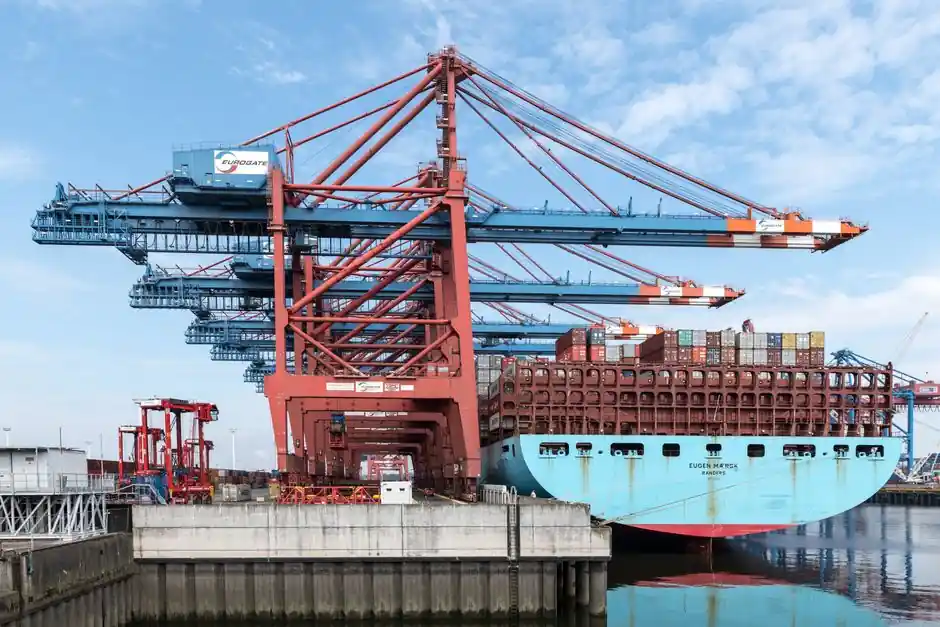
A dock leveler should not be used for permanent grade-level loading: it bridges a trailer bed from an existing raised dock, while a dock ramp or dock lift transfers freight between grade and dock height [S1][S4].
The decision is driven by dock height, trailer variation, traffic volume, footprint, drainage, and whether the installation must remain relocatable, with documented ramp systems reaching 138 inches wide and 80,000 lb capacity [S3].
Dock Levelers Require a Permanent Raised Dock
A dock leveler is fixed at an existing dock and compensates for the height difference between the dock floor and a trailer bed. It does not create a grade-level loading position [S4]. A dock leveler is fixed equipment installed at an existing loading dock and is built into the dock structure itself [S4].
Typical leveler choices include mechanical, hydraulic, air-powered, edge-of-dock, and vertical-storing models [S2]. Mechanical units use a pull chain or lever and suit lower-volume work, hydraulic units use a push button and hydraulic pump, and edge-of-dock units have a limited adjustment range of approximately plus or minus 5 inches depending on model [S2].
These systems make sense at a permanent dock with regular trailer traffic and predictable trailer-bed heights [S1][S4]. They are the wrong choice for a facility whose loading position must remain at grade, because the essential raised-dock structure cannot be omitted.
Dock Ramps Suit Fixed or Relocatable Grade Access
A dock-to-ground ramp creates access between warehouse dock height and grade without a conventional dock pit. Dockzilla documents prefabricated installation in less than 2 hours, bolt-down base plates, adjustable front legs, handrails, guardrails, tall side curbs, and replaceable bar grating [S3].
The documented construction uses high-strength steel, with a 96-inch standard clear width. Wider versions reach 138 inches, and the published capacity extends to 80,000 lb [S3]. These figures define one manufacturer’s offered ramp range, not a universal rating for every dock ramp.
A permanent ramp is appropriate when the door location, approach, and vehicle path are stable. A relocatable ramp is appropriate for leased buildings, temporary loading positions, overflow capacity, or facilities without an existing dock. Yard ramps can bridge ground-to-trailer or ground-to-dock gaps and can be repositioned where a truck can pull up [S4].
Dock Lifts Deliver a Level Freight Interface
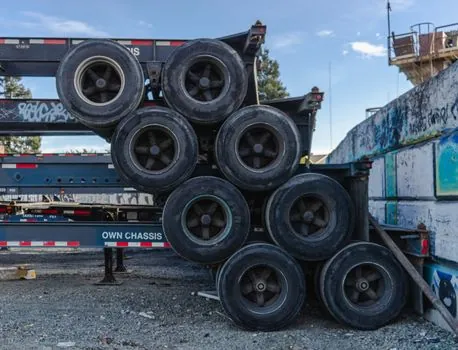
A surface-mounted dock lift raises and lowers freight between grade and dock height rather than forming a sloping bridge from a raised dock [S1]. This makes it the stronger functional alternative when the loading floor must remain at grade and the equipment must present a level transfer surface.
An edge-of-dock leveler has a typically ±5-inch adjustment range, depending on the model [S2].
The grade calculation explains why a leveler is not a substitute for a lift at a low trailer. A leveler remains a ramp whenever the trailer bed differs from dock height; it becomes level only when the two elevations match [S2]. Equipment selection must also account for the load profile and rated grade of the actual manual pallet jack or electric pallet truck.
Grade-Level Options Compared by Operating Criteria
A dock leveler scores well for cycle speed, integration into an existing dock, and routine dock-to-trailer bridging, but it requires fixed installation at an existing dock [S1][S4]. A dock ramp can be bolt-down and relocatable without permanent building modifications, and it leaves a longitudinal grade through which powered equipment must travel [S3][S4].
A dock lift provides a level interface and avoids reliance on a trailer bed that is already near dock elevation, but its installation, utilities, cycle time, and footprint must be evaluated as dedicated vertical handling equipment [S1]. An edge-of-dock leveler is compact and inexpensive but has a limited height range, typically ±5 inches depending on the model [S2].
For permanent grade-level loading, specify a dock ramp when the approach is fixed and grade travel is acceptable. Specify a surface-mounted dock lift when a level transfer surface, controlled elevation, or a substantially shorter interface is required. Do not specify a pit dock leveler unless the building is converted to a raised dock.
Traffic, Safety, and Site Constraints

Grade-level facilities with mixed delivery vehicles should be evaluated for dock-lift equipment because dock lifts are intended for ground-level facilities with no permanent dock or varying truck heights [S1]. Permanent installations also need an engineered approach for forklift approach angles, vehicle positioning, impact protection, pedestrian separation, drainage, and trailer restraint.
The decision for dock leveler derating for off-center forklift loads illustrates why nominal plate capacity alone is not enough; the manufacturer’s load chart for the selected model and actual load geometry controls.
A declining dock approach creates a compound grade because the approach slope is added to the equipment grade. The total approach length determines the percentage decline, and a longer approach reduces that percentage [S5]. Any grade calculation must therefore include the yard apron, not only the distance from dock edge to trailer.
Permitted Installation, Drainage, and Ownership
A permanent bolted ramp can be installed in less than 2 hours without permanent building modifications under one manufacturer’s configuration [S3]. That installation simplicity does not remove the need to verify local building, fire, accessibility, and stormwater requirements, and the source’s references to OSHA and IBC compliance do not replace project-specific review.
Relocatability is a concrete ownership advantage when a lease may end before the loading operation. Dockzilla describes a modular unit that can be unbolted and removed with minimal or no building damage [S3]. For a permanent operation, compare that flexibility with the durability of a concrete dock, the service access of a lift pit, and the maintenance exposure of hydraulic, air, or mechanical mechanisms.
The final procurement package should record the dock height, grade envelope, trailer-bed range, vehicle class, pallet-jack turning radius, rated load, shift cycle count, power or compressed-air availability, drainage method, and maintenance access. The equipment selection should also align with the planned dock leveler layout if any raised-dock position remains in service.
Track two project signals before ordering: the measured percentage of trailer-bed heights below dock elevation, and the number of shifts requiring grade-level access. If most trailers remain within the leveler’s range and the raised dock already exists, retain the leveler; if the floor must remain at grade or vehicle heights vary widely, specify a ramp or lift.