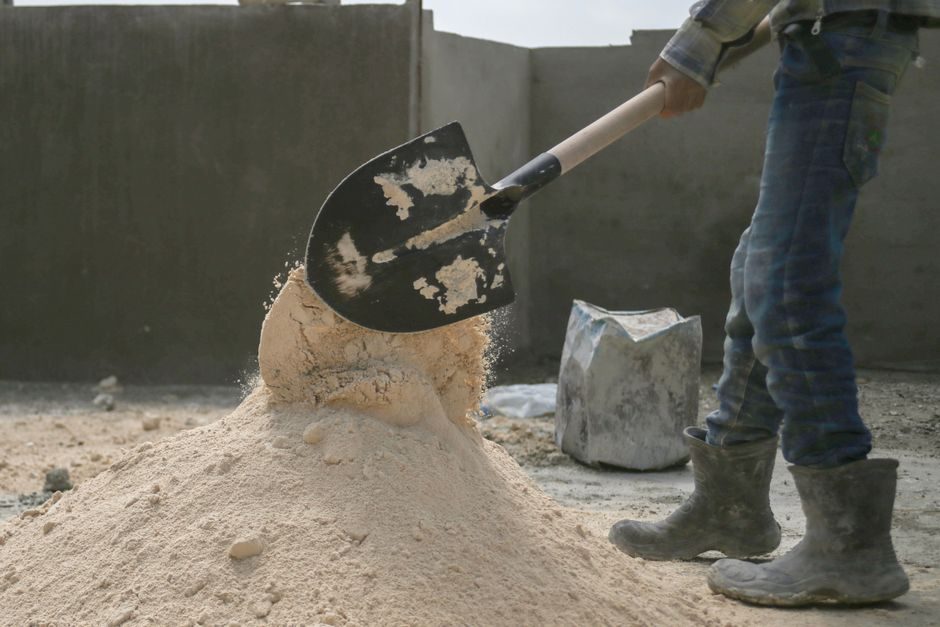
On 2026-05-20, Made-in-China listed quick-setting walkable mortar and quick-firming self-flattening mortar blend at US$ 9.00 per piece at a 200-piece MOQ, shipped from Shanghai Languan New Building Materials [S5]. Tower-type dry mortar product lines on Okorder run at a 50 sets/month supply capability with negotiable pricing and Qingdao as the loading port [S1].
Plant cost drivers — mixer type, tower vs. simple workshop layout, automation level — are mapped to typical Chinese ex-works reference data, not list prices.
Finished Dry-Mix Mortar: FOB China Per-Tonne Reference Bands
Bagged quick-setting and self-flattening mortars from Shanghai Languan New Building Materials (ISO 9001:2015 / ISO 14001 / ISO 45001:2018 audited) list at US$ 9.00 / 200-piece MOQ, with on-time delivery rated 5.0/5.0 on the marketplace card [S5]. The 200-piece minimum and per-piece pricing structure is typical for specialty tile adhesive, self-leveling underlayment, and rapid-repair grades sold into Southeast Asia, the Middle East, and Africa.
For ordinary masonry and plastering grades, Chinese ex-works bulk bands track the cement price curve — see the 2026 special cement price guide for CSA, API, and CAC cement cost inputs. Bulk dry-mix typically runs 60-75% ordinary Portland cement by mass, with the balance split between graded silica sand (0.1-4 mm), calcium carbonate filler, and 2-5% polymer/chemical additives. The ready-mix-concrete readymix concrete cost stack is a useful adjacent reference because both share cement, sand, and chemical admixture line items — concrete adds aggregate + water + PCE superplasticiser, while dry-mix mortar adds cellulose ether + redispersible powder.
Plant and Equipment Capex: Tower vs. Simple Workshop Layout
Okorder's tower-type dry mortar product line is engineered for mass production of both ordinary and special dry mortars, with a stated 50 sets/month supply capability per supplier card [S1]. Tower layouts deliver higher output consistency, batched weighing accuracy, and dust-controlled enclosed conveying — the capex premium is justified once annual output crosses roughly 30,000-50,000 tonnes/year.
For sub-30,000 t/yr plants, the typical Chinese mid-tier build is a simple workshop with a single dry mortar mixer (JHW1000 cylinder type or equivalent), screw conveyor, bucket elevator, sand drying machine, and bulk storage silo — BHM Machinery packages these modules together with grinding, mixing, and packing [S2]. Made-in-China's manufacturer directory lists more than 82 verified Chinese dry mortar mixing equipment suppliers, with 200+ piece/200-piece MOQ tolerance typical for entry-level skid packages. The 2010-vintage JHW1000 cylinder dry-mix mixer remains a referenced baseline design for small plants [S6], and the parallel-shaft dry-mixed mortar mixer remains the workhorse for medium-throughput lines [S3].
Additive Stack Cost Levers: Cellulose Ether, RDP, and Special Cement
Within a dry-mix formulation, the four cost-moving additives are cellulose ether (water retention + workability), redispersible polymer powder (RDP, usually vinyl acetate-ethylene, for adhesion and flexibility), calcium formate or lithium carbonate (accelerator for cold-weather or rapid-set grades), and defoamer/anti-crack fibres [S4]. WACKER's quality-control seminar for dry-mix mortar production covers the same additive stack and emphasises mix-time, dispersion sequence, and water-to-powder ratio as the three process variables that swing final bagged cost most [S4].
A practical rule for procurement: doubling RDP content from 2% to 4% of formulation weight typically lifts bagged ex-works price 12-20% but allows binder content to drop 5-8% — a net material-cost gain when the application is tile adhesive or EIFS base coat. Cellulose ether is the smaller line item (0.2-0.5% of mix) but with the highest unit price (US$ 3-6/kg in 2026), so a 0.1% dosing error on a 50,000 t/yr plant moves roughly US$ 150,000-300,000 of annual cost. For chemistry specifics on adjacent admixture pricing, the concrete admixture pricing guide covers PCE/accelerator/retarder bands in parallel.
Application-Driven Grade Selection and Cost Mapping
WACKER's "Dry-Mix Mortar and Its Various Applications" webinar groups dry-mix into seven application families, each with its own binder/additive profile: tile adhesive (C2TE/S1/S2 classes per EN 12004), EIFS/base coat, self-leveling underlayment, masonry mortar, plaster/render, repair mortar, and waterproofing slurry. Self-leveling underlayment and rapid-repair grades sit at the top of the price-per-tonne stack because of higher special cement (CSA or CAC) loading and tighter workability windows — see the special cement price guide for CAC and CSA cost bands. [S1]
Tile adhesive and standard masonry/plaster grades occupy the mid-band; bulk bags (1 t) typically land 20-35% below 25 kg bag ex-works. The 25 kg bag, 200-piece MOQ structure visible on Made-in-China [S5] reflects pallet-friendly export packing to distributors in the Gulf, Africa, and Latin America. Buyers should compare prices on a per-tonne-of-installed-mortar basis, not per-bag, because water demand and coverage rate differ sharply between a self-leveling grade (~1.7 kg/m²/mm) and a tile adhesive (~3-5 kg/m²).
Sourcing Realities: MOQ, Quality Audit, and Logistics
Three sourcing realities hit most first-time buyers: (1) the 200-piece/1-set MOQ is not negotiable below the listed threshold for ex-works pricing [S5]; (2) ISO 9001:2015 plus ISO 14001 and ISO 45001:2018 are the baseline quality/environmental/safety audits to demand from Chinese suppliers — Shanghai Languan publishes all three on its supplier card [S5]; (3) the Qingdao loading port for tower lines [S1] and Shanghai for bagged mortar [S5] differ by roughly US$ 80-150/40'HC in inland logistics, which matters once order volume exceeds five containers.
For plants above 50,000 t/yr, dual-source qualification of cellulose ether (one Chinese, one European — WACKER, Shin-Etsu, or Dow) and RDP (WACKER, Dairen, or Shandong-based) is the standard risk-control move. Redispersible polymer powder single-source exposure is the most common cause of bagged-mortar line stoppages in 2024-2026 plant audits, based on the WACKER quality-control curriculum [S4]. A practical anchor for adjacent capital-equipment pricing in the same Chinese cluster is the gearbox suppliers 2026 reference — gearboxes drive every mixer, conveyor, and bucket elevator in the dry-mortar line.
Cost-Stack Comparison: Three Plant Tiers Side by Side
Tier 1 — bagged mortar import (200-piece MOQ): zero capex, US$ 9.00/piece ex-works [S5], suitable for distributors and small contractors with no blending capability. Tier 2 — simple workshop (JHW1000-class mixer, no tower): roughly US$ 80,000-250,000 capex [S2][S3][S6], 10,000-30,000 t/yr output, ideal for regional bagging. Tier 3 — tower-type product line [S1]: 50 sets/month supply capability, 30,000-100,000+ t/yr output, typically US$ 500,000-2,000,000 capex, requires full additive pre-weigh, dust collection, and PLC batching.
The cost decision gate is annual tonnage: below 10,000 t/yr, import beats local blending. Between 10,000-30,000 t/yr, the simple workshop wins on capex payback (2-4 years at 60% capacity utilisation). Above 30,000 t/yr, the tower layout's lower per-tonne operating cost (energy, labour, scrap rate) overtakes the higher capex within 3-5 years. The dry-mortar plant encyclopedia entry covers the equipment taxonomy in more depth, and adjacent readymix concrete plant economics translate closely for plants considering both product lines.
For component-level specifications, see linear guide.