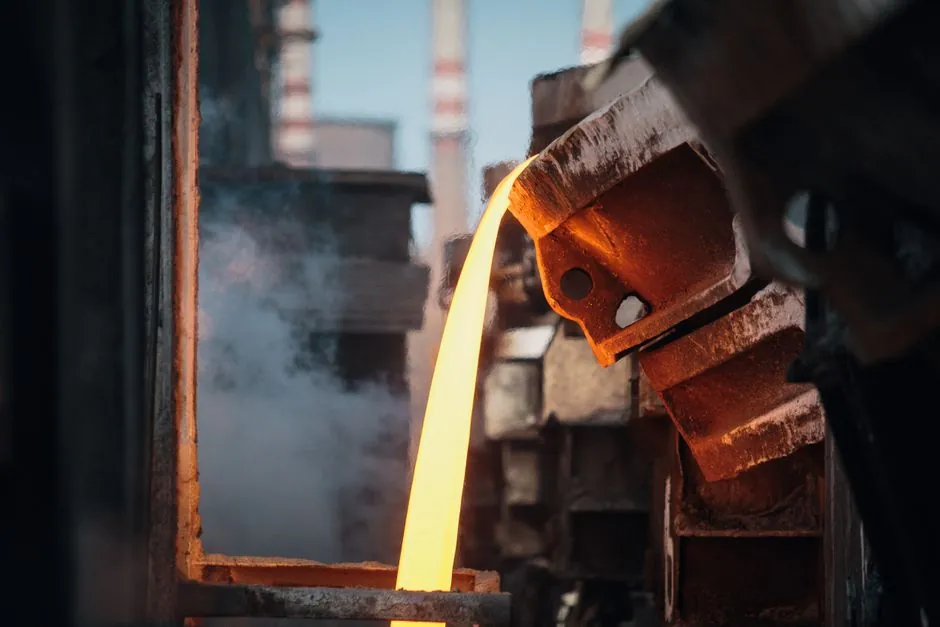
Specify ductile iron for ordinary water distribution up to the valve's certified pressure-temperature rating, commonly PN16–PN25, while cast steel is the normal choice above 1.6 MPa and for steam, hydrocarbons, and higher-temperature service [S3][S7].
The material grade alone does not establish a valve rating: body grade, flange class, sealing arrangement, test pressure, and allowable temperature must match the installation.
Pressure-Rating Decision by Body Material
Ductile iron is a practical compromise for municipal water, drainage, fire-protection, and industrial water systems: it retains an iron casting's economy while providing greater strength, ductility, and impact tolerance than grey cast iron [S1][S6].
These are typical ratings, not blanket permissions to select any valve at the top of a range. The manufacturer's certified pressure-temperature table governs the selected size, end connection, and seat configuration.
A secondary comparison places cast iron gate valves below 1.6 MPa and cast steel gate valves above 1.6 MPa [S7]. That dividing line is a useful screening rule for water service, but it does not replace a project-specific calculation because operating temperature, valve size, and end connection can reduce the permissible rating.
Material Grades Behind the Rating
The relevant distinction is not merely the label “cast iron.” EN-GJL-250 grey iron has a minimum tensile strength of 250 MPa, EN-GJS-400-15 ductile iron has 400 MPa minimum tensile strength and 15% minimum elongation, while ASTM A216 WCB cast steel has 485 MPa minimum tensile strength and 22% minimum elongation [S3].
Spheroidal graphite lets ductile iron deform before fracture, whereas flake graphite in grey iron creates paths that can support rapid cracking under shock. Cast steel also deforms before failure and is more readily weld-repaired [S3]. These differences explain why material choice is linked not only to pressure class but also to water hammer, mechanical shock, thermal stress, and repair strategy.
Cost, Weight, Temperature, and Repair
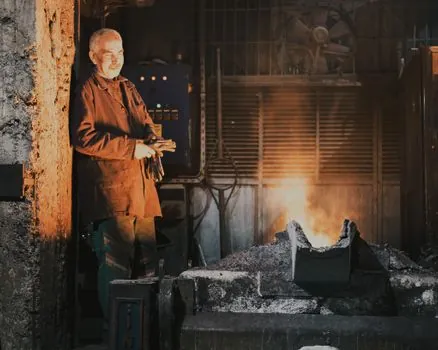
Cast steel is suitable for weld repair, while ductile iron offers greater flexibility and impact resistance than grey cast iron [S1][S3].
Grey cast iron is suitable for clean, low-pressure water service where shock loading is absent, ductile iron combines low cost with greater toughness, and cast steel is suitable for steam, hydrocarbons, higher pressures, and weld repair [S3].
For this comparison, the operating-temperature and corrosion boundaries matter as much as nominal pressure. Ductile iron is often coated for exposure to water, fuel, oil, and outdoor environments, while stainless steel becomes preferable where the medium is highly corrosive or sanitary requirements dominate [S1][S4]. The ductile iron family should not be treated as equivalent to corrosion-resistant stainless steel.
Application Fit and Failure Modes
Ductile iron ball valves are commonly selected for municipal infrastructure, industrial systems, and energy applications, including water supply, drainage, and fire-protection systems [S1][S2]. Cast steel is preferred for steam, hydrocarbons, higher pressure and temperature, and valves that may be returned to service after welding [S3].
Grey cast iron is a poor choice where water hammer, thermal shock, pipe misalignment, or excessive flange bolting can fracture a pressure-containing body [S3]. Its low cost and vibration damping remain useful in clean, low-pressure, well-supported systems, but extending PN16 or PN25 to a valve that lacks the required certification is not acceptable.
Ductile iron is not the universal answer for high pressure or high temperature. For fuel, oil, chemicals, or process fluids, compatibility of trim, seal, coating, and gasket materials must be checked separately from the body rating.
Specification and Sourcing Controls
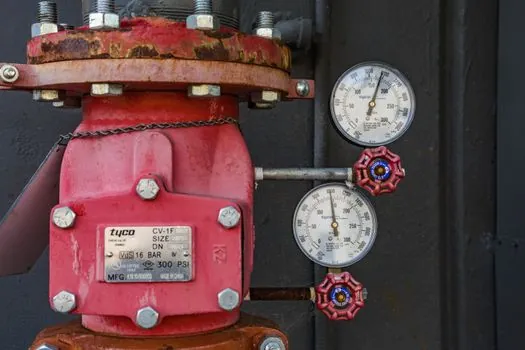
Write the body material, grade, pressure class, temperature limit, end connection, and applicable product standard as separate procurement requirements. Typical grade combinations include EN-GJS-400-15 or ASTM A536 for ductile iron, ASTM A216 WCB or EN 1.0619 for cast steel, and EN-GJL-250 for grey iron [S3].
Request a manufacturer-certified pressure-temperature rating and shell, backseat, and seat test evidence appropriate to the governing product specification. Body castings can be produced by sand, shell, investment, or lost-form casting, but the process alone does not establish pressure capability [S2]. For material-level review, compare the casting yield and elongation data with the cast iron and alloy steel references.
Use ductile iron when the duty is water or another compatible medium, the certified class covers the design point, and toughness and cost drive the decision. Move to cast steel when design pressure exceeds 1.6 MPa, service includes steam or hydrocarbons, temperature is elevated, or field weld repair is required.
Before purchase, record the design pressure, design temperature, test medium, corrosion allowance, and required pressure class in the valve datasheet, then verify all five against the manufacturer's certified rating table.