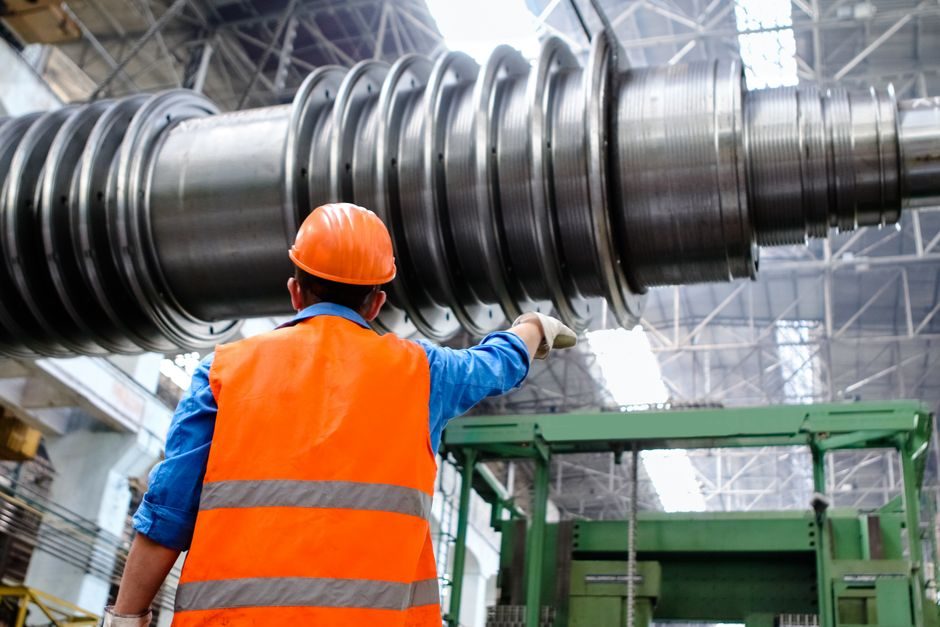
Dynamic balancing machine list prices on the July 2026 Made-in-China wholesale index start at US$1.00 placeholder FOB for basic grinder-rotor hard-bearing units and run to US$20,000 per set for digital automatic two-station drill-and-balance lines from Shanghai Shenman [S3][S7].
The real spread is driven by rotor mass and automation: a manual HQB-160-class hard-bearing machine for automotive transmission shafts sells in the low-thousand-dollar band, while a CEMB-class computerised vertical balancing rig distributed by Dynamics Research Corp. in North America carries a different price-to-capability ratio tied to PC-driven reporting and unlimited setup storage [S2][S5].
What "Dynamic Balancing Machine" Actually Covers
A dynamic balancing machine measures and corrects rotor unbalance while the part spins at its operating speed, distinguishing it from static single-plane balancers used for grinding wheels dynamic balancing machine. The category subdivides into hard-bearing machines (low-rpm, calibration-free, suited to armatures, brake discs, fan impellers) and soft-bearing machines (higher rpm, higher sensitivity, required for turbomachinery and motor armatures above ISO 1940 G2.5) [S2].
For buyers, the practical split is three-fold: workshop manual rigs, semi-automatic single/double-station production machines, and fully automatic in-line balancers with integrated drilling or milling correction. The Shanghai Jianping catalogue explicitly maps to this split, listing two-station automatic milling balancers for differential shells, new-energy motor automatic balancers, and brake-disc automatic balancing machines as separate FOB line items [S4].
Price Bands and What Sits in Each
The cheapest tier, US$1 to US$2 placeholder FOB per piece with 1-piece MOQ, covers grinder-rotor hard-bearing and brake-disc automatic units from Shanghai Jianping; these are catalogue entry points and almost always require RFQ to unlock a real number [S3][S4]. Mid-tier digital automatic units from Shanghai Shenman sit at US$5,000 to US$20,000 per set with 1-set MOQ, including ODM high-accuracy models for the railway industry and fully automatic fan-impeller balancers [S7].
Higher-complexity CEMB/Dynamics Research-class machines with PC consoles, printed before/after balance reports, and unlimited hard-drive setup storage occupy the upper band, with delivered North American pricing that reflects the CEMB Italian build and the computerised instrumentation stack rather than the bare steel bedplate [S5]. For process engineers comparing linear guide rails or crossed roller guide tables used as the machine backbone, the balancing machine is a direct analog: structural cost follows the linear axis, not the branding.
Cost Drivers Ranked by Impact
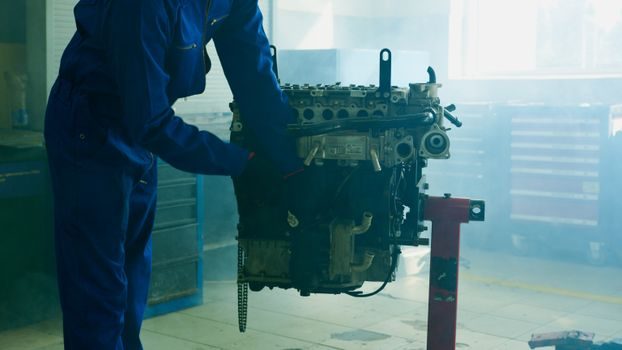
Four variables move the quote more than anything else. Rotor mass class is first: a 3 kg armature balancer (Balance Systems BMK8-class) is built on a fundamentally smaller, less stiff bedplate than a 1,500 kg motor or turbomachinery rotor rig, and the cost ratio between the two is typically an order of magnitude [S1]. Drive type is second: servo-driven direct-drive spindles eliminate belt slip and allow self-calibration, but add roughly 20-35% to the spindle subsystem cost versus a belt-drive universal motor.
Automation level is third, and the biggest swing factor on production lines: a manual loader with hand-indexed correction costs a fraction of a two-station drill-and-balance cell with automatic milling correction and conveyorised part flow [S4]. ISO 1940 balance grade is fourth: G6.3 is the default for automotive and HVAC rotors, G2.5 is standard for turbomachinery and machine tool spindles, and G0.4 drives the cost of a soft-bearing machine with higher rpm and vibration-isolated foundations [S2].
Comparison: Hard-Bearing vs Soft-Bearing vs Automatic Two-Station
For buyers choosing between the three dominant configurations, the trade matrix is straightforward. Hard-bearing machines (Balance Systems BMK8, HQB-160-class) run at low rpm, need no calibration run, suit armatures and brake discs, and sit in the entry-to-mid price tier [S1][S2]. Soft-bearing machines run at the rotor's service speed, require calibration with a test rotor, achieve G0.4 to G2.5 grades, and price at a premium tied to foundation and vibration isolation requirements.
Automatic two-station drill-and-balance machines (Shanghai Jianping JP900-class, Shanghai Shenman railway ODM units) add correction tooling in-line, drive throughput rather than accuracy per se, and price between US$5,000 and US$20,000 per set on the current index [S4][S7]. For context on the production-line economics, see the dynamic balancing machine buying guide and the selection map at rotor type, drive, and ISO grade.
Total Cost of Ownership, Not Just Sticker Price
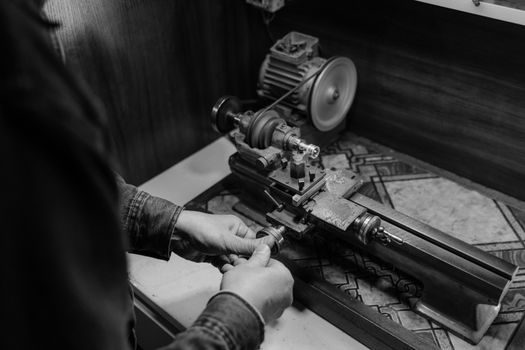
FOB unit price understates the installed cost by 30-80% on most balancing installations. A soft-bearing turbomachinery rig needs a vibration-isolated foundation, typically a 200-400 mm reinforced concrete plinth with isolators, plus a controlled-temperature metrology room if grade G0.4 or finer is specified. Foundation and room work routinely equals the machine price on shop-fit projects. [S4]
Recurring costs are dominated by calibration test rotors (each grade change requires a certified artefact, US$1,500 to US$8,000 depending on mass and certification), bearing replacement on the machine's own support journals (3-5 year cycle for hard-bearing, 1-2 year for soft-bearing at high rpm), and the per-fixture cost of tooling for the rotor family in production [S2][S5]. A CEMB/Dynamics Research-class machine mitigates setup labour by storing a "virtually unlimited number of setups on the hard drive," which is the key TCO lever for job shops running mixed rotor families [S5].
Where the Market Is Moving
Three signals are visible on the July 2026 wholesale pages. First, the new-energy motor automatic balancer has become a distinct product line at Shanghai Jianping rather than a custom order, reflecting volume EV motor and drive-unit production needing G2.5 balance at cycle times under 30 seconds [S4]. Second, digital automatic machines with ODM signalling for railway-industry accuracy are now listed at the US$5,000 floor of the Shanghai Shenman catalogue, down from custom-quote territory five years ago [S7].
Third, MOQ on the entry-level Jianping units is 1 piece rather than the 3-5 piece minimum common on European equivalents, which compresses the per-unit price for small-batch buyers but shifts integration risk onto the buyer's fixture engineering. For plants already running industrial gearbox test stands, the balancing machine is the next upstream quality gate and should be specified to the same ISO 1940 grade as the gearbox's balance grade, not the motor's.
Track the next two signals: whether the Shanghai Shenman railway-ODM US$5,000 floor holds through Q4 2026, and whether CEMB's North American distributors publish 2026 list pricing against the Dynamics Research import channel, since the spread between the two is the cleanest read on landed cost versus domestic-service cost for buyers outside the EU and China.