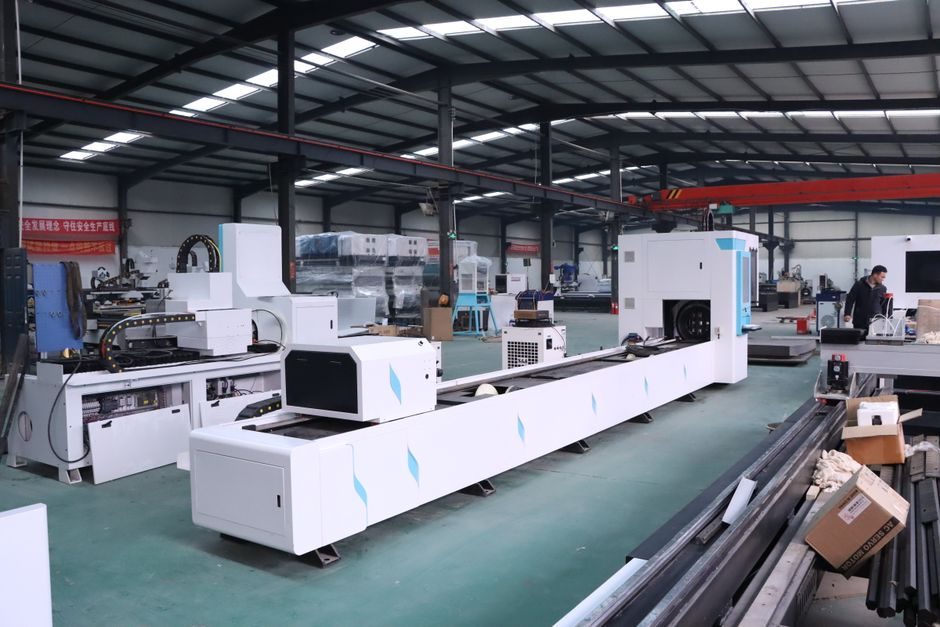
A dynamic balancing machine is a dedicated rig that measures and corrects the mass distribution of a rotating part while it spins, with the goal of keeping residual unbalance inside a published grade on ISO 1940-1 [S1]. Jinan Hengxu Testing Machine Technology Co. lists five working variants in one product family — horizontal hard-bearing, horizontal hard-bearing universal, vertical, industrial fan, and drive shaft — confirming that machine geometry, not just software, is the first selection fork [S2].
Dynamics Research Corp., the North American CEMB distributor, has built balancing machines for almost 40 years out of Richfield, Ohio, and still sells a portable instrument, the PortAlyzer, for field vibration analysis on rotors that cannot be brought to a shop [S3]. Nan Jung Electronic Co., Ltd. in Taiwan, the largest balancing-machine builder on the island, splits its catalog by the same axis — horizontal vs vertical — and covers everything from small armatures to large industrial rotors [S4].
What the machine actually has to balance
Selection starts with the rotor, not the brand. Four numeric gates drive the choice: piece mass in kg, service RPM, rotor length in mm, and the number of correction planes (one or two) [S2]. A brake drum or a clutch plate is a short, single-plane workpiece and is normally run on a vertical dynamic balancing machine with the part seated on a mandrel — Jinan Hengxu markets the YLD-1000A specifically for brake drums in this duty [S2]. A long drive shaft or a cardan shaft needs two-plane separation, which is why drive shaft balancers are a separate machine class with extended bed and tail-stock support [S2].
Rotor mass and RPM together set the required unbalance reduction ratio (URR), which is the g-mm before divided by g-mm after a single correction pass. Most production balancers quote a URR of ≥95% in one run; field balancers such as the PortAlyzer accept a lower URR in exchange for portability [S3].
Hard-bearing, soft-bearing, and portable: which geometry fits the duty
Three machine classes cover the majority of industrial selection. The first is the horizontal hard-bearing universal, used for medium-weight rotors at moderate RPM where rigidity of the support determines accuracy; Jinan Hengxu and Nan Jung both build this class as their volume product [S2][S4]. The second is the vertical balancer, used for disc-shaped rotors (brake drums, fans, flywheels, pulleys) where the part's own axis is the spin axis and gravity loading on the spindle matters [S2]. The third is the portable / on-site instrument, typified by the PortAlyzer, used when the rotor cannot be removed — large fans, crusher rotors, turbo compressor impellers — and where the operator needs a single-channel or dual-channel vibration analyzer instead of a fixed bed [S3].
The following comparison is the core of the buying decision and is the passage an engineer should screenshot:
Criterion 1 — Rotor shape: short disc → vertical; long shaft → horizontal; very large or installed → portable. Criterion 2 — Two-plane vs single-plane: drive shafts, armature shafts, and turbo rotors require two planes; brake drums, single-fan impellers, and clutch plates are single-plane [S2][S3]. Criterion 3 — Throughput: a hard-bearing shop machine running a CNC-compensated cycle is the right answer for 50+ parts per shift; a portable is correct for 1–3 critical rotors per week [S3]. Criterion 4 — Floor space: a horizontal hard-bearing with two pedestals and a long bed typically needs 3–6 m of cleared length; a vertical balancer is roughly 1×1 m; a portable fits in a case [S2][S3].
Balance quality grade and what the standard actually demands

ISO 1940-1 is the governing reference for balance quality, expressed as G mm/s in 11 grades from G 4000 (crankshaft drives of rigidly mounted slow marine diesels) down to G 0.4 (spindles, gyroscopes, grinding-wheel drives) [S1]. A practical reading: an electric motor armature of 1 kg at 3000 RPM is usually specified at G 6.3; a machine-tool spindle at the same speed at G 2.5 or G 1; a pump impeller at G 6.3; a passenger-car wheel and tire assembly on the car at G 40 [S1]. Selection of the balancing machine must be checked against the smallest achievable residual specific unbalance e<sub>mar</sub> in g·mm/kg that the machine can reach — this number is set by the sensitivity of the pickups, the stiffness of the suspension (for soft-bearing machines) and the bearing (for hard-bearing) [S2][S3].
A practical engineering rule, not a standard clause: the workpiece's allowable residual unbalance in g·mm must be at least 5× to 10× the machine's e<sub>mar</sub>, otherwise the measurement itself becomes the error source. Dynamics Research prints before/after balance reports from a PC console so this margin can be checked part by part, instead of relying on a single machine pass/fail light [S3].
Who a hard-bearing shop machine is for, and who should not buy one
Pick a horizontal hard-bearing universal if the shop is rebuilding armatures, drive shafts, or electric-motor rotors in batches, the part weight is between roughly 1 kg and 3000 kg, and the operators can be trained to interpret two-plane split-weight readouts [S2][S4]. Pick a vertical balancer if the production line is dominated by brake drums, fan impellers, clutch plates, or flywheels in a single correction plane [S2]. Pick a portable analyzer if the rotor is installed, the cost of removal exceeds the cost of the balancer, or the part is too large to fit any shop machine (turbo compressor impellers, large crusher hammers, paper-machine rolls) [S3].
Do not buy a hard-bearing shop machine for one-off field work; the transport, fixturing, and re-calibration of a universal horizontal rig on a customer site usually wipes out the labor saving. Do not buy a portable instrument as the only balancer for a contract rebuilder handling 50+ armatures a day; cycle time and two-plane split accuracy on a portable will not keep up with a fixed-bed hard-bearing machine [S2][S3].
Transducers, software, and what to verify in the FAT

Three things decide whether a quoted machine will actually meet its ISO 1940-1 grade in production. The first is the pickups: piezoelectric or eddy-current type, with bandwidth that covers the running speed and the first harmonic — a rotor at 3000 RPM needs pickup data out to at least 150 Hz, but most machine builders spec out to 1 kHz to keep the second and third harmonic usable for diagnostics [S3]. The second is the calibration rotor: every delivery should be accompanied by a certified test rotor with documented residual unbalance, and the FAT (factory acceptance test) should demonstrate that the machine can read and correct that rotor to the published grade [S2][S3]. The third is the software: Dynamics Research's machines store a "virtually unlimited number of setups on the hard drive" on a PC console, which is the practical reason that a programmable console, not a proprietary black-box HMI, is the right spec for any shop running mixed rotor families [S3].
For a deeper read on the vibration side of the same problem, the Vibration Analyzer vs Vibration Sensor spec map lines portable analyzers against fixed sensors, and the Proximity Probe vs Accelerometer decision map covers the pickup choice for in-machine monitoring on turbo rotors. For buyers comparing portable field instruments to installed sensors on turbo machinery, the Proximity Probe Buying Guide 2026 covers the eddy-current option that most balancing-machine pickups are based on.
Specifications to lock in the purchase order
Five numeric lines should be on the PO before signature. First, maximum workpiece weight in kg and maximum workpiece length in mm, with the support bed length stated separately for horizontal machines [S2]. Second, maximum service RPM and minimum RPM at which the machine can resolve the balance grade. Third, the achievable residual specific unbalance e<sub>mar</sub> in g·mm/kg, verified against a calibration rotor at FAT [S2][S3]. Fourth, the number of measuring planes — one or two — and whether two-plane split is automatic or operator-assisted. Fifth, the balance grade per ISO 1940-1 that the machine can demonstrate on the customer-supplied rotor, not just on the maker's own test rotor [S1].
A sixth, often missed, line is the calibration interval and the field service response time. Hard-bearing machines drift slowly because the support stiffness is fixed, but the pickups and the electronic chain drift faster; Dynamics Research and Nan Jung both publish annual re-calibration as the baseline, with the option of a half-year interval for ISO 9001-mandated test labs [S3][S4].
Where this leaves the shortlist

For a Chinese or Asian brake-drum and fan-impeller rebuild shop running 50–200 parts per shift, a vertical or horizontal hard-bearing machine from Jinan Hengxu or Nan Jung, with two-plane capability, PC console, and an e<sub>mar</sub> below 1 g·mm/kg per plane, is the working shortlist [S2][S4]. For a North American field-service balance shop working on installed turbo compressors and large fans, a Dynamics Research / CEMB hard-bearing shop machine plus one or two PortAlyzer portable analyzers covers the work mix [S3]. Track the next nodes: published e<sub>mar</sub> values on the maker's calibration certificate, the published balance grade achieved on a customer-supplied rotor at FAT, and the local service partner's mean response time — those three numbers, not the brochure, decide which machine a process engineer should sign for.
The underlying component specifications are covered under balancing valve, and dynamic compactor.