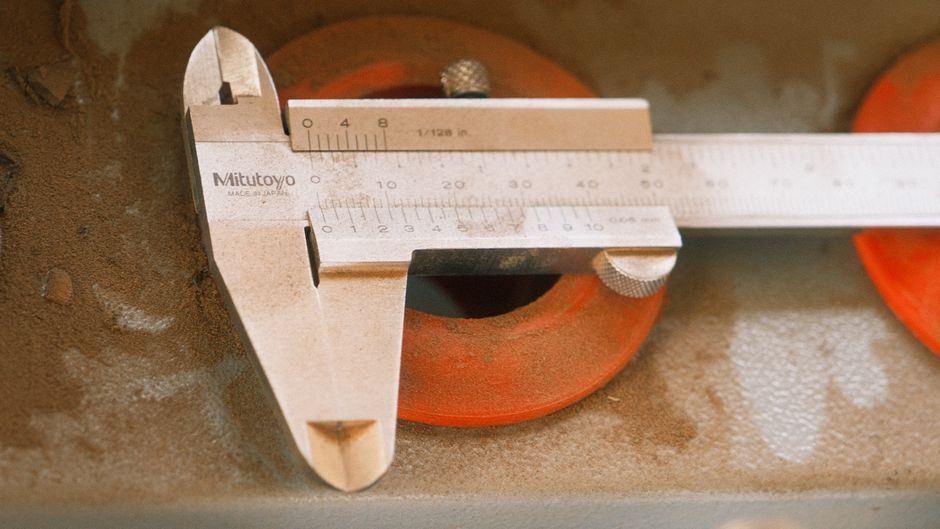
On bulk-solid lines a hopper scale is a vessel-mounted weighing system whose load cells sit under the bin and report net/gross mass in real time, while a dynamometer is an in-line force transducer sized to read tension or compression along a single axis of pull, not to inventory a vessel [S2][S3].
The two instruments are routinely confused because both are sold as "industrial scales" and both terminate at a hook, shackle, or pad; on a grain, plastic-pellet, or cement line the wrong choice reads the wrong quantity and breaks either trade-weight compliance or structural-test traceability [S4].
What Each Device Actually Measures
A dynamometer returns a force value in newtons, kilograms-force, or pounds-force, with the load introduced coaxially through the body of the device; vertical and horizontal mounting are both valid, and capacities on the Tractel Dynafor Industrial line start at 1 t for the small handheld form factor and scale upward to higher-tonnage inline units used in field tension testing [S3]. A hopper scale returns mass — kg, lb, or t — by summing the vertical reaction on 3 or 4 compression load cells fitted between the vessel legs and its support structure; the measurement is inherently static and summed, so the scale does not care about a single line of pull, only about the total downward force on the bin [S5].
Tractel's own distinction lines up the use cases: the crane scale-class Dynascale is a large, screen-forward device built so an operator can read mass from the cab or floor during a lift, while the Dynafor 1 t is a pocketable inline dynamometer aimed at cable tensioning and field proof tests [S3]. American Scale's reference material on the same family of devices makes the second axis explicit: dynamometers cover both dynamic force events and static compression tests, where the load is "not subject to movement" — exactly the regime a hopper scale lives in [S4].
Capacity Ranges, Readability, and Form Factor
Commercial digital crane scales — the closest functional cousin to a vessel-mounted hopper scale in the suspended-load family — span 50 kg to 100 t in standard form, with heavy-duty models reaching 150 t and above [S2]. Powerful Machinery's published crane-scale portfolio is narrower, covering 100 kg to 12 t in the standard digital series and up to 225 t at the top of the heavy-duty table; the same vendor's dynamometer line is intentionally lower-capacity because inline force work rarely needs vessel-class mass [S2].
Hopper scales sit in a different capacity band entirely. Rice Lake's worked example uses a grain hopper scale at 100,000 lb (≈45.4 t) full-scale with calibration masses of only 4,000 lb — the ratio is intentional, because a 12.5 % load substitution is the minimum to reach a NIST Handbook 44 / OIML R76-acceptable initial calibration by build-up, and the example scales weights back to 8,000 lb by adding grain on top of the dead weights [S5]. That 25:1 vessel-capacity-to-test-mass ratio is why hopper scales are almost always built around 3 or 4 hermetically sealed compression cells rather than a single hook-mounted transducer: the load is distributed, the cells are field-serviceable, and the vessel can be calibrated without dismantling the process [S5].
Readability on a hopper scale is typically 0.05 % to 0.1 % of full scale at installation, dropping as the vessel ages; dynamometer readability is quoted as a percentage of full scale but at a finer class — 0.1 % to 0.5 % is common on the Tractel Dynafor industrial tier — because the device only sees one line of force and does not have to reject vessel-induced side loads [S3]. Side-load rejection is the silent specification that separates the two: a hopper scale's mounting hardware is specifically designed to ignore horizontal piping reactions, while a dynamometer's accuracy spec is only valid when the pull is coaxial [S3][S5].
Selection Criteria: Weighing a Vessel vs Reading a Line of Force
Pick a hopper scale when the requirement is net or gross material mass inside a fixed or wheeled bin, when the output feeds a batching recipe, inventory system, or trade-weight invoice, and when the vessel is refilled and discharged repeatedly; this is the only configuration that supports legal-for-trade billing under typical metrology regimes [S5]. Pick a dynamometer when the requirement is a single line-pull value — proof load on a sling, cable tension on a guy wire, anchor pull-out, or compression test on a structural member — and the asset is not a vessel at all [S3][S4].
The decision matrix in plain prose:
• Configuration: hopper scale is a multi-cell support under a vessel; dynamometer is inline on a single tension/compression axis [S2][S5]. • Output quantity: hopper scale reads mass in the unit of trade (kg, lb, t); dynamometer reads force (N, kgf, lbf) [S2][S3]. • Calibration mass: hopper scales are calibrated with 12.5 % to 100 % substitution using build-up material plus test weights; dynamometers are calibrated against a force-standard machine on the bench [S5]. • Compliance scope: hopper scales sit under weights-and-measures rules (OIML R76, NIST HB 44 in US jurisdictions) for trade use; dynamometers sit under proof-load/test-instrument rules and are not typically trade-legal [S3][S5]. • Typical capacity band: hopper scales cluster at 1 t to 100 t full-scale per vessel; industrial dynamometers cluster at 1 t to 100 t per inline unit, but the duty cycle is fundamentally different [S2][S3][S5].
The two are not substitutes on a bulk line. A standard practice that fails in the field is hanging a vessel from a crane-scale hook to "weigh the contents" — the read is single-axis, sensitive to swing and side load, and not compliant for trade billing; the correct fix is a properly mounted hopper scale with summed load cells and a NTEP/OIML indicator [S5]. The reverse failure is using a hopper scale to proof-test a sling — the cells are not rated for short-duration overload the way a dynamometer is, and the readout is in mass, not force, so the engineer cannot compute a safety factor [S3][S4].
Calibration Workflow Differences
For a hopper scale, Rice Lake documents a 4-method set covering direct verification with test weights, build-up with substitute load (grain, water, or product) to reach the 12.5 % substitution floor, material substitution against a known reference vessel, and re-verification with the original weights [S5]. The 100,000 lb grain-bin example explicitly uses a 4,000 lb weight set plus incremental fills to reach 8,000 lb, 12,000 lb, 16,000 lb and beyond the 12.5 % threshold, with the scale expected to read each step to within the indicator's resolution [S5].
For a dynamometer, the analogous procedure is a force-machine calibration against a Class-A load cell standard, then a periodic in-situ check with a known deadweight or a calibrated shackle; tractel-style product data sheets publish a 0.1 % to 0.5 % full-scale combined error band for the Dynafor industrial line, and that band is what safety-factor calculations are based on [S3]. Operators should not accept a "weighing" calibration for a dynamometer or a "force" calibration for a hopper scale — the error model, the standards, and the metrology rules are different [S4][S5].
Who It Is For — and Who It Is Not For
A hopper scale is for plant engineers, batching supervisors, and inventory accountants who need a reliable mass reading on a fixed or mobile bin. It is not for riggers, lifting contractors, or anyone who needs to certify a single line of pull. [S2]
A [dynamometer](/encyclometer/dynamometer.html) is for lifting-gear inspectors, cable-tension crews, aerospace and energy test technicians, and structural-test engineers. It is not for process operators who need to close a batch recipe or file a trade-weight invoice.
The borderline case is the crane scale, which is essentially a single-point load cell in a hook housing — useful for one-off lifts where the goal is "does this load exceed 90 % of rigging capacity" but not a substitute for a permanent vessel scale, because side-load errors and swing dynamics push its repeatability well outside what a hopper-scale indicator will accept [S1][S2][S3]. The decision tree is therefore: if the asset is a vessel, specify a hopper scale with multiple cells; if the asset is a line of force, specify a dynamometer; if the asset is a one-time lift, a crane scale is acceptable but must be re-verified before each shift.
Limitations and Failure Modes
Hopper scales fail predictably when the vessel's support structure binds — piping reactions, weld-induced moment, or a cell that has been over-strood will push the reading outside the resolution band; the symptom is a slow drift when material is added and removed, and the fix is almost always mechanical, not electronic [S5]. Dynamometers fail when side load exceeds 5 % to 10 % of full scale on most industrial units, when the line of force is not coaxial with the body, or when shock loading exceeds the rated peak; the symptom is an offset that will not zero out, and the fix is to repath the rigging or replace the unit [S3][S4].
Process engineers specifying either should also check the IP rating at the install point (IP65 minimum for indoor wash-down, IP67 or IP68 for outdoor grain or cement service), the operating temperature window of the cells (−10 °C to +40 °C for standard, extended ranges for heated vessels), and the indicator's communication protocol — analog 4–20 mA, RS-485/Modbus RTU, and Ethernet/IP or PROFINET are now standard options on mid-tier hopper indicators, while Bluetooth and app integration are increasingly common on the dynamometer side for proof-test logging [S2][S3].
Related reading for capacity and accuracy trade-offs is covered in our crane scale capacity and shortlist logic brief; engine and motor test-stand users should also see the dynamometer selection criteria map for the braking-dynamometer branch of the family.
Track these signals over the next quarter: vendors publishing OIML R76 / NTEP certificates for new mid-capacity hopper indicators in the 5 t to 50 t band, and dynamometer OEMs extending Bluetooth proof-test logging to Android and iOS app suites with PDF certificate export.