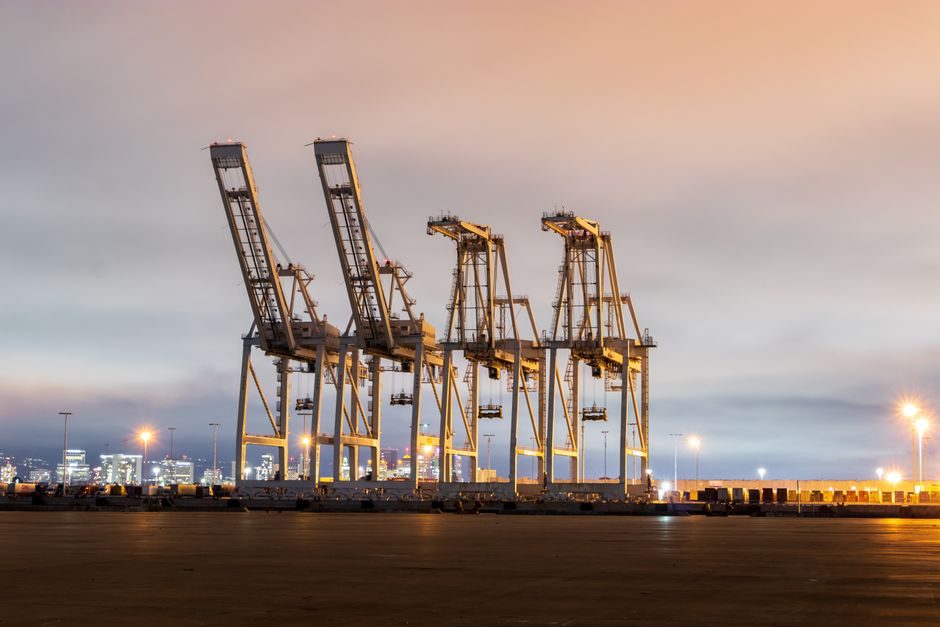
Buyers sourcing crane scales in 2026 should anchor the spec on four numbers first: maximum capacity (kg/t), display digit height, enclosure IP rating, and battery or wireless option. A 30 mm LED digit on an aluminium housing, in capacities of 1,000 / 3,000 / 5,000 / 10,000 kg, is the baseline profile released by Gram Group for the Lite C5 family [S1].
Mid-market hanging scales are also widely listed at the 5,000 kg / 11,000 lb point, confirming that this capacity remains the price-sensitive tier in distribution channels [S2]. Specialist suppliers such as Intercomp frame crane scales as material-handling sensors delivering real-time load data, replacing legacy mechanical dynamometers [S6].
Capacity Tiers and Match-to-Duty Logic
Standard industrial OCS-series crane scales cover 100 kg to 30 t in discrete steps: 100 kg, 500 kg, 1 t, 2 t, 3 t, 5 t, 10 t, 15 t, 20 t, 30 t — a ladder that lets a buyer over-spec by 25–50% rather than under-spec [S5]. The Lite C5 ships only in the upper four (1 t / 3 t / 5 t / 10 t), signalling that lighter sub-1 t jobs are normally handled by bench or bench scale platforms, not hanging scales [S1].
Procurement rule used by process plants: pick a rated load at least 1.25× the heaviest single lift and at most 80% of the hook's WLL. Below 1 t, specify an electronic scale or platform; above 30 t, move to a dedicated load cell + hopper scale instrumentation, not a hanging scale.
Display, Readability, and Operator Distance
Display legibility at 5–10 m hook height is set by digit height: 30 mm LED is the most common industrial baseline, with optional remote readout modules on C6, C7, and C9 variants for above-5 t lifts [S1]. LED segments beat LCD outdoors; LCDs win indoors where backlight glare is a problem.
Auto-hold and weight accumulation are now near-universal in the Lite family, freeing the operator from manual tare at every lift [S1]. For yards where the operator is 8–15 m from the hook, specify a wireless remote display rather than relying on auto-hold alone.
Enclosure, Anchors, and Environmental Rating

Aluminium housings dominate sub-10 t crane scales, paired with reinforced lift anchors rated for the full WLL plus shock load [S1]. For wash-down or marine yards, request stainless housings and confirm the IP rating in writing — generic "waterproof" claims should be rejected unless the IP number is on the nameplate.
Foundries, plating lines, and chemical docks should treat the crane scale as an IP65 / IP66 device, with the load connector sealed and the display potted. Standard industrial units without a stated IP are typically IP54 at best.
Power, Wireless, and Connectivity Options
Rechargeable battery packs are now standard on C3, C6, C7, and C9 variants; the Lite C5 ships as a light-crane wired model aimed at fixed jibs [S1]. Wireless handheld remotes are standard above 3 t, with line-of-sight range typically 50–100 m on the 433 MHz / 2.4 GHz ISM bands [S5].
For plants running Industry 4.0 dashboards, confirm output: RS-232 / RS-485 remains the lowest-friction path; some OEM scales expose 4–20 mA or Modbus RTU as options. Buyers integrating crane scales into a WMS should plan for one gateway per cell, not a direct Wi-Fi link per hook.
Comparison: Main Crane Scale Form Factors
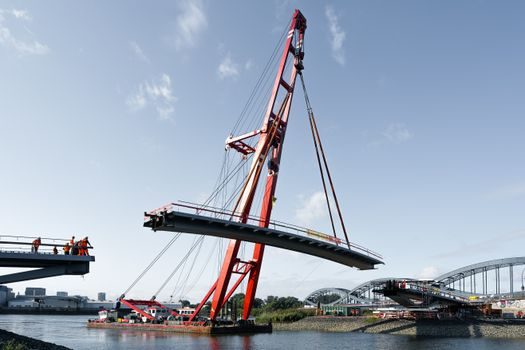
Four realistic options on the 2026 shortlist, scored on the four buyer-critical axes:
1) Lite hanging scale (1–10 t, LED, aluminium, wired): cheapest, simplest, ideal for fixed indoor jibs under 5 t — capacity ceiling is the limiter. 2) Wireless hanging scale (3–30 t, remote, rechargeable): the default for outdoor yards and shipyards; verify ISM-band certification per destination country. 3) Heat-shield crane scale (foundry / forge): refractory-lined housing, higher mass, used where ambient exceeds 60 °C; expect 2–3× the price of a standard unit. 4) Dynamometer / linear guide integrated load cell: the choice for tension testing and proof-load rigs under 50 t where accuracy below 0.1% is required; not a production lifting device [S6].
Decision rule: stay on option 1 or 2 unless a written duty cycle (ambient, accuracy, duty hours per shift) forces a move to option 3 or 4. Buyers who try to use option 1 above its IP / duty envelope account for most warranty disputes.
Use Cases and Selection Logic
Real 2026 demand splits into three buckets. Scrap yards and recycling: 5–10 t wireless LED units dominate, with auto-hold required because the operator's hands are on the grapple. Manufacturing and OEM assembly: 1–3 t wired LED units on bridge cranes, often integrated with a crossed-roller guide pick-and-place cell. Logistics and ports: 10–30 t wireless units with remote readout and data logging for invoicing [S3][S6].
Jadever's 2026 catalog lists crane scales alongside weighing indicators, bench scales, and floor scales as a parallel category, confirming that the buyer's first fork is "hanging" vs "platform" rather than between specific brands [S3]. Cross-check the Crane Scale Selection: Capacity, Accuracy, and 2026 Shortlist Logic map for the shortlist scoring method.
Who Should NOT Buy a Standard Crane Scale
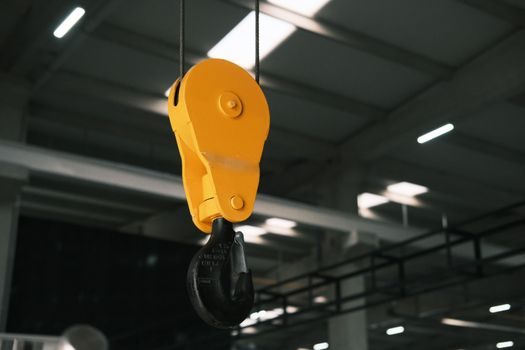
Buyers needing legal-for-trade billing weights above 5 t should require an OIML R76 or NTEP certificate on the nameplate, not a generic "calibrated" sticker. Buyers below 100 kg single-lift are overpaying for a hook-and-loadcell device and should specify a precision platform scale instead. Buyers in ATEX / IECEx zones 1 or 2 must request the Ex marking on the nameplate, not rely on a vendor "we can supply Ex" statement. [S1]
Two more disqualifiers: any lift where peak shock load can exceed 2× the static WLL (e.g. coil handling without a snubber) and any application requiring dynamic weighing of a moving load — standard crane scales are static-reading devices, and specifying them dynamically is a known warranty void.
Signals to Track in Late 2026
Two verifiable signals: (a) whether the Lite C-series adds a native Modbus / Ethernet output option by Q4, given the current C5/C9 spec lists only display, remote, and battery; (b) whether the 10–30 t wireless tier consolidates around a single ISM band per region, since current Chinese OEM listings show both 433 MHz and 2.4 GHz variants under the same model code [S1][S5]. The Industrial Ethernet for Smart Manufacturing spec map is the reference for the connectivity fork.