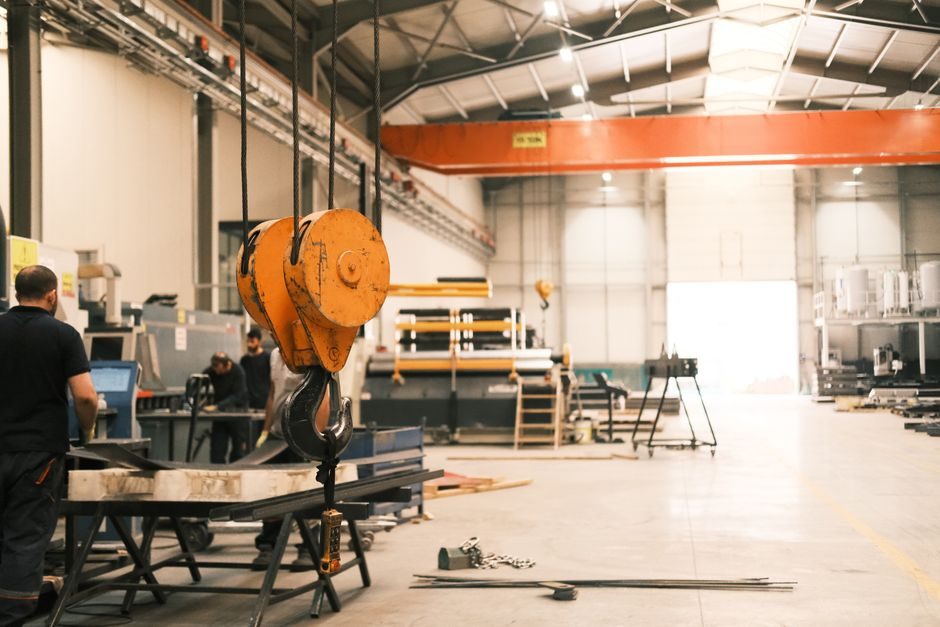
Crane scale selection hinges on four binding constraints: maximum lifted load, required accuracy class, environmental sealing, and the legal-for-trade posture of the host site [S1]. A crane scale is a load-bearing weighing instrument suspended between the hoist hook and the load, replacing or supplementing a mechanical dynamometer with a real-time readout — its core function is the same as a platform scale hung from a hook rather than set on a deck.
Intercomp, a US manufacturer of material-handling weighing products, frames crane and hanging scales as a route to real-time load data without breaking the lifting circuit, with the typical installed unit designed for portability between jibs, gantries, and overhead cranes in industrial, aviation, and logistics operations [S1]. Capacities on the commercial market run from a few hundred kilograms for light-duty rigging checks up to 200 t and beyond for steel-mill and shipyard duty.
Capacity, Safety Factor, and Resolution
Specifying a crane scale by the single heaviest lift ever recorded is the most common procurement error; the correct basis is the heaviest routine lift, then apply a derating margin so the load cell never sits at its nominal full scale in service [S1]. A 10 t scale routinely lifted at 9.5 t will drift, lose linearity, and fatigue faster than a 20 t scale working in the same 9–9.5 t band — load cell fatigue accumulates in the upper 20–30 % of rated capacity.
Resolution, the smallest displayed increment, must be evaluated as a ratio against capacity: industrial crane scales commonly ship with 0.1 % to 0.05 % of full scale as the displayed division, while trade-approved variants must satisfy OIML R76 / NTEP Handbook 44 step requirements. For a 5 t unit, a 0.1 % resolution equals 5 kg, which is too coarse for batching but adequate for shipping verification; a 1 kg resolution (0.02 %) requires a higher-accuracy strain-gauge stack and tighter calibration. The relationship between the host electronic scale architecture and the suspended load cell is treated in more detail in the weighing indicator vs electronic scale spec map.
Accuracy Class, Calibration, and Legal-for-Trade
Accuracy class is set by the metrology framework the host site falls under: OIML R76 (Europe/most of world), NTEP Handbook 44 (US commercial), and the older NBS Handbook 44 lineage for law-enforcement weighing [S1]. Class III instruments (typical for general industrial crane scales) commonly deliver 3 000 to 5 000 divisions; Class IIII units (scrap, rough weighing) allow 500 to 1 000 divisions and tolerate far harsher mechanical and thermal environments.
Calibration must be traceable to a national standard, and on suspended scales this means a known deadweight applied vertically with the load cell in its installed orientation — pre-calibrated bench scale standards do not transfer cleanly to a hook-loaded geometry. For internal-only material control, an unapproved industrial scale is acceptable; the moment the readout drives invoicing, dispatch decisions, or regulatory reporting, only an approved scale can be legally used. The indicator side of the same architecture (display, comms, and zone rating) is covered in the weighing indicator selection criteria: spec, zone, and shortlist logic reference.
Environment, Sealing, and Hazardous Area Rating
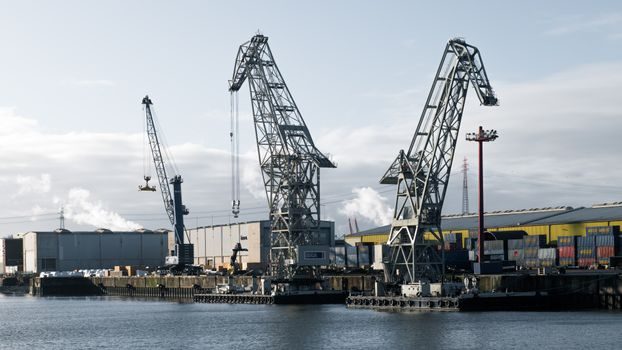
Foundries, chemical plants, grain elevators, and offshore platforms push crane scales into heat, dust, moisture, and explosive-atmosphere zones that a benign warehouse never sees [S1]. The two binding ratings are ingress protection (IP65–IP68 for outdoor wash-down; NEMA 4X equivalent) and hazardous-area classification (ATEX 2014/34/EU Zone 1/2 or 21/22, or IECEx equivalents).
An IP65 enclosure survives rain and hose-down but not submersion; a foundry or marine application typically demands IP67 or IP68 plus stainless housing. For Zone 1 (continuous explosive atmosphere likely), the load cell, indicator, and intrinsically safe barrier must be specified as a matched set — retrofitting a standard scale into a Zone 1 site is a near-universal rejection. The same environmental logic that drives hopper scale selection in dusty batch plants applies here: sealed load paths, sealed connectors, and sealed cable glands.
Mechanical Format: Hook-and-Shackle vs. Compression Link
The two dominant mechanical formats are the hook-and-shackle scale (load cell between the hoist hook and a bottom hook/swivel) and the compression-link or tension-link load cell (the cell is installed in-line with the wire rope or rigging hardware) [S1]. Hook-and-shackle units are the default for portability and quick redeployment between cranes; compression-link units are the right answer when the scale becomes a permanent part of a fixed hoist path or when very high capacities (50 t and up) make a hook-and-shackle geometry impractical.
Hook-and-shackle scales typically top out around 30 t for general industrial product, with specialised units extending to 50 t; compression links routinely serve 50–200 t steel-mill and shipyard lifts. The choice also drives display options: hook-and-shackle units usually carry the indicator on the scale body itself, while compression links feed a remote indicator via cable or wireless link. For heavier duty that exceeds crane-scale capacity entirely, a truck scale becomes the verification platform for inbound and outbound loads.
Power, Connectivity, and Wireless Options

Battery life is the single largest operational complaint with portable crane scales: rechargeable lithium packs typically run 40–100 hours of intermittent use, with the lower number closer to a continuously-lit display with wireless streaming on [S1]. Wireless display links (proprietary 2.4 GHz or Bluetooth) let the operator read the load at floor level, removing the need for a second person at the hoist — a meaningful safety gain when lifts are over 5 t.
Connectivity options now extend to Wi-Fi and 4G telemetry for fleet-level aggregation, with data logging to internal memory for batch reporting. The integration patterns — what gets logged, what gets pushed to a plant historian, and how the indicator talks to a PLC — mirror those in modern electronic scale systems rather than legacy mechanical scales, and the indicator selection logic in the weighing indicator spec, zone, and shortlist logic reference applies almost unchanged.
Selection Criteria Matrix: Four Realistic Options
For a routine procurement decision, the candidate set typically narrows to four profiles, each matched to a duty envelope:
1) Light-duty portable (1–5 t, 0.1 % FS, IP65, battery, ≤ US$2 000): correct for rigging shops, HVAC lift verification, and small-parts shipping checks; not for invoiced loads. 2) Mid-duty industrial (5–20 t, 0.05 % FS, IP67, OIML R76 approval, wireless display, US$3 000–US$8 000): the default for general manufacturing, logistics, and steel service centres. 3) Heavy-duty fixed (20–100 t, compression-link, 0.1 % FS, IP66, wired remote indicator, US$10 000–US$30 000): the answer for steel mills, shipyards, and precast concrete yards. 4) Hazardous-area (any capacity, ATEX/IECEx Zone 1, stainless, IP67, approved): the only acceptable option for refineries, chemical plants, and grain elevators; expect a 2–4x cost premium over the equivalent non-Ex unit.
Who Should Not Buy a Crane Scale
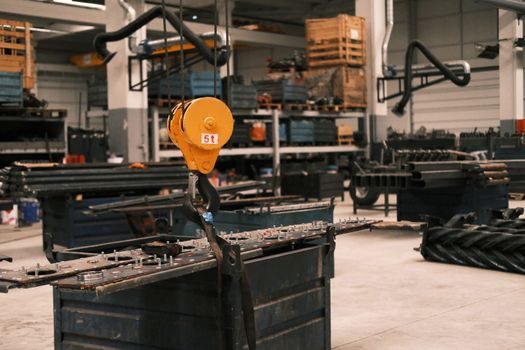
If the maximum lift exceeds the largest commercial crane-scale capacity (around 200 t for specialised units) and the load is also routine, the right instrument is a compression load cell plus a weighing indicator or a hydraulic load monitor integrated with the crane's own safety system. Buying a 200 t crane scale to weigh 5 t loads is also a mistake: the 0.1 % resolution at 200 t equals 200 kg, useless for 5 t batching work; a 5–10 t mid-duty scale would give 5–10 kg resolution at the same cost. [S1]
For static floor weighing of pallets, drums, or trolleys, a platform scale or bench scale is the right answer; a crane scale suspended over a floor scale duplicates function and adds two calibration points. If the operation is purely inventory counting and not invoiced, a simple mechanical dynamometer with annual calibration may be sufficient, though it forfeits the data-capture benefits that drive most 2026 procurement decisions.
Failure Modes and Maintenance Realities
The dominant failure modes for crane scales, in order, are: load cell fatigue from chronic overload, connector and cable damage at the strain-relief boot, battery degradation in units left on continuous charge, and moisture ingress through gland seals after field abuse [S1]. Annual re-calibration is the industry baseline; six-monthly is the norm in trade-approved installations and in any application where overload events have been logged.
Load cell replacement is typically 40–60 % of the cost of a new scale, so a fatigue-damaged 10 t scale on a 12 t routine lift is almost always a write-off; a 20 t scale on the same lift is still in service. Track these signals at the next quarterly review: ratio of routine lift to nominal capacity (target below 0.7), and number of overload events logged by the indicator (any non-zero count in a quarter triggers a calibration review).