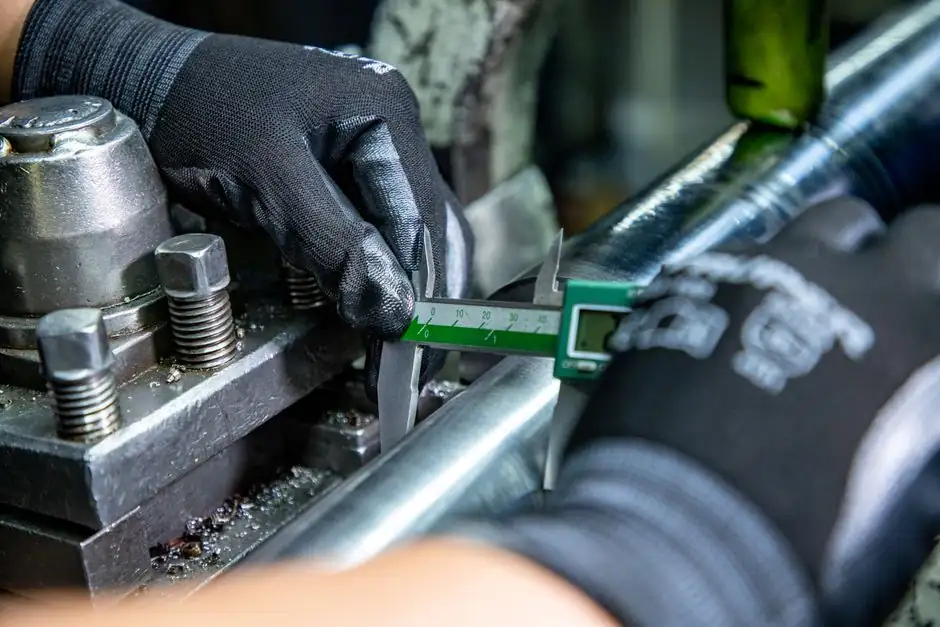
Second-generation e-axle plants are moving to cell-and-line hybrid architectures to run multiple product variants on a single line without sacrificing takt time, with AISIN deploying this model from a 2022 first-generation base and updating it in a March 9, 2026 technical disclosure [S2].
Process steps common to all models run on a shared automated main line using robotics, while model-specific components and assembly steps are grouped into dedicated cells that act as variation-handling lines, pairing automation with human dexterity where it adds the most value [S2]. The planning math is now standardized: on a 450 min/shift base, raising axle output from 60 to 100 units per shift compresses cycle time from 7.5 min to 4.5 min, a delta that an extension line typically cannot absorb, pushing planners toward a parallel-line layout with additional jigs, fixtures, line-side storage, and material handling [S5].
Capacity math: cycle time, takt, and the 100-axle-per-shift benchmark
Capacity up-gradation for any axle or e-axle line starts with cycle-time compression. Reference plant data shows a working window of 450 min/shift and a baseline of 60 axles/shift at a 7.5 min cycle, with a target of 100 axles/shift at a 4.5 min cycle, meaning any station with cycle time above 4.5 min becomes the bottleneck and must be paralleled or retooled [S5].
Planners should compare an extension line against a parallel line on criteria including investment cost, number of manpower, flexibility, and ease of implementation, and the parallel line layout is recommended [S5]. The same logic applies to e-axle EDU (electric drive unit) assembly, where the electric motor, transmission, and inverter are integrated and tested as a single unit, because a missed cycle at any sub-station blocks the full e-axle output.
Production line architecture: cell, line, or hybrid
Traditional line production delivers high productivity and consistent quality by fixing cycle time, but it loses flexibility when product mix grows, which is the everyday reality for electrified passenger-car and light-commercial programs [S2].
Cell production gives one worker ownership of a full assembly, which improves craftsmanship and job satisfaction but increases individual workload, lengthens training, and reduces throughput at high volume [S2]. The cell-and-line hybrid used in AISIN's second-generation eAxle line routes the common process steps through an automated main line, then diverts model-specific steps into cells where human skill adds the most value, a pattern that fits e-axle programs where torque class, inverter rating, and reducer ratio vary by vehicle segment [S2].
For comparison: a pure line minimizes unit cost at constant volume, a pure cell maximizes flexibility and worker engagement, and a hybrid sits between them on both axes while letting planners ramp capacity by adding cells rather than rebalancing the entire main line, a structural advantage when SOP (start of production) volumes are uncertain.
End-of-line and conformity-of-production testbeds
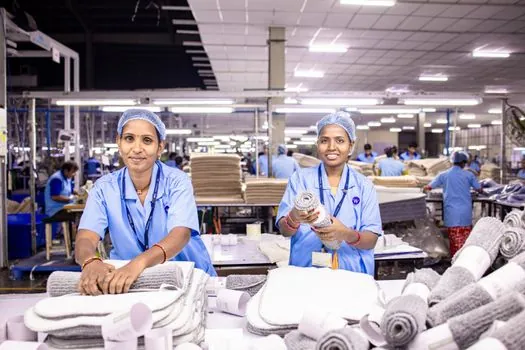
EOL (End of Line) test capacity is now a hard constraint, not an afterthought, because regulators and OEM quality systems require COP (Conformity of Production) checks on every shift, and NVH (noise, vibration, harshness) defects caught after vehicle integration are the most expensive recalls in the e-axle category [S1].
AVL's E-Axle TS (Test System) family covers three roles: End of Line, Quality Assurance, and Conformity of Production, with standard power coverage up to 440 kW per wheel and higher ratings available on request, which matches the passenger-car, light-, mid-, and heavy-duty segments on a single testbed platform [S1]. The layout is intentionally modular: small footprint, brick-and-mortar or protective enclosure, trolley/conveyor/robot/AGV (Automated Guided Vehicle) handling, and manual or match-plate connection, so the same test cell can be redeployed between pilot and series production without rebuilding the line [S1].
Testbed up-time, not nominal throughput, is the binding KPI, since a 24/7 highly automated workflow determines how many e-axles can be released per shift; AVL markets this as the binding design target on its E-Axle TS platform [S1]. For procurement teams, the spec gate is therefore not "what kW rating" but "what is the guaranteed up-time, what is the takt, and does the test cell cover both EOL and COP at the same footprint" [S1].
Supplier integration: super-vertical model and lead-time compression
An e-axle is not a parts bin, it is the integration of an electric motor, inverter, and reducer, with Nidec estimating that around 400 complex components must be developed and assembled as a single optimized system, which is why suppliers with in-house motor, inverter, and production-equipment capability hold a structural lead-time advantage [S4].
Industry reference puts the design-to-supply cycle for an e-axle program at 2.0-2.5 years, and Nidec reports it has compressed this to 1.0-1.5 years by combining super-vertical integration (in-house production of key components plus the equipment that makes them) with platform-based derivative development [S4].
For buyers, the practical reading is that lead-time and capacity ramp are coupled: a supplier that builds its own stator winding lines, rotor magnet lines, and EOL testbeds controls its own capacity curve, while a buyer sourcing from an assembler that buys motors and inverters third-party will see capacity slip when any of those upstream suppliers is constrained [S4]. Nidec has explicitly tied this capability to its stated objective of holding the largest global market share in traction motors, and has flagged Europe via its Nidec Electric Motor Serbia plant as part of that ramp [S4].
Volume targets and industrial scale signals
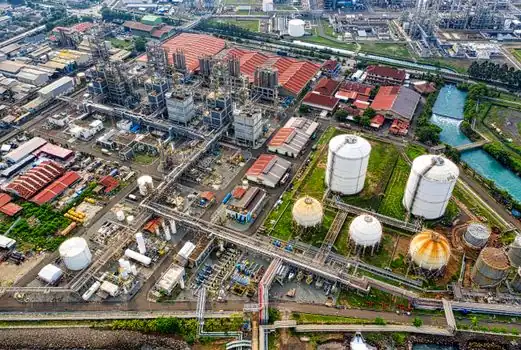
Public capacity announcements in the e-axle segment now read in millions of units, not thousands, with one widely cited OEM program targeting 3.6 million e-axle unit sales against a planned production capacity of 7 million units by 2025, a 2:1 headroom ratio that effectively builds in second-source optionality for downstream tier-1s [S3].
For sourcing teams, the procurement-relevant translations are: spec for takt per shift and takt per testbed, not nominal annual volume; require COP-capable testbeds rated to the highest-power variant in the program, not just the average; and treat 1.0-1.5 year development lead times as the new baseline for super-vertical suppliers versus 2.0-2.5 years for the broader market [S4][S1][S3].
Procurement selection criteria: a side-by-side
For a buyer choosing between line architectures and supplier models, the decision reduces to four numbers and one constraint, lined up below. [S2]
Architecture and supplier comparison: (1) Pure line: lowest unit cost at fixed volume, weakest on product-mix flexibility, typical for legacy axle programs at constant 7.5 min cycle [S5]. (2) Pure cell: highest flexibility and worker engagement, weakest throughput per shift, suited to low-volume specialty axles [S2]. (3) Cell-and-line hybrid (AISIN second-generation): intermediate cost, high flexibility, scalable by adding cells, first deployed 2022 and updated March 9, 2026 [S2]. (4) Super-vertical integrated supplier (Nidec): in-house motor/inverter/reducer plus in-house production equipment, 1.0-1.5 year design-to-supply lead time versus an industry 2.0-2.5 year baseline, and a stated target of the largest global traction-motor market share [S4].
Testbed gate, applied to all four: EOL plus COP coverage, up to 440 kW per wheel standard rating, 24/7 automated workflow, modular footprint, VR/AR-supported planning and training [S1].
Constraints, failure modes, and what to watch
The dominant failure mode in e-axle capacity planning is treating cycle-time compression as a station-by-station problem instead of a system balance problem; reference work shows that moving from 60 to 100 axles/shift on a 450 min/shift base is not a linear exercise and that bottleneck identification must precede equipment purchase [S5].
The second failure mode is mismatched testbed coverage, where a plant invests in main-line capacity but under-sizes EOL and COP testbeds, so the line is throttled by the test cell even when the assembly cycle is healthy [S1]. A third risk is single-region sourcing, which the AISIN disclosure explicitly addresses by designing for region-specific strategies that require suppliers to be more agile than uniform global lines can be [S2]. Trackable signals to watch: new EOL testbed orders above 440 kW per wheel, additional cell capacity at hybrid e-axle plants, and further super-vertical announcements that fold inverter or reducer production in-house.
For readers mapping this onto adjacent drivetrain commodities, the same spec-first logic that governs industrial gearbox selection applies to e-axle reducer sourcing, where AGMA (American Gear Manufacturers Association) and ISO (International Organization for standardization) quality classes, load class, and NVH targets are the binding gates rather than brand. Process-engineering teams scaling parallel lines can also borrow the 5-factor spec map for cutting tool production line design when laying out e-axle machining cells, since takt, station count, automation mix, footprint, and changeover time drive both decisions. Where rare-earth magnet content is a constraint, the magnetic material selection map for SmCo, NdFeB, AlNiCo, and soft alloys provides a useful side reference, because traction motors inside the e-axle depend on the same NdFeB (neodymium iron boron) versus SmCo (samarium cobalt) trade-off between room-temperature flux and high-temperature stability, and at least one major supplier has flagged motor production capacity as its primary ramp bottleneck [S4].
Spec-level background on the components involved: pressure transmitter, flow meter, and industrial valve.