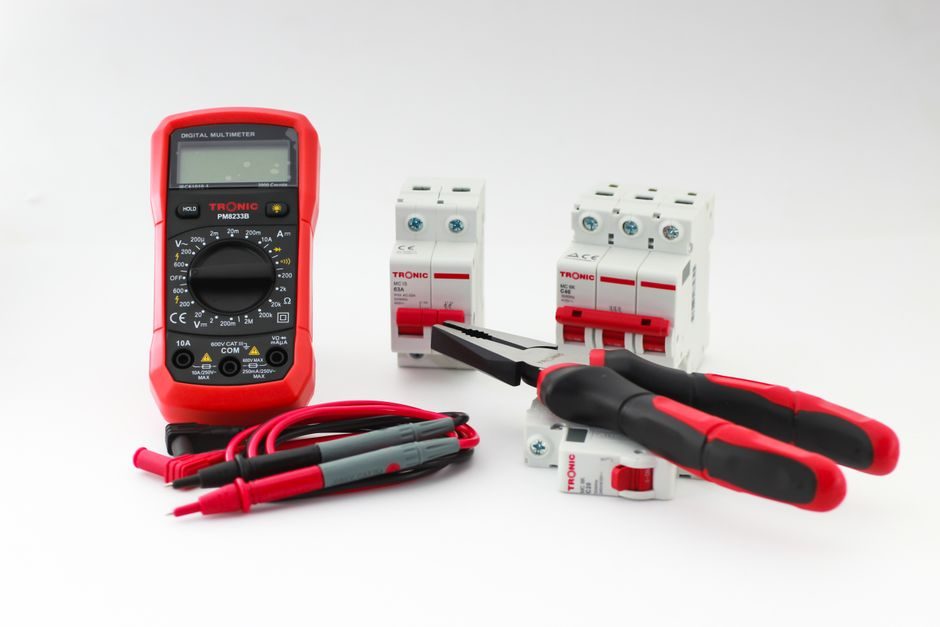
An industrial eddy current tester bought new in 2026 lists between US$300 and US$30,000+ on public B2B catalogs, with the 4-figure to low-5-figure band holding the bulk of NDT-grade instruments [S3][S4][S8].
Entry-level single-frequency coating thickness gauges sit near US$300 per piece at 1-unit MOQ on Made-in-China.com [S8]; dual-frequency handheld flaw detectors such as the Zetec MIZ-21C add surface-array capability at a markedly higher tier and quote on request [S3]. Production-line ECT instruments for tube, bar and wire — typified by the EDDYSUN EEC-24 with 64 Hz–4 MHz frequency range, 0–90 dB gain in 0.5 dB steps, and 6 m/s detection speed — sit in the mid-band and ship at roughly 20 kg per channel [S2].
Price Tiers and What Each One Buys
The catalog splits cleanly into four tiers, and a spec-driven buyer can place a target instrument without reading the marketing copy. Tier 1, sub-US$500: single-function coating-thickness gauges with combined eddy-current/magnetic probes, 1-piece MOQ, and aluminum-case transport packaging [S8].
Tier 2, US$3,000–US$7,000: industrial eddy-current motor and brake test benches, sold per set with 1-piece MOQ, typically AC/DC configurable, and used for dynamometer loading rather than flaw detection [S4]. Tier 3, US$5,000–US$15,000: rack or benchtop ECT instruments for tube/bar/wire production lines with 1–4 channels, frequency coverage from tens of hertz to several megahertz, and programmable alarm zones [S2]. Tier 4, US$15,000–US$30,000+: dual-frequency handheld flaw detectors with surface-array probes, axial-encoding bolt-hole modules, and 3D C-scan visualization, typically quoted on request by the OEM [S3].
Spec Gates That Move the Price
Five specification gates separate a US$500 unit from a US$25,000 unit, and buyers should rank them against their actual inspection before talking to sales. Frequency range is the first gate: a 64 Hz–4 MHz instrument covers ferritic and non-ferrous heat-exchanger tubing plus surface crack detection, while sub-100 Hz coverage is mandatory for pulse-eddy-current and remote-field techniques used on ferromagnetic pipe [S2][S9].
Channel count is the second gate; multi-channel array systems scale price roughly linearly because each channel adds its own impedance plane, phase rotation (0–360°, 1° steps in the EEC-24 architecture), and signal-cable shielding [S2]. Probe architecture is the third gate: a single pencil probe costs a few hundred dollars, an eddy-current array (ECA) probe or a rotating bolt-hole probe with axial encoder adds a four-figure sum, and a Surf-X array probe paired with a handheld instrument can compress inspection time by up to 95% versus pencil probing [S3].
Conductivity and coating-thickness mode is the fourth gate: dual-frequency plus digital conductivity with non-conductive coating measurement, as implemented in the MIZ-21B-class platform, commands a measurable premium over single-frequency units [S3]. Certification and software is the fifth gate: 3D C-scan visualization, multi-language embedded software, sealed enclosures for field use, and a documented Probability-of-Detection (POD) basis all push price into the upper tier [S3][S9].
Eddy Current vs Adjacent NDT Methods: A Cost-Based Comparison
Against competing surface NDT methods, eddy current testing has a distinctive cost profile that procurement should weigh up front. Versus liquid penetrant testing (PT) and magnetic particle testing (MT), an ECT handheld with surface-array option can reduce inspection time by up to 95% versus pencil probes, displacing the recurring chemistry, rinsing, and dark-room costs of PT/MT [S3]. Versus ultrasonic testing (UT), ECT requires no couplant, touches only the near-surface layer, and is largely insensitive to water-path coupling, but UT penetrates deeper; for thicker sections UT is the only viable method and its ultrasonic sensor price tracks similar four-figure-to-five-figure tiers.
Eddy current array (ECA) and remote-field eddy current (RFEC) add coverage area and through-wall capability on ferromagnetic tubing respectively, but require higher channel counts and more expensive probes than conventional ECT [S9]. Pulse eddy current (PEC) handles insulated ferromagnetic components but trades bandwidth and resolution — a buyer selecting PEC over surface ECT is paying for access to coated or insulated steel, not for better flaw sizing [S9].
Where Eddy Current Testers Are Used and Where They Fail
Eddy current testing is fit-for-purpose on conductive metals — non-ferrous alloys, austenitic stainless steel, and the near-surface layer of ferromagnetic parts — and is the standard method for surface crack, axial crack, weld defect, pucker, scar, and lamination detection on tube and bar lines [S2][S10]. In-process inspection of metal tube, bar and wire at line speeds up to 6 m/s (350 m/min) is a documented ECT use case in seamless and welded tube mills [S2].
The technique concentrates at the surface and loses sensitivity with depth, so for sub-surface flaws in thick ferromagnetic sections UT or phased-array UT is the right tool, not ECT [S10]. Inspection area is small relative to radiographic or phased-array UT, so probe design and test parameters must be set with a clear understanding of the target flaw [S10]. Operators also need a defined standard or reference part to phase and amplitude against; without that, signal interpretation is guesswork [S3][S10].
Vendor Landscape and Sourcing Channels

Public catalogs expose three vendor archetypes, and each behaves differently on price negotiation. German specialists such as ibg NDT Systems position on grinder-burn detection, ball-inspection AVIKO high-speed scanners, and 40+ years of NDT / 35+ years of ECT experience; pricing is quote-based and not visible on the public site [S1]. US-based NDT houses such as Zetec (now under Eddyfi) publish the MIZ-21B/C handheld platform with on-request quoting and 1.2 kg (2.6 lb) field units, signalling a price tier well above the gauge segment [S3].
China-based OEMs and exporters — EDDYSUN, Nantong Kino, and Haibao Instrument among them — list tube/bar testers, eddy-current motor test benches, and combination coating-thickness gauges with explicit price ranges and 1-piece MOQ on Made-in-China.com and on the vendor's own English site [S2][S4][S7][S8]. Independent NDT service providers such as eddyczech s.r.o. (Czech Republic, family-owned, established 2016) sell ECT, ECA, PEC and RFEC inspection services plus training, which is the right procurement route when a project needs probability-of-detection validation rather than a new instrument [S9].
Standards, Training, and Total Cost of Ownership
Eddy current testing is one of the established NDT methods referenced in general non-destructive evaluation documentation, and acceptance is usually tied to the customer-specific procedure rather than a single universal code [S10]. Buyers should match the probe, frequency, and conductivity setup to the written procedure before finalizing the bill of materials; a US$5,000 instrument running the wrong procedure is more expensive than a US$15,000 instrument running the right one [S10].
Total cost of ownership on an ECT line is dominated by probe wear, calibration standards, and operator training rather than purchase price. Pencil and array probes are consumables that must be replaced on a documented interval; calibration blocks and reference defects are mandatory consumables for any audit-ready program; and the third-party training programs offered by eddyczech and similar service houses are the fastest way to bring new operators up to a procedure-compliant level [S9]. A realistic five-year TCO stack for a benchtop production ECT is roughly 1× purchase price for the instrument, 0.3–0.5× for probes and standards, and 0.2–0.3× for training and procedure qualification, putting genuine five-year spend at 1.5–1.8× the sticker — without counting the line downtime that a flaky unit can cause [S2][S9].
Trackable signals for the next sourcing cycle: published 2026 price refreshes on the ibg NDT product configurator [S1], any new MIZ-series or Surf-X array probe release from Eddyfi/Zetec [S3], and EU-bound ATEX/IECEx-certified ECT handhelds for refinery and petrochemical turnarounds — a category where the eddy current tester market overlaps with the explosion-proof equipment spec stack covered in the explosion-proof installation guide.
Spec-level background on the components involved: linear guide, and crossed roller guide.