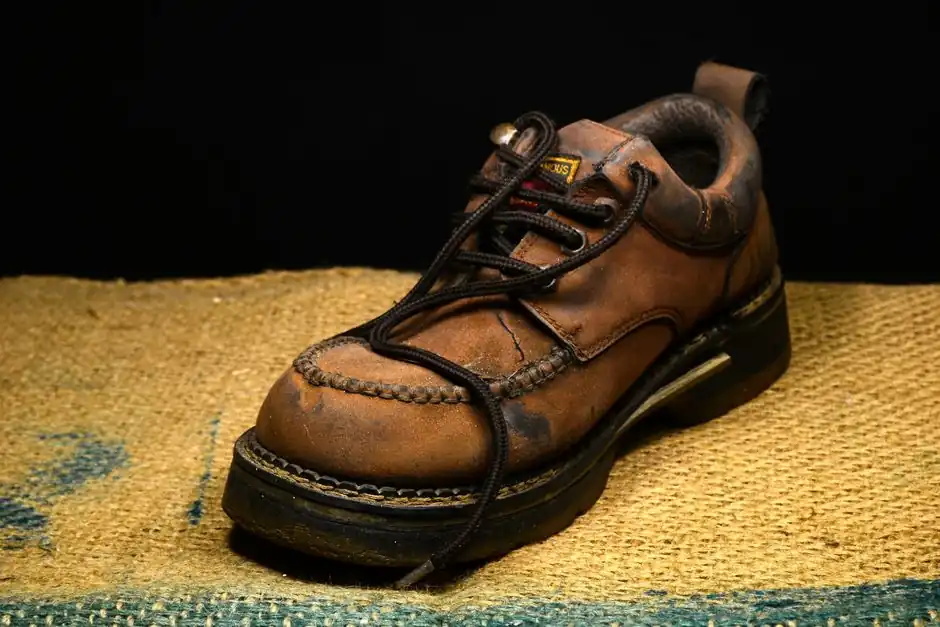
Choose EH-rated shoes when the floor is electrically insulating and the primary hazard is electrical; choose ESD-rated shoes when personnel must control static discharge in an EPA.
Both categories can provide impact, compression, puncture, and slip protection, so the rating must match the floor and electrostatic-control requirement rather than the physical-hazard level alone.
Electrical and Electrostatic Performance Serve Different Risks
EN ISO 20345 separates footwear by electrical behavior into conductive, antistatic, and electrically insulating, or EH, footwear [S3]. The footwear category therefore answers an electrical question, not simply a question about how protective the shoe is against impact.
EH footwear is intended for environments where the floor is insulating and the principal concern is protection from electrical shock associated with live equipment or charged surfaces [S3]. The relevant selection evidence is the footwear classification and its test record, not an informal claim that the shoe is “nonconductive.”
ESD footwear is selected for electrostatic protected areas where charge must drain in a controlled manner to protect electronic components. ANSI/ESD S20.20 and IEC 61340-5-1 treat the person, footwear, and flooring as one tested system [S1].
For the broader mechanics of personal grounding, heel grounders vs ESD shoes provides a useful comparison of personnel grounding methods, but footwear still has to be validated against the installed floor.
Contact Resistance Sets the Category
EN ISO 20345 assigns antistatic footwear a measured contact resistance from 100 kΩ through 1,000 MΩ, while footwear below 100 kΩ is conductive and footwear above 1,000 MΩ is electrically insulating [S3]. Those boundaries explain why “antistatic” alone does not establish either EH or ESD suitability.
The comparison below converts the terminology into an engineering decision:
EH is the correct choice for an electrically insulating floor and an electrical-shock hazard; ESD is the correct choice for a controlled EPA and static-sensitive products; ordinary antistatic footwear is a broader class that does not by itself prove either EH insulation or ESD performance [S3].
Physical Protection Must Be Specified Separately

Safety shoes address physical hazards such as falling objects, rolling loads, sharp objects, and slippery floors. Common features include steel or composite toe caps, puncture-resistant midsoles, slip-resistant outsoles, and oil- or chemical-resistant materials [S2].
ESD behavior does not replace those mechanical protections. A steel toe cap provides impact protection, while the sole, insole, and materials path from foot to floor determine electrostatic performance. A steel-toe shoe fitted with a standard insulating sole can fail an ESD system test [S1].
Composite toe caps remain available for ESD footwear and can suit metal-detected areas; they are lighter than steel caps on long shifts, but they do not alter the requirement to test the finished shoe on the actual flooring [S1]. Specify the required toe-cap protection and the electrical classification as separate attributes of one finished product.
For basic safety shoes, the selection record should therefore identify the protective toe-cap type, sole construction, puncture and slip features, chemical exposure needs, and the applicable safety-footwear classification. Electrical wording should be added only after the floor and process hazards have been defined.
Use Cases and Inappropriate Applications
EH footwear fits electrical work or production areas where insulating floors, live equipment, and charged surfaces create the governing risk. Its purpose is to limit the risk of electric shock while retaining ordinary physical-hazard protection [S3].
ESD footwear fits electronics assembly, test, laboratories, and other EPAs where static accumulation could damage sensitive components. Dissipative footwear releases charge gradually, while conductive footwear releases it faster; conductive behavior is appropriate only where the process specification calls for it and is not simply a stronger version of dissipative footwear [S1].
Neither EH nor ESD should be chosen solely because a product page uses the words “safety shoe” or “antistatic.” EH is not the general-purpose EPA solution, and antistatic labeling alone does not demonstrate compliance with EN 61340-5-1 or acceptance in an ANSI/ESD S20.20 program [S1][S3].
Verification Requires the Installed Flooring

ESD footwear must be tested together with the personnel who will wear it and the flooring installed in the protected area. A shoe that passed on a supplier’s test floor can fail on a different floor because of resistance variation, dirt, wear, or contamination carried in from outside the EPA [S1].
These test conditions provide evidence for the product classification, but they do not replace site verification.
Before a bulk purchase, test a candidate pair on the actual floor with representative wearers and retain the result with the purchase record. For EH footwear, confirm the insulating classification and its suitability for the site hazard; for ESD footwear, confirm both the footwear test and the personnel-footwear-flooring system test [S1][S3].
Documentation should also record the applicable safety classification, electrical range, test method, flooring reference, and any site-specific acceptance limit. The safety certification file should distinguish product certification from system-level validation, since a compliant label does not guarantee that a shoe will pass on every floor.
Decision Sequence for Buyers and Assessors
Start with the hazards in order: identify falling-object, compression, puncture, and slip risks; then determine whether the task presents an electrical-shock risk, an electrostatic component-protection risk, or both. Assign the required mechanical protection first and use safety certification to confirm the finished footwear class. [S2]
Next, identify the floor. An insulating floor points toward EH evaluation when electrical shock is the controlled hazard. A conductive or dissipative EPA floor points toward an ESD footwear requirement, with the person, shoe, and floor validated together [S1][S3].
Reject ambiguous labels such as “antistatic” unless the manufacturer supplies the applicable classification and measured resistance data. Do not treat the S1 label alone as proof of EH insulation, and do not treat the yellow ESD symbol as proof of suitability for an electrical-shock hazard [S3].
The final purchasing check is simple: request the test data, confirm the toe and sole construction, test samples on the actual floor, and verify that the recorded classification matches the risk assessment. That sequence prevents a common category error, selecting stronger physical protection when the real gap is electrical or electrostatic control.