
ESD shoes and heel grounders can both ground personnel when used with qualified ESD flooring, provided the footwear/flooring system has a total resistance below 1.0 × 10⁹ ohms and generates a maximum body voltage below 100 V [S1][S3].
ESD shoes suit permanent wearers who need footwear to combine electrostatic control with safety protection, while heel grounders suit visitors, contractors, and mixed footwear populations needing an adjustable grounding path over ordinary shoes [S1][S2].
Electrical Path and Qualification Boundaries
A personnel grounding system consists of the person, footwear, and conductive or dissipative floor acting together; neither a shoe nor a heel strap should be judged independently of the floor and operating conditions [S1][S5]. For footwear/flooring qualification, ANSI/ESD STM97.1 addresses the total resistance from footwear in combination with the wearer, while ANSI/ESD STM97.2 addresses peak body voltage [S3].
The cited qualification values are less than 1.0 × 10⁹ ohms total system resistance and less than 100 V maximum body voltage [S1][S2][S3]. ANSI/ESD S20.20 identifies a footwear-flooring system as an accepted means of grounding standing personnel, but footwear grounding has no effect when both feet are lifted from the floor, including seated work with feet on a footrest [S1][S2].
A seated operator therefore needs a separate personnel-grounding method, typically a wrist strap, while standing and walking operators may use the qualified footwear-flooring arrangement [S1][S2][S5].
ESD Shoes: Consistent Full-Sole Contact
ESD shoes integrate a conductive or dissipative sole, usually with an additional conductive element in the insole, to create the foot-to-floor path [S1]. Large sole contact removes dependence on strap tension, ribbon placement, or the shape of a particular shoe, giving this option better day-to-day consistency and auditability than heel grounders [S1].
Safety footwear can add toe protection while retaining the static-control function, allowing one item to address mechanical hazards and ESD grounding in the same PPE assessment [S1]. The trade-offs are higher purchase cost, footwear sized for each employee, replacement as shoes wear out, and the need for users to accept the style enough to wear it throughout the shift [S1].
This option is not the preferred solution for visitors or occasional entrants who would otherwise wear ordinary shoes, because it creates a recurring stock requirement and depends on correct footwear being issued and used [S1][S2]. It is also not a substitute for a qualified floor, since an ESD shoe on an insulative surface does not establish personnel grounding [S1].
Heel Grounders: Flexible Coverage for Ordinary Shoes
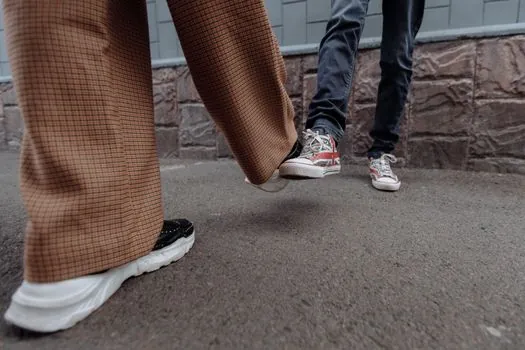
A heel grounder typically combines an external heel cup or conductive tab, a strap around the shoe, and a conductive ribbon routed inside the shoe to contact the sock or skin; a resistor can limit current if the assembly is exposed to an electrical source [S2][S4][S8].
The assembly is inexpensive, adjustable, and usable with most ordinary shoes, including flat shoes, loafers, safety shoes, boots, and styles with raised heels [S1][S2]. This makes heel grounders useful for visitors, temporary personnel, mixed footwear populations, and mobile operators who move between workstations [S2][S4].
Both feet should wear a grounder so the body-to-ground path remains available when one foot is lifted [S2][S4]. The internal ribbon must maintain solid contact with the foot, the heel cup must contact the shoe, and the fastening must remain secure; installation therefore needs confirmation after fitting [S2].
Heel grounders are not the stronger choice for workers who require certified safety footwear, because the strap adds a grounding function without replacing the separate protective construction of the shoe [S1]. They are also less dependable where frequent walking, dirt, moisture, or changing footwear repeatedly disrupts ribbon placement and skin contact [S1].
Decision Comparison for Typical Operating Conditions
Select ESD shoes when consistent grounding, minimal user adjustment, and integrated PPE compliance outweigh purchase and replacement costs [S1]. Select heel grounders when flexibility, visitor throughput, and reduced footwear stock matter more, but assign installation checks and daily verification to preserve path integrity [S1][S2][S3].
Installation, Monitoring, and Failure Modes
For a standard D-ring heel grounder, place the grounding tab inside the shoe under the heel, fit the heel cup to the shoe, tighten the elastic strap for a secure fit, and confirm installation by testing [S2]. For a cup-style unit, position the conductive tab inside the shoe under the foot, trim the contact strip as required, fasten the hook-and-loop strap, and verify contact [S2].
Daily footwear-grounding verification is required before entry into an ESD Protected Area under the cited ANSI/ESD TR20.20-2016 guidance [S3]. Surface resistance meters can evaluate flooring and work surfaces, while ANSI/ESD STM97.2 addresses peak body voltage for a wearer with footwear in place [S3].
Common failures are an insulative or contaminated floor, a worn contact strip, a ribbon displaced by movement, poor skin contact, or a grounder fitted to only one shoe [S1][S2]. Insulating dust and adhesive residue can make a dissipative floor ineffective, while a damaged ribbon or worn cup interrupts the only added grounding path in a heel grounder [S1].
Do not treat a strap as independent proof of compliance. Qualification depends on the complete footwear-flooring system under the actual wear conditions, and the footwear-flooring route is specifically intended for standing personnel rather than seated operators with both feet raised [S1][S2][S5].
Standards, Sourcing, and Acceptance Records
The central program references are ANSI/ESD S20.20 for the ESD control program, ANSI/ESD STM97.1 for footwear resistance testing, ANSI/ESD STM97.2 for body-voltage testing, ANSI/ESD TR20.20-2016 for personnel-grounding practices, and IEC 61340-5-1 and IEC 61340-4-5 for the corresponding resistance and body-voltage assessment framework [S1][S3].
MIL-HDBK-263B Appendix 1, Section 40.1.2, states the personnel-grounding requirement for conductive floors: “Conductive shoes, shoe covers, or heel grounders should be used to discharge personnel on conductive floors” [S9]. That text confirms the functional equivalence of the two footwear options in the stated application; it does not remove the need to qualify the installed system.
For purchasing, define whether the requirement is dedicated ESD footwear or grounding over approved ordinary footwear, then specify resistor construction, conductive-contact materials, adjustability, shoe compatibility, and replacement criteria. Include installation, daily verification, flooring resistance, and body-voltage records in the acceptance process rather than treating a product label as system-level evidence [S3][S6][S8].
Review the footwear-and-flooring system whenever the flooring material, shoe model, grounder type, or wearer practices change. The defensible choice is the system that maintains the cited resistance and body-voltage limits under real operating conditions, with heel grounders providing flexible deployment and ESD shoes providing more consistent integrated footwear control [S1][S2][S3].
