Fence-mounted systems can be installed in about 5 hours, while buried cable systems typically require up to 10 hours, with published cost estimates of $15–$25 and $10–$20 per linear foot, respectively [S1].
The decision depends on fence condition, terrain, excavation access, weather exposure, alarm response requirements, and the detection target: fence attacks for mounted systems or ground movement for buried systems [S1][S2][S6].
Start with the threat and the boundary geometry
Fence-mounted sensors detect mechanical activity on the boundary itself, including climbing, cutting, lifting, and vibration of the fence fabric [S3][S6]. They are the direct choice when a usable fence already defines the route an intruder must cross and the required event is an attack on that fence.
Buried cable sensors detect movement across the ground, including footsteps and digging, and can cover a boundary without visible hardware [S2][S5]. They fit wooded sites, uneven terrain, and boundaries without a fence because the detection line does not have to follow fence fabric [S1].
The scope differs in another important way: a fence-mounted system protects only its fence line, while a buried system can detect an approach crossing an underground detection zone [S2][S6]. Neither technology should be treated as a complete security strategy. A typical perimeter sequence separates deterrence, detection, delay, assessment, and response, with cameras or guards used to assess and respond after the sensor raises an alert [S5].
Compare installation, terrain, and operating exposure
Published installation estimates put fence-mounted work at roughly 5 hours and buried cable work at as much as 10 hours [S1]. Fence-mounted installation avoids trenching, which is a decisive advantage where underground services, hard access, or compressed schedules restrict excavation [S2][S3].
For short boundaries, the schedule difference can be significant. The decision should therefore include the full route length, number of zones, gate interfaces, control-room connections, civil works, commissioning, and operator training rather than sensor unit cost alone.
Buried systems gain concealment and reduced exposure to wind, rain, fog, and direct sunlight because their active detection elements are below grade [S2]. However, the buried installation remains sensitive to soil, water, frost movement, and surface activity. Distributed acoustic sensing performance also depends on burial depth, soil compaction, cable distance from the fence, and site-specific tuning [S3].
Match the sensor to the site's nuisance sources
Fence-mounted systems are best where the existing fence is structurally sound. Loose fabric, broken ties, missing tension wire, worn fittings, wind movement, and vegetation striking the fence create signals that cannot be eliminated simply by adding signal processing [S3]. A pre-installation fence survey is therefore more important than comparing sensor housings.
Buried cable systems are best where weather, wildlife, traffic, or visible fence hardware would create a larger operational problem. Published guidance identifies wind-driven fence vibration as a common fence-sensor nuisance source and soil, water, and frost movement as failure modes for buried cable [S2][S5]. Rainfall, wildlife, and nearby vehicles can also complicate buried-cable tuning, particularly at rural sites [S1].
Every perimeter system should be evaluated with 3 operating metrics: probability of detection, false alarm rate, and nuisance alarm rate. Probability of detection must identify the tested attack, such as cutting, climbing, crawling, or tunnelling; false alarm rate counts alarms with no identifiable cause, while nuisance alarm rate counts real non-threat causes such as animals, branches, heavy rain, or passing vehicles [S5].
Compare the main options against 4 decision criteria
For a typical fence-defined site, fence-mounted sensors usually lead on installation speed and cost when a stable fence already exists [S1][S2]. Buried cable leads on concealment and terrain independence but carries excavation, soil, and commissioning liabilities [S1][S2][S5].
The comparison should be written into the site specification. Fence-mounted systems win where non-trenching installation, a short boundary, and direct climb-or-cut detection dominate the score. Buried cable wins where concealment, wooded or sloping ground, and detection of crossings rather than fence attacks dominate. Distributed acoustic sensing becomes relevant when the perimeter extends for miles or kilometers and field power or visible hardware is unacceptable [S1][S3].
Cost figures need local validation: one comparison gives fence-mounted systems a cost of $15–$25 per linear foot and buried cable systems a cost of $10–$20 per linear foot [S1]. Treat these as published planning ranges, not universal quotations; civil works, terrain, cable specification, controls integration, commissioning, and site conditions can move the installed result materially.
Use existing fences as an asset, not as a shortcut
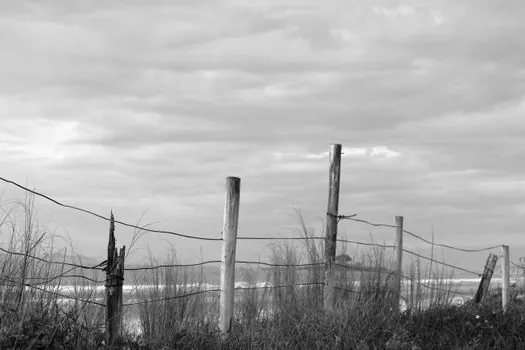
Fence-mounted sensors suit sites with a visible perimeter fence, regular foot traffic, and manageable environmental conditions [S1]. They can use accelerometers, piezoelectric elements, or microphonic cable, with the processor classifying patterns generated by climbing, cutting, or lifting [S3]. A safety fence can remain the delay element while the sensor layer supplies early warning.
They do not fit a site with a deteriorated fence unless the fence is repaired first. A noisy fence can defeat useful event classification even when the sensor itself is correctly installed [S3]. They are also a poor primary choice for wooded, uneven, or fence-free areas where there is no stable fabric on which to mount the detection elements [S1].
Buried cable is not automatically better. The system is concealed, but poor burial or unsuitable soil can reduce detection reliability and increase nuisance events [S3]. It is also less attractive where trenching is prohibited, utility congestion is high, frost or water movement is severe, or the required boundary is short enough for a maintained fence system to provide the required coverage at lower cost and faster commissioning [S1][S5].
Specify commissioning and performance acceptance
The alarm chain has 5 functional stages: sensing the disturbance, processing the signal, raising a zoned alarm, delivering it to the panel or management system, and having an operator verify and dispatch a response [S5]. Specification work should name the sensor type, cable or radio path, zone logic, alarm output, control-room integration, verification workflow, and maintenance responsibility for each stage.
Acceptance testing should cover the site's defined attack set and known environmental sources. For fence-mounted systems, test cutting, climbing, lifting, and fence noise from wind or vegetation. For buried systems, test walking, crawling, digging, vehicle or machinery activity, and relevant ground movement [S3][S5]. Record probability of detection, false alarm rate, nuisance alarm rate, alarm location accuracy, and operator response time rather than accepting a generic detector-performance statement.
For perimeter applications involving powered equipment or operator interfaces, the wider design context in the mounted generator set noise control enclosure is relevant only where generator noise affects operator communication or alarm assessment. Sensor selection itself remains governed by the physical boundary, not by the enclosure used around nearby equipment.
Make the decision from a site survey
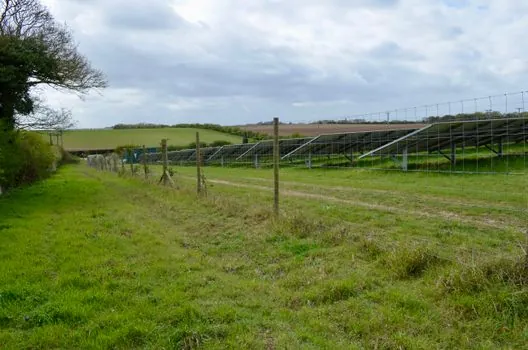
The correct choice is usually straightforward after a route survey. Select fence-mounted sensors for an existing, stable fence where rapid non-trenching deployment and direct attack detection are the priorities. Select buried cable for concealed detection across wooded, uneven, or fence-free ground where excavation and ground-condition tuning can be controlled [S1][S2][S8].
The next actionable record is a measured route survey covering total length, fence condition, gates, soil type, slope, vegetation, wildlife activity, underground utilities, power and communications paths, and the local false-alarm history. The detailed comparison of fence vibration versus buried cable perimeter sensors can support that engineering review before a trial installation and acceptance test are approved.