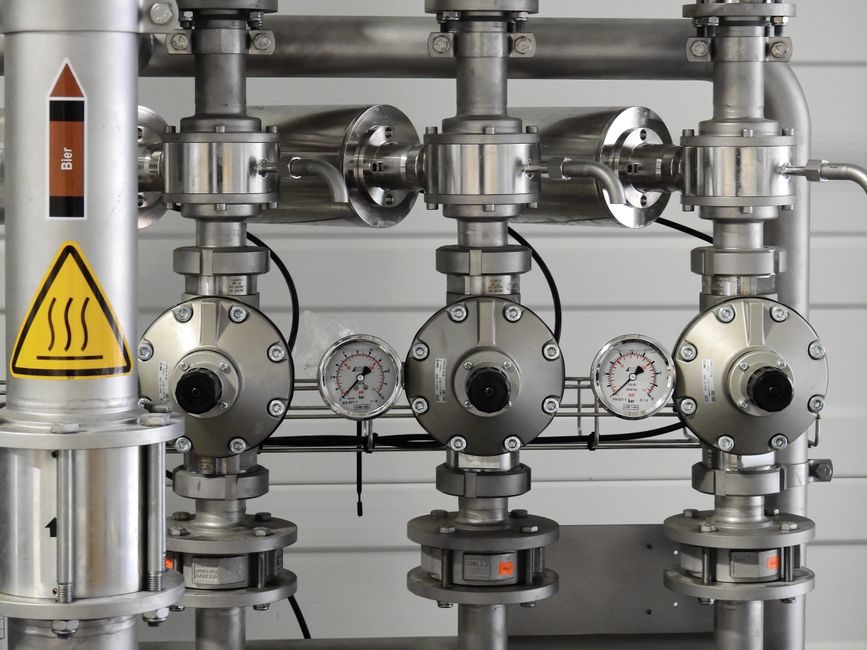
Electrochemical gas detector unit prices on the global B2B market cluster into two distinct tiers in 2026: portable single-gas instruments from Chinese OEMs at FOB US$73-92 per piece (5-piece MOQ) and ATEX-certified portable multi-gas analyzers at FOB US$738.58 per piece (1-piece MOQ) [S3]. The five-fold jump is driven almost entirely by certification, pump draw, sensor count, and enclosure rating — not by the electrochemical cell itself, which is a fraction of the bill-of-materials.
Buyers evaluating total ownership cost should look past the headline unit price. Sensor replacement intervals, calibration-gas cylinder consumption, bump-test frequency, and ATEX/IECEx retesting drive a multi-year cost that routinely exceeds the purchase price 2-4x over a 7-10 year service life. For a deeper sensor-technology comparison, the fixed gas detector reference covers the engineering trade-offs that drive those numbers.
Unit Price Bands by Configuration
Public B2B listings on Made-in-China.com for CE-marked gas detectors show the lowest FOB price band of US$73-92 per piece on 5-piece MOQ orders, tied to compact portable single-gas instruments with FCC/CE/RoHS certification and a 1-year warranty [S3]. The mid-band sits around US$200-400 per piece for OEM-branded portable multi-gas units with 2-4 sensor slots, and the top band — exemplified by the Mst 410p portable multi-gas detector with pump, ATEX, CE, and RoHS — clears US$738.58 per piece with no MOQ floor [S3].
Industrial fixed-mount electrochemical transmitters with HART, 4-20 mA, RS-485 and Modbus RTU outputs — the configuration used in chemical storage, analyzer rooms, and confined-space monitoring — are typically quoted 3-8x above equivalent portable units once IP66/IP67 stainless enclosures, dual-channel remote sensor heads, and non-intrusive calibration via HART handheld are added [S1]. The ESP Safety Vector-Oxygen platform, for instance, supports sensor separation distances up to 500 ft, a feature that materially raises both the transmitter and installation cost.
What Drives the Price Differential
Four engineering variables separate the US$80 portable from the US$700+ ATEX analyzer. First, the number of electrochemical cells: a single CO or H2S cell costs an OEM roughly US$15-40 in volume, while a four-gas sensor pack (LEL + O2 + CO + H2S) pushes the sensor BOM alone past US$120. Second, intrinsically-safe certification: ATEX 2014/34/EU and IECEx certification programs add roughly US$50-150 per unit in amortized testing, documentation, and notified-body fees. [S1]
Third, enclosure and ingress protection: an IP66/IP67 cast aluminum or stainless head with a windowed digital display represents a 30-60% cost premium over a basic ABS portable housing. Fourth, signal stack: 4-20 mA analog only is the cheapest option, while adding HART, Modbus RTU, and relay outputs — as on the Vector-Oxygen — adds interface hardware, firmware, and EMC compliance cost [S1]. These four levers account for the bulk of the FOB spread visible across the listings.
Sensing Chemistry and Sensor Replacement Economics

Electrochemical cells used in commercial detectors rely on a liquid or gel electrolyte with a working, counter, and reference electrode; target gas diffuses through a membrane and produces a current proportional to concentration. The chemistry is mature — Citicel, Medicel, and OEM-branded cells from suppliers like Spantech cover O2, H2S, CO, NH3, SO2, and Cl2 in standard 4-series and 7-series footprints [S4]. Service life on these cells typically runs 18-36 months in clean environments, but drops to 6-12 months in high-temperature or high-humidity sites, which means sensor replacement is a recurring line item rather than a one-time cost.
For a four-gas portable bumped-tested weekly, sensor replacement alone can run US$120-200 per unit per year. By contrast, a fixed O2 transmitter in a benign indoor application can stretch sensor intervals to 3 years, dropping that annual cost below US$50. This is why the multi-gas detector and combustible gas detector reference pages emphasize use-case matching before price comparison — the same hardware can carry dramatically different lifetime costs depending on duty cycle.
Calibration, Bump Testing and Consumables
Calibration gas cylinders, regulators, and flow adapters are the second-largest lifetime cost after sensor replacement. A 58-liter cylinder of 100 ppm CO in N2 (balance air) typically lists around US$80-150, with H2S, O2, and multi-gas blends running US$120-300 depending on concentration stability and shelf life. For a four-gas portable bumped weekly, a single cylinder may last 8-14 weeks — translating to US$400-1,500 per year in calibration gas per fleet of 10 instruments. [S2]
Modern fixed-mount detectors reduce this burden through non-intrusive calibration via HART handheld or local display, eliminating the need to remove the head and apply test gas with a cup [S1]. Plant buyers should weigh the upfront cost of a HART-enabled fixed unit against the labor saving on a large detector network: at 200 detectors bumped monthly, the labor delta alone can exceed US$30,000 per year.
Selection Criteria: Portable vs Fixed-Mount
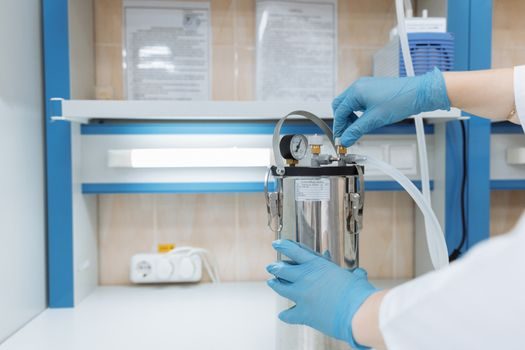
Portable single-gas or four-gas units suit confined-space entry, temporary work, and contractor gas monitoring. They trade calibration discipline (manual bump before each shift) for mobility, and the low US$73-92 entry price makes them attractive for fleet deployment [S3]. Fixed-mount transmitters suit continuous area monitoring — analyzer rooms, freezers, chemical storage, controlled labs — and carry 4-20 mA plus digital outputs for direct tie-in to DCS/PLC systems [S1].
The decision rule: if the application requires alarm-only local indication and periodic walk-around checks, portable wins on cost. If the application requires real-time integration with a control system, automatic event logging, or remote sensor mounting beyond 50 ft, fixed-mount wins despite the 3-8x price premium. Buyers comparing across both categories should look at the gas detector overview for the broader sensor-technology comparison (electrochemical, infrared, catalytic, PID).
Total Cost of Ownership: 10-Year Model
A representative 10-year cost model for a fixed O2 transmitter: US$2,500-4,000 purchase and install, US$1,200-1,800 in sensor replacements (3 cells at US$400-600 each), US$1,500-2,500 in calibration gas and labor, and US$500-1,000 in periodic proof-testing and recertification — totaling US$5,700-9,300 over the service life. A comparable portable four-gas unit purchased at US$738.58 with annual sensor and gas spend runs US$8,000-12,000 over the same window once labor and downtime are added. [S3]
The crossover point depends entirely on instrument count, sensor exposure, and how aggressively the buyer enforces bump-test discipline. For a single fixed point, fixed-mount wins. For a fleet of 5+ portables in rotation across a large site, the disposable sensor economy of a US$80 portable can be undercut by a US$300 fixed unit with longer sensor life. There is no universal answer — only a per-application break-even calculation.
Standards, Sourcing and What to Verify Before Purchase

Buyers should verify three certifications before any electrochemical detector ships to a hazardous area: ATEX 2014/34/EU for EU explosive atmospheres, IECEx for international IEC-based zones, and the appropriate ingress rating (IP66 minimum for outdoor, IP67 for washdown) [S1]. For oil-and-gas service, NACE MR0175 compliance on wetted metallic parts is commonly required, though that applies to the housing and mounting hardware rather than the sensor itself. CE and RoHS marks are baseline on Chinese OEM units but do not by themselves certify intrinsic safety [S3].
On the sourcing side, Made-in-China listings from verified suppliers consistently show 1-year warranty, online after-sales service, and 5-piece MOQ at the low end, while 1-piece MOQ appears at the ATEX-certified end [S3]. Buyers should request the test certificate, sensor lot traceability, and a written calibration-gas shelf-life statement before placing volume orders. For a parallel cost reference on a competing sensor technology, the catalytic gas detector price guide breaks down the same BOM structure for pellistor-based LEL sensors.
Trackable signals for the next 90 days: (1) Q3 2026 FOB repricing from Chinese OEM electrochemical cell manufacturers as palladium and platinum catalyst costs settle; (2) any new ATEX/IECEx dual-certification launches that compress the US$738 tier toward the US$400 tier; (3) consolidation among mid-tier portable OEMs that could shift the 5-piece MOQ floor higher.