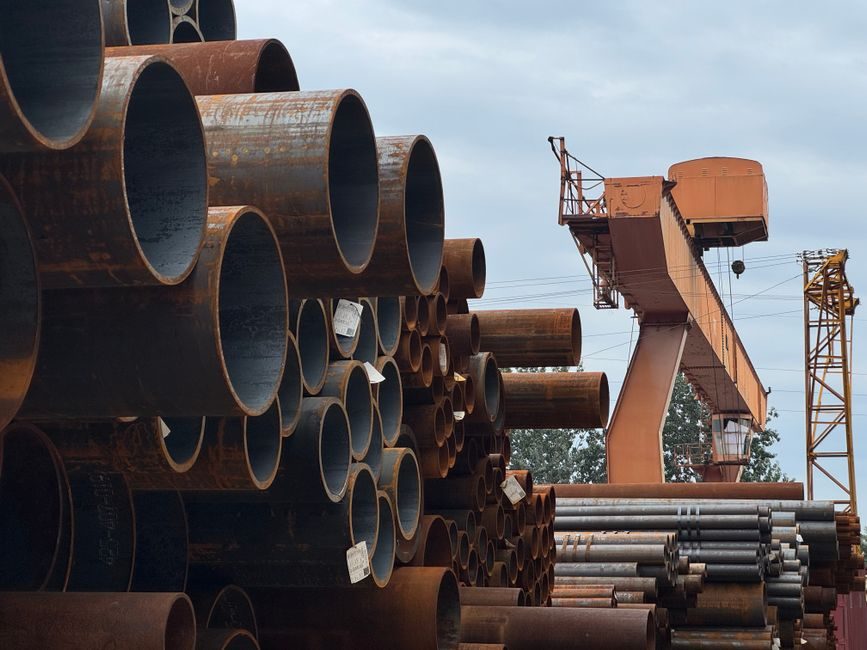
Steel-plastic composite pipe (PSP) is a five- to seven-layer coextruded tube with a welded steel middle, PE inner and outer skins, and a dedicated hot-melt adhesive tie layer between metal and plastic, used across civil water supply, fire-fighting mains, municipal secondary supply and chemical service lines [S3].
Two structural families dominate 2026 sourcing: plastic-lined steel pipe (lining-grade PE/PP/RTP epoxy inside a steel shell) and the seven-layer PSP pressure pipe for hot/cold water risers and cable ducts [S1][S3]. Both share the same cleanability problem — the wetted surface is the polymer, not the steel, so chemical resistance, roughness and CIP suitability track the liner, not the carrier.
Why Liner Chemistry Drives Cleanability, Not the Steel Core
The steel core in PSP exists for pressure rating and crush resistance; the fluid only ever touches the inner PE skin, so CIP chemical selection, surface roughness and biofilm behaviour are set by the plastic layer [S3]. Inner PE is typically HDPE in the seven-layer coextruded PSP pressure pipe defined in the Chinese composite-pressure-pipe reference, with operating temperatures up to the stated hot-water use range of the carrier PE [S3].
For aggressive chemical or food-grade service, the same steel carrier is offered with PP, PTFE or fep liners from lining-pipe specialists; Hebei Yunkai, founded 2006, lists epoxy-coated steel pipe and lining-plastic composite pipe as a matched pair, indicating the liner is a swappable spec axis rather than a fixed attribute of the carrier [S2].
Cleanability Criteria: Four Numbers That Decide CIP Suitability
Four liner-driven numbers decide whether a steel-plastic composite line can run a clean-in-place cycle: wetted surface roughness, max continuous service temperature, chemical resistance envelope, and joint type. PE liners in PSP ship with a smooth, low-adhesion wetted surface that limits biofilm anchoring compared with unlined carbon steel, but they are bounded by the PE temperature ceiling and by NaOCl concentration limits typical of PE [S1][S3].
For potable and fire lines, LESSO's coated steel pipe is positioned for civil water supply, industrial water supply, fire fighting, sewage transport, communication and optical-fibre ducting — service mixes that include low-temperature, low-residence-time fluids where the PE liner's chemical envelope is adequate [S1]. For hotter or more aggressive CIP cycles, a PP, PVDF or PTFE liner is the conventional step up; LESSO and Yunkai both offer the steel carrier as the variable, with the liner as the spec'd-in option [S1][S2].
Joint Method as the Weak Point in CIP Cycles
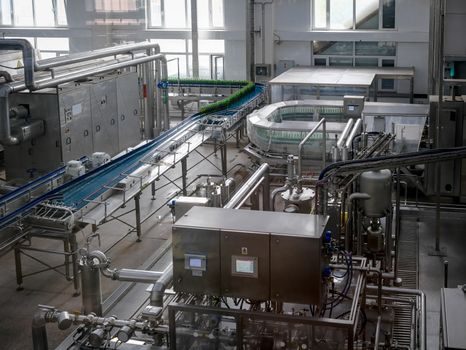
Even with a cleanable liner, a steel-plastic composite line is only as cleanable as its joints: threaded steel connections, grooved couplings and welded steel joints all create crevices or exposed metal at the interface that the PE skin cannot protect. The seven-layer PSP pressure pipe addresses this with thermal-fusion joints on the plastic layers, producing a continuous polymer wetted surface across the fitting [S3].
Lining-pipe systems from Yunkai rely on flange or threaded steel joints with the liner stepped through the fitting face, so cleanability depends on the fitting liner being continuous and on gasket material compatibility with the chosen CIP chemistry [S2]. For new cleanable builds, specify thermal-fused PSP ends; for retrofit CIP, audit each joint for exposed steel, gasket compatibility and crevice geometry before signing off the loop.
Comparison: PSP Pressure Pipe vs Lined Steel Pipe vs Plain PE Pipe
On four procurement-and-cleanability axes — pressure rating, temperature ceiling, CIP chemical envelope, joint method — the three options split clearly. PSP pressure pipe gives the highest pressure rating in a polymer-wetted system, holds the PE temperature ceiling of the carrier resin, accepts standard aqueous CIP within PE's chemical envelope, and uses thermal-fusion joints for a continuous wetted surface [S3].
Lined steel pipe carries the same pressure capability as plain steel, runs hotter because the liner can be PP/PVDF/PTFE, takes a wider CIP envelope matched to the chosen liner, but its joint cleanability is limited by fitting-liner continuity and gasket compatibility [S1][S2]. Plain PE pipe (see plastic pipe) has the simplest joint (thermal fusion) and lowest biofilm adhesion, but is bounded by the PE pressure/temperature ceiling and offers no metal reinforcement for hot-water risers or fire-loop pressure surges.
Standards, Sourcing and Cross-Material Context
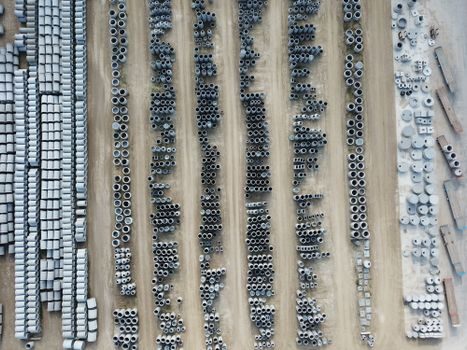
PSP and lined steel pipe sit inside the broader steel-plastic composite pipe family; the carrier material itself is the seamless steel pipe or welded steel substrate, and the wetted polymer follows plastic pipe chemical-resistance rules — the FRP alternative (frp composite) is the common substitute when a single non-metallic wetted surface is preferred. For 2026 procurement, the Seamless Steel Pipe Selection: Six-Criteria Spec Map for 2026 Procurement article covers carrier-grade selection, while the Industrial Coating Suppliers 2026 guide applies when an internal epoxy coating is the chosen wetted surface instead of a thick PE liner. [S1]
Where PSP Fits and Where It Does Not
PSP pressure pipe is the right pick for civil hot/cold water risers, secondary municipal supply, fire-fighting risers and cable/optical-fibre ducting where the PE envelope matches the fluid [S1][S3]. It is the wrong pick for high-temperature chemical CIP, for lines that need periodic steam sterilisation above the PE ceiling, or for service where the joint count is high and thermal-fusion tooling is not available — in those cases, a PP/PVDF/PTFE-lined steel pipe with verified fitting-liner continuity is the safer spec [S1][S2].
Two trackable signals to watch for the rest of 2026: lining-pipe suppliers extending PP/PVDF liner options onto the same steel carrier used for PSP-class products, and any tightening of PE chemical-resistance envelopes in municipal-water CIP guidance. Both will move the cleanability-versus-cost frontier for steel-plastic composite pipe before the next sourcing cycle closes.