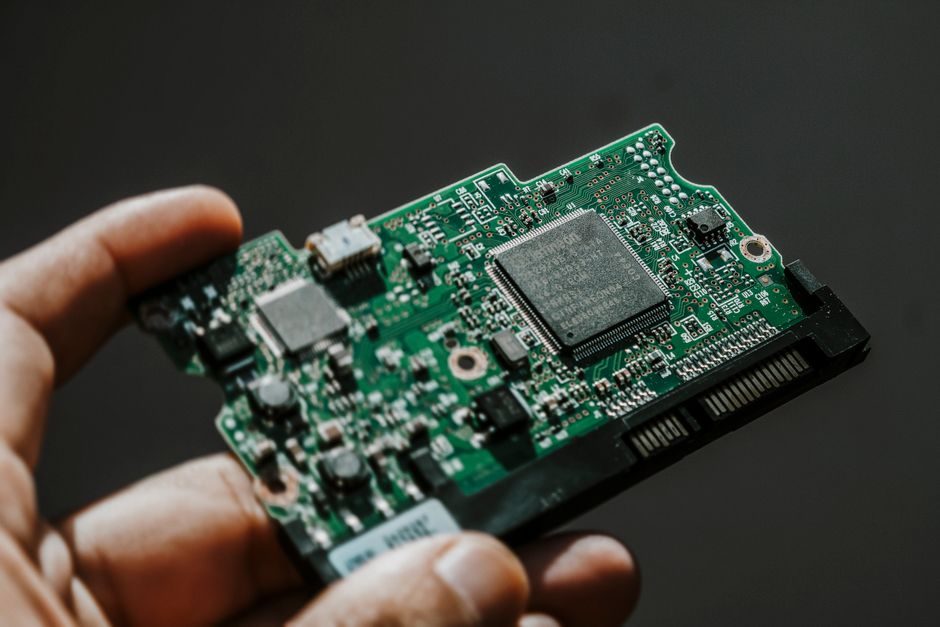
An electronic load is a programmable current-sink instrument used to characterise power supplies, batteries, fuel cells, and DC converters by absorbing a defined current, power, or resistance profile; the bench DC load segment now spans 60 W hobbyist single-channel units up to 8- or 16-channel modular programmable racks sharing one mainframe [S1][S8].
Selection in 2026 is driven by the source's worst-case operating point, not the load's headline wattage: a 1.5 kW supply that must be tested down to 0.8 V at full current demands a load rated for at least that current at that voltage, while a 60 W ZPB30A1-class unit is fine for USB-PD and small converter work [S1][S2].
Five Specs That Decide the Model
Peak power, peak current, minimum operating voltage, slew rate, and supported mode set are the five hard gates; everything else (display, interface, transient list depth) is a tiebreaker [S2][S8].
For DC supplies, the worst-case current is reached at the source's minimum compliance voltage, so a load rated "40 A / 300 W" only delivers 40 A if it can sink that at the supply's lowest spec'd output — a frequently-missed point on hobbyist units [S2]. For a lithium battery or DC bus test, peak power often sets the chassis size before peak current does, because the load must dissipate the full wattage as heat inside its own heatsink and fan envelope [S2]. Slew rate (A/µs) determines whether the load can reproduce a real-world dynamic step (load-dump, cranking pulse) — values from a few hundred mA/µs on entry-level units to tens of A/µs on regenerative or high-speed loads separate "steady-state only" from "transient-capable" categories [S2][S8]. Standard modes are constant current (CC), constant voltage (CV), constant power (CP), and constant resistance (CR); battery test, OCV recovery, and fuel-cell polarisation sweeps depend on CP and CR modes, so any load lacking them is automatically disqualified for those workflows [S2].
Form-Factor Tiers: 60 W → Modular Multi-Channel
The market resolves into three tiers — handheld/hobbyist (60-150 W single channel), bench programmable (300 W-1.5 kW single or dual channel), and modular mainframe (multi-channel 1U/2U cards summing to 8 or 16 channels per frame) [S1][S8].
Tier 1 (60-150 W): the ZPB30A1-class Chinese DC load is a 60 W/110 W single-channel USB-controlled sink for which open-source firmware is now being written on GitHub, reflecting a wider move away from vendor-locked firmware blobs [S1]. BK Precision's 85xx family sits one tier up in this class, with vendor-published Python and LabVIEW examples aimed at automated test stands [S5][S6]. Tier 2 (300 W-1.5 kW): programmable bench loads typically add GPIB/LAN, OVP/OCP/OPP test scripts, and transient-list editors for switching-supply margin testing. Tier 3 (modular): the IT8700P mainframe is documented as housing up to 8 channels per frame and up to 16 channels with an extended frame, with both front and rear terminals to support paralleled high-current channels and mixed DUT wiring from one controller [S8]. This modular tier matters in production ATE where one PSU/load mainframe replaces several bench instruments and per-channel cost drops materially versus stacking single-channel units [S8].
Criteria-Based Comparison: 4 Realistic Options
The four realistic archetypes, lined up against four selection criteria, give a defensible shortlist.
1) ZPB30A1-class 60 W hobbyist load — best for USB-PD trigger boards, small buck/boost converters, and battery capacity checks on a hobby bench. Criteria: 60 W peak [S1], single channel, ~30 V typical max, modest slew rate. Not for: 24 V/20 A industrial PSU burn-in, EV DC-link testing, or anything that needs SCPI command automation. 2) BK 85xx-class 300-750 W bench programmable — best for engineering characterisation of single AC/DC and DC/DC supplies up to 150 V. Criteria: SCPI over USB/LAN, list/transient modes, CC/CV/CR/CP all present [S5][S6][S2]. Not for: multi-DUT parallel ATE where channel count per rack matters. 3) IT8700P modular mainframe — best for production ATE, multi-output adapter test, and parallel-DUT reliability runs. Criteria: 8 channels per frame, 16 with expansion, front + rear terminals per card [S8]. Not for: a single-engineer bench where one channel is enough and rack cost cannot be amortised. 4) Regenerative / high-power sink — best for HV battery pack cycling, fuel-cell polarisation, and any test where the absorbed kW would otherwise dump as heat. Criteria: bidirectional power, grid-tie return, A/µs slew rate in the tens. Not for: tight-budget labs without three-phase supply or a power-recycling feed-in agreement. The 4-way trade-off is power-per-channel vs channel-per-rack vs slew rate vs upfront cost — only one of these is optimised by each archetype, which is why "buy the biggest" is the wrong starting heuristic.
Interface, Software, and Automation Reality
By 2026, USB and LAN have displaced GPIB on most new bench loads, with vendor-supplied Python and LabVIEW examples (BK 85xx) and community SCPI wrappers on GitHub reducing integration time from days to hours [S5][S6][S7].
Open-source SCPI drivers cover BK Precision 85xx-series loads in Python, with parallel LabVIEW VIs in the same repos so that the same test sequence can be reused by a validation engineer writing a Jupyter notebook and a production engineer maintaining a TestStand sequence [S5][S6]. The ZPB30A1 reverse-engineering project goes a step further: it ships replacement firmware in C, with separate `hardware/` and `software/` trees and an explicit note that the original vendor firmware was protected and could not be read for improvement, which is exactly the lock-in scenario that pushes industrial buyers toward the BK/ITECH tier where source code and SCPI are documented [S1]. For teams building a protocol gateway selection workflow, the load's LAN SCPI socket is functionally the same socket class as a DNP3 or Modbus gateway endpoint — same TCP keepalive considerations, same firewall rules, same logging requirements.
What Most Buyers Get Wrong
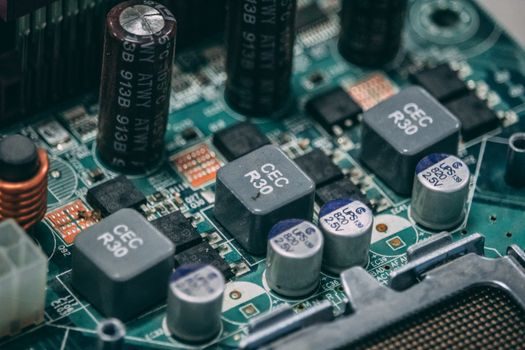
Three errors dominate bad electronic-load purchases: rating at full voltage instead of at minimum voltage, ignoring slew rate until a transient test fails, and under-provisioning channel count on a multi-output production line.
Error 1 — wattage at full voltage: a 300 W load rated for 60 V is not 300 W at 1 V; at low V it becomes current-limited well below 300 W, so a 12 V/25 A supply cannot be fully load-tested on that unit. Error 2 — slew rate blind spot: many spec sheets quote "rise time" but not A/µs, and a load that slews at 0.1 A/µs will smooth out a 5 A/µs load step the DUT was designed to handle, hiding a real stability margin problem. Error 3 — channel count: stacking eight single-channel benches is mechanically and electrically worse than one 8-channel mainframe with shared triggering [S8]. Where the workflow is bench characterisation of a single programmable DC power supply, a single-channel BK-class unit is the right answer; where the workflow is parallel validation of a DC fast charger line, a modular mainframe is the only rational buy.
Standards, Safety, and Sourcing
Standards that touch electronic loads are mostly safety and metrology, not protocol: IEC 61010 for measurement instrument electrical safety, IEC 62040 for UPS-adjacent testing where the load is the sink, and IEC 62054-11 for ripple-control receivers in tariff/load-control metering [S9].
Calibration traceability to a national lab (NIST, NPL, PTB) is the other sourcing line item: a load used as a reference in a 17025-accredited lab must carry a current calibration certificate with uncertainty stated in mA and mV, not a generic "calibrated" sticker. For a buyer who has already settled on a programmable supply and is now matching the sink, the link between bench electronic load, load cell and load switch documentation on the spec reference is the fastest way to avoid mis-spec'ing the dissipation envelope, while the pressure transmitter and load cell module pages cover adjacent instrumentation vocabulary that often gets conflated in purchase orders. The electronic scale reference is the most common false-friend term in cross-team RFQs and is worth pinning in the spec template.
Shortlist Logic and Trackable Signals
Shortlist: for ≤150 W single-DUT work, pick a 60-150 W ZPB30A1-class or BK 85xx bench unit; for 300 W-1.5 kW single-DUT characterisation, pick a BK 85xx or equivalent SCPI-programmable bench load; for production ATE with 4+ parallel DUTs, pick an IT8700P-class modular mainframe [S1][S5][S6][S8].
Trackable signal: vendor firmware-lock complaints (mirroring the ZPB30A1 reverse-engineering project's stated motivation) appearing in mainstream bench-load product lines would be a meaningful industry shift and would push procurement toward open-SCPI vendors [S1]. Trackable signal: any IT8700P-class vendor adding a documented Python or REST API wrapper in 2026-2027 would close the current software gap with the BK 85xx ecosystem and is worth watching on vendor changelogs [S5][S6][S8].