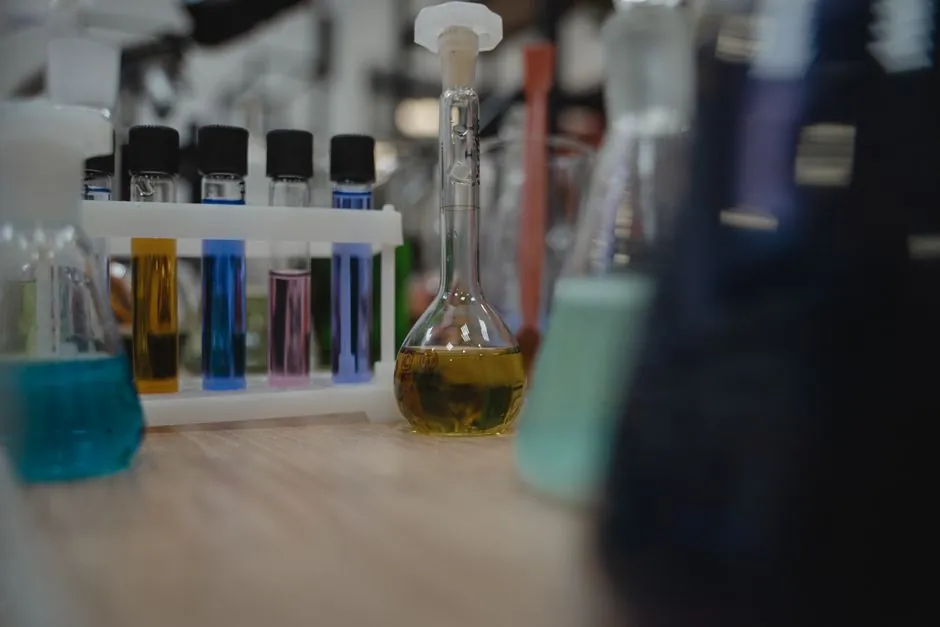
Electronics-grade reagent selection is now governed by three concrete gates: a purity target of 4N (99.99%) to 5N (99.999%) for trace-element work, an ACS / USP / Semi Grade designation that fixes allowable impurity budgets, and a hazard screen against the CEPN Priority Chemicals MRSL rounds 1 to 3 [S1][S2][S3].
The practical reagent set stocked for fab, failure-analysis, and PCB wet-bench work is narrow: acetone, isopropyl alcohol, nitric acid, hydrochloric acid, hydrogen peroxide, plus acetic, phosphoric, and sulfuric acid as supporting etchants and strippers [S2][S3]. Selection between them is driven by the surface being prepared, the residue being removed, and the downstream yield impact, not by a generic "high purity" label.
Purity tiers and what 4N versus 5N actually buys you
Bell Chem specifies 99.99% as 4N and 99.999% as 5N, with electronic-grade wet chemicals commonly categorized as ASTM level O and used to detect metallic infiltrates from parts per billion (ppb) down to parts per trillion (ppt) [S3]. For wafer cleaning, final rinse, and drying, isopropyl alcohol at ACS Reagent, USP, or Semi Grade is the workhorse, while nitric acid at ACS Reagent or Semi Grade is the standard pick for photoresist stripping [S2].
Aladdin Scientific frames electronic grade as a dedicated class: high-purity reagents specifically formulated and processed for the electronics and semiconductor industry, distinct from general lab reagent grades [S7]. In practice that translates into tighter specifications on individual trace metals (typically controlled at ppb levels), lower non-volatile residue, and filtered packaging to keep particulate counts within fab cleanroom budgets.
Mapping reagent to application: a five-chemical decision grid
The reagent-to-task matrix used by ACS Reagent and Semi Grade suppliers is consistent across vendors: acetone for wafer cleaning and degreasing, isopropyl alcohol for final rinse and drying, nitric acid as a solvent and photoresist stripper, hydrochloric acid for etching and surface preparation, hydrogen peroxide for cleaning and oxidation [S2]. Bell Chem's electronics-grade list overlaps exactly: acetic acid, acetone, hydrochloric acid, hydrogen peroxide, isopropyl alcohol, nitric acid, phosphoric acid, and sulfuric acid [S3].
Selection logic therefore reduces to four questions: what residue must be removed (organic versus metallic versus oxide), what substrate is exposed (silicon, copper, aluminum, dielectric), what downstream process touches the surface (photolithography, bond, plasma etch), and what disposal envelope applies. For oxide removal, dilute HF and HCl dominate; for organics, acetone and IPA; for metallic contamination, hot nitric acid and Piranha (H2SO4/H2O2) mixtures; for photoresist, dedicated strippers or fuming nitric [S2][S3]. Cross-referencing this grid against the chemical reagent reference clarifies which purity tier each step actually requires.
CEPN Priority Chemicals: the substitution pressure now shaping the solvent shelf

CEPN's three rounds of Priority Chemicals function as an industry MRSL, focused on solvents used as process chemicals in electronics manufacturing, and selected via GHS rating, California Prop 65, GreenScreen, ChemForward ratings, electronics use as a solvent, and availability of safer alternatives [S1]. Round 1 already lists dichloromethane (CAS 75-09-2) and methanol (CAS 67-56-1), with dichloromethane flagged for central nervous system effects and cancer concerns in liver and lungs based on animal studies, and methanol flagged for absorption through eyes, skin, and lungs [S1].
Round 3 added explicit Watch/Candidate and Legacy/Archive buckets, signalling that substitution decisions are no longer one-off and that reintroducing a previously archived high-hazard solvent triggers a documented review [S1]. For a selection engineer this means the "what to use" list now has a parallel "what to justify keeping" list: if a process step still calls for DCM, methanol, or NMP, a CEPN-aligned alternatives assessment is expected, and the chemical material reference is the right anchor for documenting the substitution trail.
Where CEPN pressure collides with the standard wet bench
Acetone, isopropyl alcohol, and the mineral acids (HNO3, HCl, H2SO4, H3PO4) are not currently on the CEPN rounds 1 to 3 Priority Chemicals list, which is why they remain the default shelf in most fab wet benches [S1][S2][S3]. The pressure shows up in three places: co-solvent selection for strippers and developers, cleaning chemistries that historically relied on dichloromethane or methanol, and any new process introduction that would expand the solvent footprint.
For procurement, this translates into a documented request: when a new reagent enters the line, the CEPN MRSL check, the GHS hazard review, and the ACS / Semi Grade certificate of analysis must all be on file before the material is approved. The same logic is now being applied across other regulated process inputs, which is why a comparable decision tree for industrial gas selection for general fabrication follows the same purity-plus-MRSL structure.
Selection criteria, compared: ACS Reagent vs USP vs Semi Grade
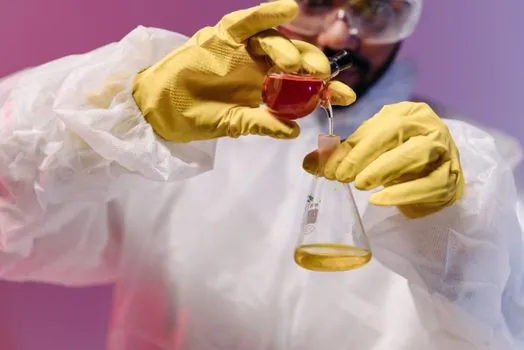
Three grade labels dominate the procurement sheet, and they are not interchangeable. ACS Reagent grade conforms to American Chemical Society purity standards and is the baseline for analytical work [S2]. USP grade meets United States Pharmacopeia requirements, which matter when the wet bench shares space with medical or life-science tooling. Semi Grade (semiconductor / electronic grade) is the electronics-specific tier, with tighter individual trace-metal limits and stricter packaging.
A pragmatic comparison: for a final IPA rinse on a silicon wafer, Semi Grade or USP IPA is typical; for a generic lab deck where electronics parts are cleaned but not at sub-ppb trace level, ACS Reagent IPA is acceptable and cheaper; for a nitric acid photoresist strip, ACS Reagent can suffice for non-critical layers, but Semi Grade is the safer pick for advanced nodes [S2][S3]. On cost the gap is meaningful: Semi Grade typically runs 20% to several multiples of ACS Reagent, depending on the chemistry and the lot size, and lead time is usually longer because of dedicated production campaigns [S2].
Limits, failure modes, and what the certificate of analysis must show
Reagent selection fails in three measurable ways: trace-metal creep on the surface, particle adders from unstable packaging, and batch-to-batch drift that invalidates process qualification. ASTM level O and the 5N target exist specifically to keep individual metallic contaminants in the ppb to ppt range, and the CoA must list each assayed metal with its numerical limit and measured value, not a generic "passes specification" line [S3].
Low-purity or mismatched reagents contribute to inconsistent assay readouts, weak signal-to-noise, unexplained background, reduced reproducibility across batches, and misleading analytical conclusions, all of which are well documented as failure modes in research-reagent quality literature [S4]. The same logic shows up in related process inputs, and the aerospace chemical reagent spec map walks through a parallel five-family gate that aerospace qualification imposes on top of the ACS baseline.
Sourcing, standards, and what to track over the next two quarters
Three signals are worth tracking through the rest of 2026: the publication of any CEPN Round 4 priority list (which would extend the MRSL beyond solvent-focused rounds 1 to 3) [S1], the cadence of ASTM and SEMI wet-chemical standard revisions governing level O and individual trace-metal limits, and any supplier consolidation among ACS / Semi Grade blenders that affects lead time on acetone, IPA, and the mineral acids. Practical next node for a selection engineer: pull the current CEPN list, align it with the in-house MRSL, and confirm that every reagent on the wet-bench shelf has a CoA that names the ACS, USP, or Semi Grade designation and reports individual trace metals at the ppb level, not as a generic assay summary.
The underlying component specifications are covered under chemical anchor.