
Specifying the wrong industrial gas in an energy system costs more than the commodity itself: helium trades above $30 per liter, xenon above $5,000 per kilogram, and a single unscheduled outage in a semiconductor or aerospace test cell can swallow weeks of procurement savings [S2]. Selection in 2026 is therefore not a procurement question but a four-axis engineering gate: gas chemistry, pressure band, purity class, and emissions footprint, all set against the regulatory baseline for the host process.
Natural gas remains the dominant combustion fuel in industrial energy equipment because it produces fewer air pollutants and less CO2 per unit of useful heat than coal or fuel oil, with EIA citing over 200 lb of CO2 per million Btu from coal and over 160 lb per million Btu from fuel oil for an equivalent energy output [S1]. For non-combustion specialty applications, the same engineering discipline applies but the gate changes from flame chemistry to cryogenic boiling point, embrittlement risk, and recovery economics, which is why industrial gas selection is treated as a separate discipline from fuel-gas piping design.
Decision Gates: Chemistry, Pressure, Purity, Emissions
A gas selection matrix in 2026 lines up against four decision criteria, and the weighting shifts with the host process. Combustion service: fuel heating value and CO2 intensity dominate. Cryogenic service: liquefaction temperature and boil-off rate dominate. Electronics and analytical service: purity class (typically expressed in nines, e.g. 99.999% versus 99.9999%) and particle/moisture spec dominate. Process or instrument service: toxicity class, lower flammability limit, and material compatibility dominate, which is why the energy management specification must reference both the gas and the metering class. [S3]
Natural gas sits in the first bucket and EIA reports it accounted for about 35% of total U.S. energy-related CO2 emissions from combustion in 2022, ahead of coal, which is the single most important benchmark for any site emissions-permit calculation [S1]. For the other three buckets, the same rigor applies: hydrogen's wide flammability range, oxygen's combustion-support behaviour, and inert gases' asphyxiation risk each dictate a different equipment and energy meter class on the same panel.
Natural Gas as Combustion Fuel: Strengths and Leakage Penalty
Natural gas is mainly methane, a strong greenhouse gas, and the U.S. EPA estimated that in 2021, methane emissions from natural gas and petroleum systems and abandoned wells were the source of about 33% of total U.S. methane emissions and about 4% of total U.S. greenhouse gas emissions [S1]. That single statistic reframes the selection gate for any new build: a gas train that delivers clean combustion but leaks 2-3% by volume through fittings, regulators, or flanged joints can wipe out the CO2 advantage over fuel oil within hours of operation, which is why leak-detection hardware is now treated as part of the gas package, not an accessory.
In the field, that means specifying low-emission valves, threaded or welded connections over flanged where the code allows, and continuous fugitive-emission monitoring on the train, all of which fall under the same NDT equipment commissioning scope used on pressure vessels. Where produced gas is sour (high hydrogen sulfide) or stranded, flaring remains standard practice because it is safer than venting and produces lower overall greenhouse-gas emissions than releasing methane directly, though the flare still emits CO2, CO, SO2, and NOx depending on gas composition [S1].
Specialty and Noble Gases: Where the Real Cost Lives
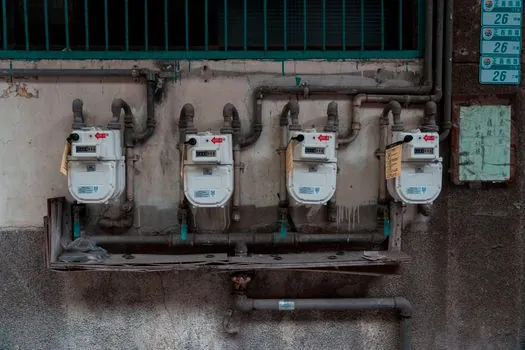
For helium, hydrogen, oxygen, krypton, xenon, and CO2, the cost-of-gas dominates lifecycle economics rather than the cost of the burner, and recovery economics are the controlling gate. Helium, xenon, and hydrogen each behave differently at the equipment level: helium is the only substance that remains liquid at temperatures approaching absolute zero, which makes it irreplaceable for MRI superconducting magnets and quantum platforms; hydrogen demands fail-safe handling because of its explosive potential; and xenon, with global supply constrained, is priced at a level where every percentage point of recovery directly changes project payback [S2].
The equipment chain for these gases splits into four sub-categories that any spec must cover: gas handling, gas measurement, storage, and accessories, and this is the same four-bucket taxonomy used by In-Gas Solutions for helium, oxygen, hydrogen, krypton, xenon, and CO2 [S2]. A typical industrial-gas panel therefore reads as a gas-handling manifold upstream, a measurement block with thermal mass flow or coriolis metering, a high-pressure or cryogenic storage vessel, and an accessories stack of regulators, purge kits, and leak detectors, with the anti-static equipment class selected to match the gas's minimum ignition energy.
Industrial Gas Equipment Categories and Field Scope
Procurement-side, the equipment market self-organises into three overlapping segments: LP gas and NH3 (propane and ammonia distribution), industrial gas and cryogenics (LOX, LIN, LAr, CO2, LNG), and petrochemical (gas processing, loading, transfer), and a distributor carrying all three is the practical definition of a one-stop shop for plant and fleet work [S3]. The product trees align with this segmentation: LP gas carries regulators, vaporizers, pumps, carburetion, dispensing, and CSST fittings; cryogenics adds ball valves, check valves, gate valves, globe valves, needle valves, relief valves, and cryogenic fill manifolds; petrochemical overlaps with both, adding loading arms and meter skids [S3].
On the project side, a single preferred-equipment-partner model is now common for multi-site operators, because aligning with one gas delivery systems provider that can support application-specific equipment across multiple builds reduces vendor evaluation overhead and ensures consistent regulator, valve, and metering part numbers [S4]. The trade-off is concentration risk: a partner that also supplies the gas may have less incentive to innovate on equipment, which is why most large operators keep at least one pure-equipment specialist on the bid list even when their primary partner bundles gas and hardware [S4].
Construction-Machinery and Mobile-Plant Overlap
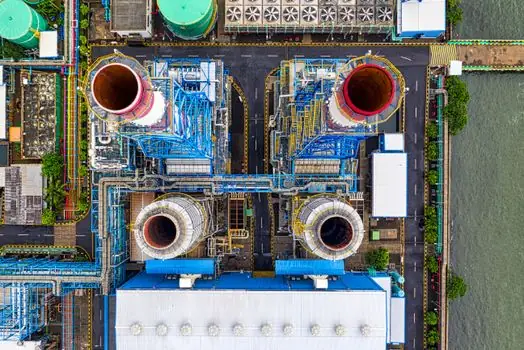
Industrial gas selection does not stop at fixed plant: mobile construction machinery, portable welders, LPG-powered forklifts, and dual-fuel gensets all use the same families of regulators, vaporizers, carburetion mixers, and pressure-relief hardware, and the equipment classes cross over directly with the construction machinery and equipment supply chain. For example, a 2026 wind-turbine blade manufacturing cell may specify a mix of compressed-air tooling, argon shielding gas for composite repair, and a natural-gas-fired curing oven, each of which is sourced from overlapping but distinct gas equipment vendors. [S3]
The same crossover shows up in data-centre infrastructure: brake-resistor selection for generator sets, NDT equipment for pressure-vessel inspection on gas trains, and magnetic level gauges for cryogenic bulk storage all sit in adjacent spec chapters but share the same compliance, documentation, and traceability requirements as the gas panel itself, a theme explored in the related brake-resistor spec map for data centres and in magnetic level gauge selection for cryogenic mining service.
Selection Rules of Thumb for a 2026 Build
Three rules hold across combustion, cryogenic, and process-gas service. First, set the purity class from the most demanding downstream instrument, not the cheapest upstream supply, because upgrading a regulator later costs more than specifying the right gas from day one. Second, treat leakage and fugitive emissions as a first-class design constraint, not a maintenance issue, because EPA greenhouse-gas reporting and state-level emission rules now require documented gas management with minimal atmospheric release, and a single leaking fitting can compromise site compliance [S2]. Third, prefer equipment partners that can deliver testing, commissioning, and installation as part of the build-out, because complexity of modern gas delivery systems means the field-services capability is often the difference between a system that performs on the data sheet and one that performs on the plant floor [S4].
The trackable signals to watch next are EPA methane reporting rule updates, helium and xenon supply contracts indexed to recovery rate, and any new NFPA or ASME code revision affecting gas train assembly. For a deeper dive on the regulatory ceiling over energy equipment, the energy management reference is the right starting point, and for a direct read on combustion-fuel purity, the industrial gas encyclopedia entry is the most concise summary of the gas-by-gas matrix.