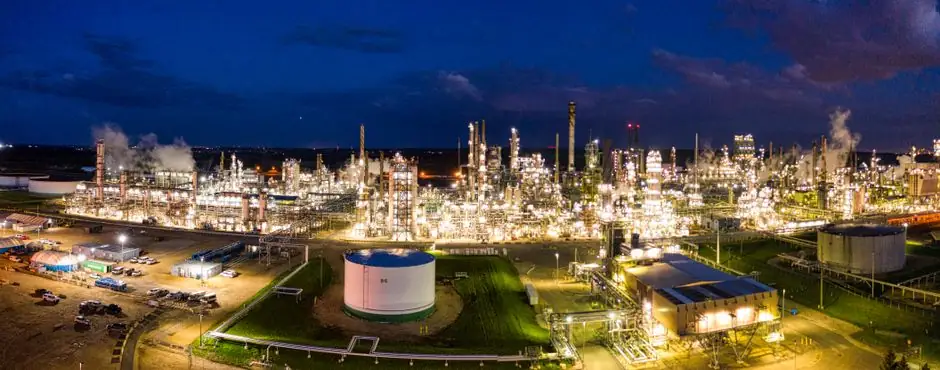
General fabrication shops specify four workhorse gases, oxygen, acetylene, argon, and carbon dioxide, plus nitrogen and helium as supporting players, with the right pick driven by base material, process, and purity tier [S1][S2].
For the shop-floor buyer, the practical question is not "which gas is best" but "which gas for this base metal, this process, this weld profile, and at what purity." Argon dominates MIG/TIG shielding, oxygen-acetylene delivers oxy-fuel cutting above 3,000°C, and CO2 cuts cost on carbon-steel MIG [S1][S2].
The Four Workhorse Gases and Where They Earn Their Slot
Oxygen and acetylene remain the foundation for heavy plate cutting, with the oxygen-acetylene flame exceeding 3,000°C and enabling clean severance on structural steel, shipbuilding plate, and construction-equipment components [S2]. Pure oxygen also feeds basic-oxygen-furnace steelmaking, where it blows through molten iron to remove impurities [S2].
Argon is the workhorse shielding gas for TIG and MIG on aluminum and stainless, where it provides arc stability, suppresses atmospheric contamination, and reduces porosity [S1][S3]. CO2 sits beside it as the cost-effective MIG shield for carbon steel, trading weld cosmetics for deeper penetration and a lower cylinder price [S1][S2]. Helium enters the picture for thick aluminum or copper, typically blended with argon to lift heat input without sacrificing arc stability [S1]. Nitrogen, while not a primary shield in general fab, supports laser-cutting assist gas and inerting of purge volumes [S2].
Industrial vs Specialty Tier: Where the Purity Line Falls
Industrial gases are produced to broader, fit-for-purpose tolerances and shipped in high-volume cylinders for welding, cutting, and bulk inerting, while specialty gases are blended to 99.999% ("five nines") purity or tighter, with Certificates of Analysis and NIST traceability [S4]. The dividing line for general fabrication almost always falls inside the industrial tier: weld shielding tolerates broader specs than emissions monitoring or pharmaceutical work, and overpaying for five-nines argon on a structural-steel MIG line is wasted budget [S4].
Documentation discipline changes with tier. Specialty gases arrive with COAs and COCs as standard, and buyers should expect NIST traceability; industrial gases typically do not carry formal certification unless requested, and most general-fab shops do not request it [S4]. For shops that occasionally do regulated work (pressure-vessel welding to ASME Section IX, or nuclear subcontracts under NQA-1), requesting COA-backed cylinders for those specific weld lots, while keeping commodity argon/CO2 on the industrial tier, is the cost-controlled path.
Shielding Mix Selection by Base Metal and Process
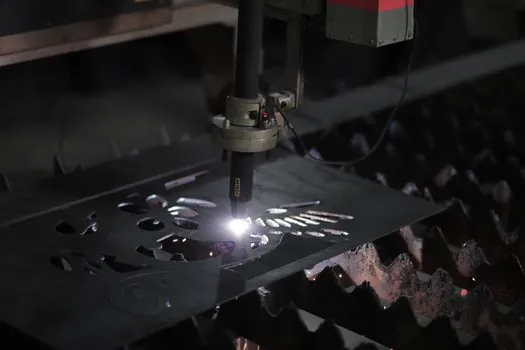
For mild-steel MIG, the 75% argon / 25% CO2 blend is the most widely specified starting point, balancing cost, weld profile, and spatter control; a pure CO2 shield cuts gas cost further but raises spatter and changes bead shape [S1]. Stainless-steel MIG/TIG typically calls for a tri-mix of helium, argon, and a small CO2 or hydrogen fraction, with the goal of preventing chromium oxidation while keeping penetration and arc stability in spec [S1].
For aluminum, pure argon is the default for TIG and thin-section MIG, while a 75% helium / 25% argon blend is common on thick-section aluminum where additional heat input matters more than the extra cylinder cost [S1]. Plasma arc welding follows similar shielding logic, with argon and argon-hydrogen blends as the most common picks [S3]. Small oxygen additions (1-5%) to argon can improve weld-pool fluidity and fusion on carbon steel, but oxygen is never used as a standalone shield because it actively oxidizes the weld pool [S1].
Oxy-Fuel Cutting vs Laser Cutting: Different Gas Logic
For oxy-fuel cutting of mild steel above roughly 6 mm thickness, oxygen is both the heat source and the cutting jet, with acetylene (or propane) supplying the preheat; the oxidizing reaction sustains the cut once initiated [S2]. This remains the default for heavy structural work where cut speed and tolerance on thick plate outweigh the cosmetic edge.
For laser cutting, the assist-gas choice inverts: oxygen is used for carbon steel to drive an exothermic cut and improve edge quality, while nitrogen is used for stainless steel and aluminum to keep the cut edge oxide-free and burr-free, accepting slower cut speeds as the trade-off [S2]. Helium appears in some laser assist-gas blends for non-ferrous work where dross-free edges justify the higher unit cost. For shops running both processes, the gas menu is therefore wider than a pure-MIG shop, and the oxy-fuel cutting torch selection logic for steel construction interacts directly with the gas choice on the cutting side.
Flow Rate, Delivery Mode, and Cylinder Handling
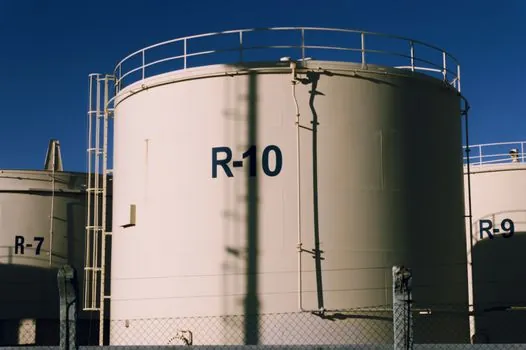
Flow rate is a first-order variable independent of gas choice: too much shielding gas wastes cylinder content and creates turbulent flow that drags in atmosphere, while too little under-protects the weld pool [S1]. A typical MIG shielding flow on a standard 0.035 in wire sits in the 20-30 cubic-feet-per-hour range, and outdoor work often needs both a higher flow rate and a wind screen to compensate for cross-drafts [S1].
Delivery mode scales with volume. General-fab shops typically run a mix of high-pressure cylinders for argon/CO2 and acetylene, with bulk liquid-oxygen supply reserved for shops with sustained oxy-fuel or laser demand [S4]. Cylinder color and valve discipline matter: oxygen cylinders must be kept free of oil and grease to avoid combustion events, and acetylene must never be pressurized above its dissolved-state limit, with most regulators capping delivery around 15 psig [S2].
Comparison: Gases Against Four Decision Criteria
Stacking the four primary candidates against cost, base-metal fit, process fit, and purity requirement makes the trade-offs explicit for a spec-driven buyer. Argon is mid-cost, excellent for non-ferrous and stainless, dominant in MIG/TIG shielding, and ships at industrial-tier purity (99.99% typical) for most fab work [S1][S4]. CO2 is the lowest-cost option, suited to carbon-steel MIG only, and produced at industrial-tier purity that is fit-for-purpose for shielding but inadequate for specialty applications [S1][S2][S4].
Oxygen is moderate-cost, used across carbon-steel cutting and as a steelmaking feed, with industrial-tier purity sufficient for combustion and cutting; acetylene pairs with it for oxy-fuel work and is similarly industrial-tier [S2][S4]. Helium is the highest-cost option, specialized for thick non-ferrous work and some laser assist-gas blends, and frequently delivered as a blend component rather than a pure cylinder [S1]. Nitrogen sits in a supporting role, low-cost, industrial-tier, used for laser-assist and inerting rather than primary MIG/TIG shielding [S2].
What General Fabrication Is Not: Adjacent Use Cases
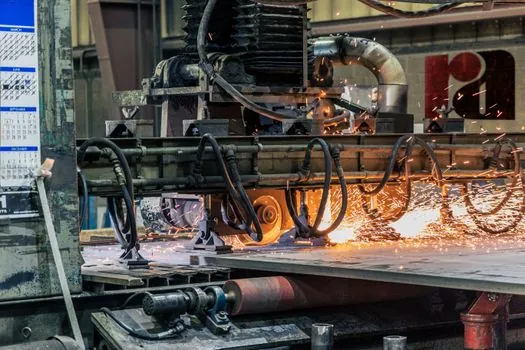
General fabrication overlaps with, but is not the same as, several adjacent applications that carry their own spec gates. Mold and die work pushes higher purity and tighter dew-point control on nitrogen and argon to avoid microporosity on polished surfaces, a discipline the average structural-fab shop does not need; the industrial gas selection logic for mold and die making is a useful reference when shops take on tool-room work. Marine engineering adds class-society rules and fuel-gas considerations, covered separately in industrial gas selection for marine engineering. Oil-and-gas work segments by upstream, midstream, and downstream with purity tiers driven by H2S, CO2 content, and NACE MR0175 material compatibility, detailed in industrial gas selection for oil and gas. Medical-device manufacturing sits at the specialty tier with five-nines purity and full traceability, the inverse of general fab's industrial-tier posture, and is covered in industrial gas selection for medical devices. [S4]
The shop that treats general-fab gas selection as a single shopping list will overpay or under-spec; the shop that segments by base metal, process, and purity tier hits the cost-quality target with off-the-shelf industrial-tier product and reserves specialty-grade cylinders for the specific weld lots that need them.
Trackable signals for the next planning cycle: cylinder price moves on argon and helium (helium in particular has been supply-constrained in recent years), bulk-liquid-oxygen availability for shops scaling oxy-fuel capacity, and any tightening of industrial-gas documentation requirements for shops seeking ASME or NQA-1 audits. Cross-reference the industrial gas reference page when validating gas property tables, and consult the gas detection coverage when speccing shop-floor leak monitoring alongside any new gas supply install.
For component-level specifications, see gas analyzer.