
Under ISO 10218-1:2025, every industrial robot cell must carry three separate stop functions, each wired to a different performance level: a normal stop, a protective stop, and an independent emergency stop, with the protective and emergency functions now explicitly mapped to PL d / SIL 2 and PL c / SIL 1 respectively in ISO 10218-2:2025 [S3].
The split matters because the two stops use different hardware, different wiring topologies, and different reset rules, and treating them as interchangeable is a frequent finding in robot-cell CE audits, particularly for pendant-mounted emergency stop button wiring on collaborative and traditional arms alike [S1][S7].
What ISO 10218-1:2025 Actually Requires for Each Stop
Section 5.4 of ISO 10218-1:2025 requires every robot to provide a normal stop, a protective stop, and an independent emergency stop, each with provision for external device connection, and the manually operated emergency stop on any controller or teach pendant must have priority over all other controls, cause all hazardous parts in the area to stop, remove power from the robot's actuator drives, and remain active until it is reset [S1].
EU Commission Implementing Decision (EU) 2026/2015 published the references of EN ISO 10218-1:2025 and EN ISO 10218-2:2025 in the Official Journal of the European Union on 7 September 2026, making them the harmonised standards under the Machinery Directive 2006/42/EC for new robot installations from that date [S3]. The 2025 edition also promoted normal stop to a safety function, because EU Regulation 2023/1230 §1.2.4.1 requires the machinery to be brought "safely to a complete stop", which means a defined PL or SIL reliability target rather than a simple software halt [S1].
Performance Levels: Why Emergency Stop Is Lower Than Protective Stop
ISO 10218-2:2025 Annex assigns default performance levels per safety function: emergency stop is PL c / SIL 1, protective stop is PL d / SIL 2, the enabling function (conditional) is PL d / SIL 2, and reduced speed is PL d / SIL 2 with a TCP cap of 250 mm/s [S3]. The lower PL on emergency stop is a deliberate choice, because emergency stop is a last-resort function that already removes drive power directly, while protective stop runs as part of the active safety chain that monitors interlocks, safety scanners, and soft-axis limits continuously [S3][S4].
Integrators can deviate from the default performance level only by running a more comprehensive risk assessment under ISO 10218-2:2025, which carries a noticeably higher documentation burden, so most cell builders stay with the defaults and select components that already meet PL d / SIL 2 across the protective-stop chain [S3]. ISO 13849-1 categories B, 1, 2, 3, 4 still structure the diagnostic coverage and architecture inside the chosen PL, and the cross-mapping is detailed separately for stop categories 0, 1, 2.
Behavioural Differences: Reset, Restart, and Manual Override

Emergency stop commands are latching: while the e-stop signal is present the robot cannot be restarted, the stop has priority over all other controls, and a deliberate reset action on the actuator is required before motion resumes, which is the behaviour the standard associates with emergency stop devices wired per ISO 13850 [S1][S7].
Protective stop is a different animal: the robot receives the signal from interlocks or a safety radar, halts in a safety-rated monitored stop that holds position with active monitoring, and if the robot drifts beyond a defined tolerance the protective stop re-triggers automatically, which is why a protective stop does not have to be a hard power removal [S4]. Once the interlock condition clears, the operator can jog the arm with the handheld hand control under safe conditions, that is, operator in a safe position or at limited speed and via maintained-action commands, so the cell recovers without a full e-stop reset cycle [S1].
When to Use Each: A Decision Matrix
Use emergency stop for the few events where removing drive power and latching the cell is the only safe response: pendant-mounted e-stops, perimeter e-stop pushbuttons at the cell boundary, and any operator-detected hazardous event that demands immediate power removal [S1][S7]. Universal Robots specifically warns that emergency stopping causes stress and wear on solenoids and brakes, so it should not be used as a routine production stop, shift change, or break, which is precisely the role of normal and protective stops [S2].
Use protective stop for the routine safeguarding chain: light curtains, safety laser scanners, safety mats, interlocked gates, and safety-rated soft axis and space limiting, where the cell should re-arm automatically once the intrusion clears and where you want the operator to recover motion via the teach pendant [S1][S4]. Reduced speed at or below 250 mm/s is the collaborative trigger condition that links protective stop to the rest of the ISO/TS 15066 collaborative envelope, and a complementary comparison of Category 1 emergency stop delay tuning covers the deceleration side of that transition.
Common Audit Findings on Robot E-Stop Wiring
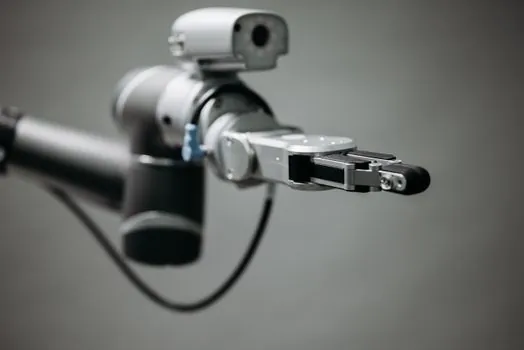
Placing emergency stop devices in hard-to-reach locations, failing to validate safety functions after installation, and overlooking maintenance and periodic test of the safety chain are the three most cited ISO 10218 audit non-conformities in 2026 [S6]. Pendant e-stops must also follow ISO 13850 and RIA R15.06, and designers must decide local vs global stop function: a local stop halts only the pendant-controlled subsystem, a global stop drops the entire cell, and span-of-control rules plus OSHA 1910 govern which is required for a given installation [S7].
For class-2 industrial robots, which is the vast majority of cells on a factory floor, the new ISO 10218-1:2025 retains the full PL d control architecture, while class-1 robots under 10 kg, under 50 N force, and under 250 mm/s, which are rare in industrial settings, may accept reduced requirements down to PL b [S3][S5]. In all cases, the safety functions must be validated after installation and re-validated after any change to the safeguarding chain, including e-stop pushbutton replacement, which is itself a category of work that some plants underestimate.
Sourcing and Standards Stack
The applicable standards stack for a 2026 robot-cell build is ISO 10218-1:2025 and ISO 10218-2:2025 for robot and system safety, ISO 13849-1 for PL determination, ISO 13850 for e-stop device behaviour, ISO/TS 15066 for collaborative operation, IEC 60204-1 for stop categories 0, 1, and 2, IEC 62061 for SIL determination, and ISO 12100 for the underlying risk assessment [S1][S3][S4][S5]. EN ISO 10218-1:2025 and EN ISO 10218-2:2025 are now the harmonised standards under Machinery Directive 2006/42/EC following the 7 September 2026 OJEU publication of Commission Implementing Decision (EU) 2026/2015 [S3]. A useful adjacent reference for the electrical side is IEC 60204-1 stop categories 0, 1, and 2, which complements the ISO 10218 functional split.
Watch for the next revision cycle of ISO/TS 15066 and any updates to RIA R15.06-2012 (or its successor) for collaborative workspace metrics, and for further guidance from the EU Commission on how class-1 vs class-2 robot distinctions are audited in practice under the 2026/2015 harmonisation; both will tighten the reset and rearm behaviour between protective and emergency stops on cells delivered from Q1 2027 onward.