
Engineering-plastic insulation resistance generally halves for each 10°C increase in temperature, making operating temperature a primary grade-selection variable rather than a secondary check.
Material selection must combine volume resistivity, surface resistivity, dielectric strength, CTI, moisture uptake, mechanical strength, and service temperature; dry room-temperature data alone cannot qualify a hot, humid, or high-voltage component.
Temperature Coefficient for Resistance
For many insulating systems, a 10°C temperature increase approximately halves resistance, while a 10°C decrease approximately doubles it [S5][S8]. This relationship is a useful screening rule, not a universal material constant, because measured resistance also depends on moisture, voltage, test duration, contamination, geometry, and aging [S2].
The mechanism is consistent with polymer behavior: thermoplastics soften as temperature rises, and additional thermal energy makes more charge carriers available for conduction [S3]. A practical implication is that a component passing at 23°C cannot be assumed to pass at its rated hot operating temperature. Apply the screening relation to the material property or an assembly baseline, then verify the finished part under the intended temperature and humidity conditions.
For a 10°C rise from 25°C to 35°C, the screening estimate becomes approximately 50% of the 25°C resistance. A 30°C rise to 55°C produces approximately 25%, and a 50°C rise to 75°C produces approximately 12.5%. These values illustrate sensitivity, but they must not replace a material datasheet or a measured qualification result.
Resistivity, Surface Resistance, and Breakdown
The resistivity of insulating plastics is generally above 10^7 Ω·m, and their electrical properties include volume resistance, surface resistance, dielectric constant, dielectric loss, dielectric strength, resistance to electrostatic tracing, arc resistance, corona resistance, and partial discharge [S4]. The span reflects different polymers, test conditions, humidity, temperature, field strength, and irradiation, so two grades with different datasheet values should not be compared unless the test basis is comparable.
Volume resistance describes current through the material bulk, while surface resistance describes current over its surface [S4]. Both matter: bulk resistance governs internal leakage, whereas surface contamination, moisture, tracking, and arc behavior can dominate leakage at a creepage interface.
Dielectric strength is a separate limit. These figures describe laboratory material behavior, not finished-component capability; wall thickness, geometry, stress concentration, contamination, frequency, and the applied test waveform can reduce the installed margin.
Engineering Plastic Options by Service Condition
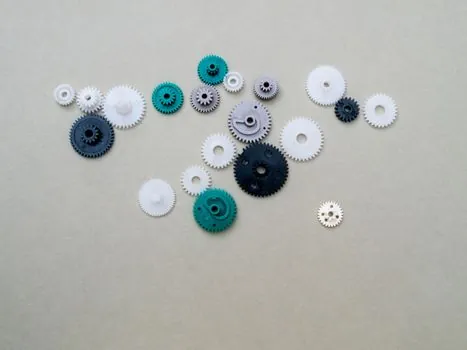
PTFE is among the engineering plastics that may be selected for insulating parts, electrical components, equipment housings, spacers, washers, and related applications [S1]. G10/FR-4, Ultem, PEEK, PTFE, and other engineering plastics may be selected for insulating parts and related applications, and their temperature range and other properties should be compared for the intended use [S1].
The comparison below organizes the main options by the criteria that normally drive an engineering decision:
PTFE is among the materials that may be selected for insulating parts and related applications [S1]. PEEK is among the engineering plastics that may be selected for insulating parts, electrical components, equipment housings, spacers, washers, and related applications [S1]. G10/FR-4 is among the materials that may be selected for insulating parts and related applications [S1]. Insulation performance depends on humidity and the specific polymer being considered [S3].
For general mechanical insulation applications, review engineering plastics as a family before selecting a specific resin and electrical grade. Flame resistance, dielectric strength, operating-temperature range, documentation, and fabricability should be compared on the same datasheet basis [S1].
Voltage, Humidity, and Surface Failure
Plastic suitability depends on voltage, temperature, humidity, frequency, and polymer type [S3]. A component exposed to 250 V in humid factory conditions requires more than a basic volume-resistivity value; comparative tracking index, also called CTI, helps assess resistance to tracking erosion at the specified working voltage and environmental conditions.
One documented comparison used a polycarbonate grade with CTI 175 V in a 250 V application, where tracking erosion created conductive carbon paths [S3]. The polycarbonate grade cited in the example had a CTI of 175 V and was used in an application exposing it to 250 V under humid factory conditions [S3]. This case illustrates why CTI and environment qualification must be considered together, rather than treating a high bulk resistivity as proof of adequate surface performance.
Moisture, dirt, cracks, pinholes, mechanical damage, vibration, chemicals, and temperature can create low-resistance leakage paths, leading to flashover or equipment overload [S5]. A sudden resistance decrease suggests a breach or damage, while a gradual decline commonly points to moisture, contamination, or aging [S5]. Inspection must therefore examine both measured trends and physical condition.
Selection Criteria by Application
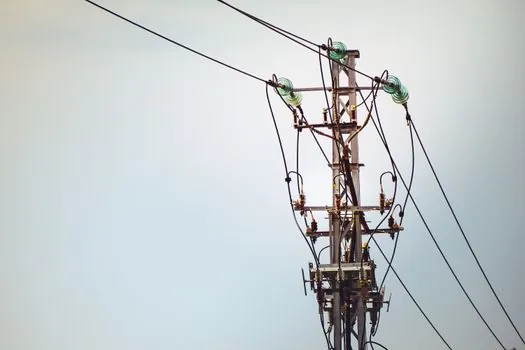
For a 480 V motor housing or terminal block, specify for the full electrical environment, not price alone. Confirm dielectric strength, CTI, moisture uptake, service temperature, creepage distance, mechanical strength, and flame rating. Engineering plastic grades such as PBT, PA66, PEEK, PTFE, and phenolic composites occupy different parts of that decision space. [S1]
For high-temperature hardware near 100°C or above, PTFE, PEEK, Torlon PAI, PCTFE, ETFE, or ECTFE may merit review, but no grade should be approved without its own continuous-use temperature and electrical data [S1]. For low-voltage housings in controlled dry conditions, PBT, Noryl, G10/FR-4, or other structurally capable grades may provide a more practical cost and stiffness balance [S1].
For wet, outdoor, or chemically aggressive service, do not extrapolate dry resistivity. PTFE is highlighted for outstanding chemical and weathering resistance [S1], but assembly design must still address moisture ingress, creepage, mechanical creep, and sealing. For flexible fluoropolymer components, FEP, ETFE, ECTFE, and PFA offer different combinations of flexibility, dimensional stability, and environmental resistance [S1].
Testing, Acceptance, and Failure Control
Insulation resistance should be measured at a defined test voltage, duration, temperature, and humidity, with results recorded as trends rather than isolated pass/fail values [S2][S5]. A 12 MΩ result may be acceptable when stable, while 30 MΩ can indicate concern if it has declined consistently; low but stable readings can also reflect a sound but dry installation [S5].
The “one-mega-ohm rule,” which associates at least 1 MΩ with each 1,000 V of operating voltage, is a screening convention rather than a universal acceptance criterion [S5]. Equipment-specific classification requirements take precedence. Record the insulation condition, test voltage, duration, temperature, humidity, and prior readings so a 10°C change can be distinguished from contamination or physical damage.
For qualification, use the same material grade and surface treatment intended for production. Include hot conditioning, humidity exposure, applied voltage, and the applicable CTI or tracking assessment. Then verify creepage, clearance, wall thickness, and mechanical retention. A datasheet establishes material capability; the finished assembly determines whether that capability survives the actual installation.
The most defensible specification records the grade-specific electrical data, the temperature and humidity basis, the CTI or tracking requirement, and the expected resistance trend. Track at least the insulation resistance, temperature, and moisture condition during commissioning and maintenance, because a falling trend can identify degradation before the reading crosses a single chosen threshold [S2][S5].