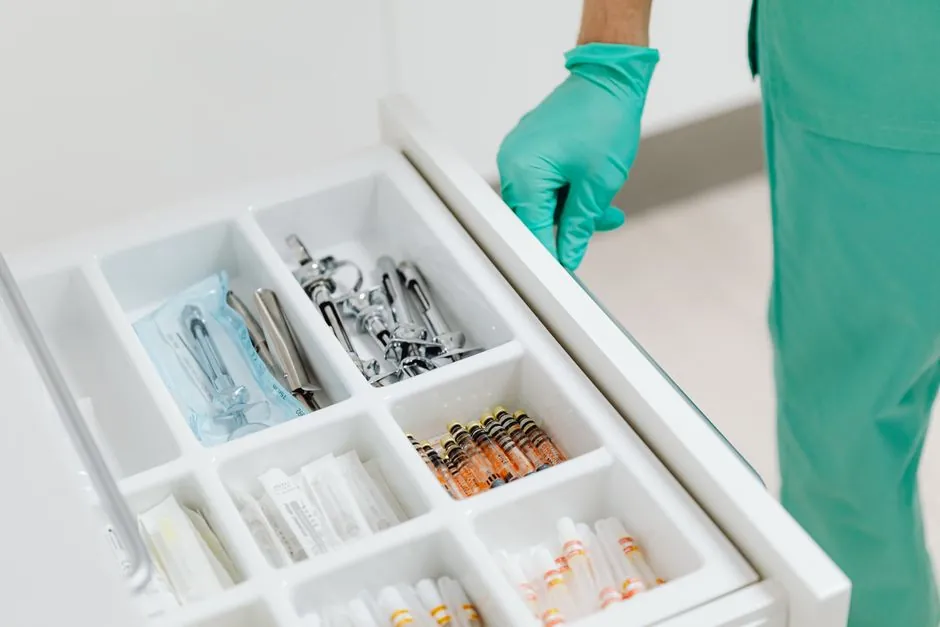
PEEK may be considered for repeated steam sterilization when hydrolysis resistance, dimensional stability, chemical resistance, and service temperature are important [S1].
Saturated steam at 121°C and 134°C combines elevated temperature, moisture, pressure, and thermal cycling, so material selection must cover hydrolytic stability, heat resistance, dimensional stability, and the number of cycles required [S4][S9].
Define the Steam-Sterilization Exposure
Steam sterilization damages susceptible polymers through water-driven chain scission, especially in ester and amide linkages, with heat and humidity accelerating molecular-weight loss, embrittlement, cracking, and dimensional instability [S2].
Polyamides, PBT, PET, and polycarbonates remain vulnerable when heat exceeds 80°C, especially when moisture ingress, chemical exposure, mechanical stress, thermal cycling, and small section thicknesses occur together [S2]. The comparative sterilization data includes steam at 121°C and 134°C, ethylene oxide at 60°C, gamma irradiation at 23°C, plasma at 45°C, hot air at 180°C, and hydrogen peroxide [S4].
Compare the Leading Polymer Families
PEEK and PPSU are among the hydrolysis-resistant plastic materials identified for consideration in hot-water and steam exposure [S1].
PPSU is described as autoclavable and is used for reusable instruments exposed to multiple autoclave cycles, while PSU and Ultem PEI are also listed among candidate polymers for steam, sterilization, humidity, and wet-process applications [S1][S4]. Medical-device material selection should account for compatibility with the sterilization process and the number of cycles the finished product is expected to withstand [S4].
Match the Polymer to the Component Duty
PEEK is appropriate for sterile instruments, implantable-device components, trays, and reusable parts where cycle endurance and dimensional retention justify a higher material cost, while PPSU fits reusable autoclaved instruments and corrosion-resistant housings [S4].
PPS is practical for pump and valve components, seals, bushings, bearings, electrical components, and semiconductor machinery exposed to hot water or steam [S3]. PEI, PSU, PEEK, and PPSU are also relevant to sterilization trays, fluid-handling parts, and machined components used in wet service [S1].
Material names describe families, not qualified components. For engineering plastics, the procurement record should identify the exact grade, color, filler system, sterilization cycle count, steam temperature, dwell time, pressure, and post-cycle acceptance criteria.
Establish Who Should Not Use Conventional Resins
Unmodified PBT, PET, polyamides, polycarbonates, and polyurethanes are poor default choices for repeated saturated steam exposure above 80°C because water-driven chain scission can reduce molecular weight and mechanical performance [S2].
Dry heat and short water contact are different qualification cases. A polymer that survives hot air at 180°C or brief contact with water may still be unsuited to repeated steam cycles because autoclaving combines moisture with elevated temperature [S6][S8]. PEEK also requires separate assessment for ultraviolet exposure and certain acids, so steam performance alone does not establish outdoor suitability [S3].
Control Geometry, Conditioning, and Cycle Validation
Low wall thickness, molded-in stress, sharp transitions, and moisture trapped in joints can shorten service life by concentrating stress and accelerating crack initiation [S2]. The material specification should therefore cover dimensional stability, residual stress, weld lines, fastener loads, and the effect of repeated heating and cooling [S1][S9].
Incoming resin conditioning must be controlled because moisture already absorbed before sterilization can affect processing and part quality. Relevant controls include moisture-barrier packaging, defined drying and conditioning procedures, catalyst and chemical-exposure limits, and retention data for mechanical properties after aging [S2]. Finished-unit testing remains necessary because cycle count, part design, and grade can change results [S4].
Validate Service Life with Cycle-Level Testing
A credible autoclave qualification records the 121°C and 134°C steam cycles, exposure duration, humidity, pressure, load configuration, and the number of cycles representing actual service [S4][S9]. Testing should measure the properties that matter to function, including strength, impact behavior, dimensional change, cracking, and retention of electrical or optical performance.
Material selection should not rely on a generic “autoclavable” label. PEEK has the clearest cycle-count evidence in the supplied research, PPSU and PEI remain credible reusable-part candidates, and PPS offers a cost-oriented route for industrial wet service [S1][S3][S4]. Final approval belongs to the finished component because geometry, grade, conditioning, and cleaning chemistry can shift the result [S4].
Track two procurement signals before releasing a steam-service component: the exact resin grade and formulation, and supplier or laboratory evidence for the specified cycle count at the actual steam temperature and dwell time.