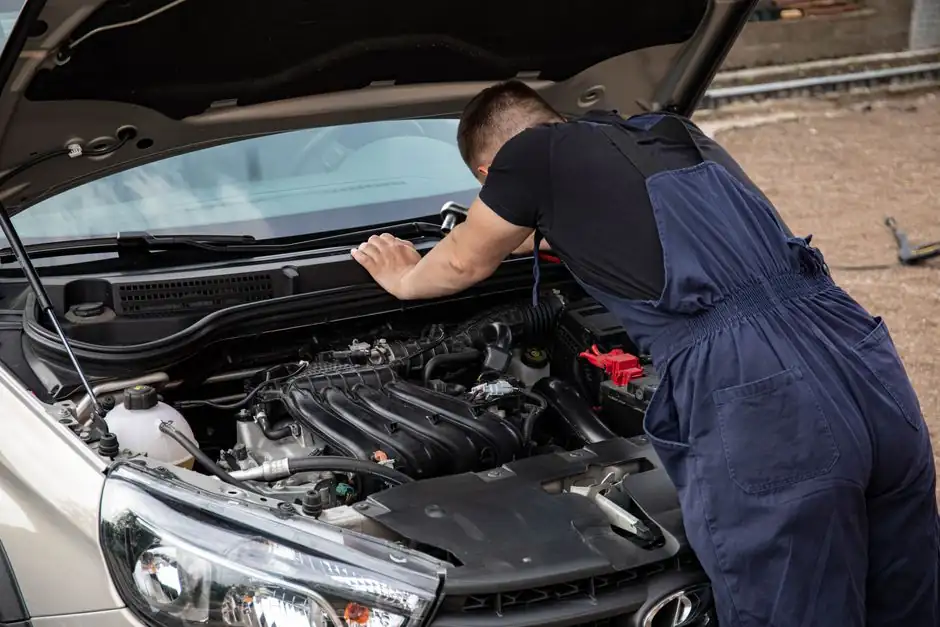
ASTM D5828 evaluates supplemental coolant additive compatibility with commercial ethylene- and propylene-glycol engine-coolant concentrates, making fluid-specific validation essential [S7].
The decision covers reservoir, hose, gasket, seal, housing, and impeller materials exposed to the complete coolant package, including additives, corrosion inhibitors, dyes, and contaminants.
Define the coolant exposure before selecting resin
Compatibility testing must reproduce the actual fluid, concentration, temperature, exposure time, stress state, cleaning method, and manufacturing route, because a generic compatibility label cannot predict a specific molded component [S3].
Record the base coolant chemistry and additive package rather than treating “coolant” as one material. Glycol type, water content, inhibitor chemistry, pH, salt loading, and contamination can change swelling, permeation, and cracking behavior; ASTM D5828 covers determining the compatibility of commercial SCAs with commercial ethylene- and propylene-glycol engine coolant concentrates [S7].
Testing should include normal operation, peak temperature, thermal cycling, immersion, splash, and vapor exposure. Also include any service cleaner, fuel, oil, or maintenance chemical that can reach the same component. Crazing, cracking, discoloration, extraction, swelling, softening, and mass change are distinct failure signals and should not be collapsed into one pass/fail result [S2].
Match polymer family to the coolant mechanism
PEEK, PPS, PEI, PVDF, PP/HDPE, and PA are screening candidates, but each carries a different limitation: oxidizer and acid exposure for PEEK, reinforcement and weld-line sensitivity for PPS, solvent and strong-base cracking for PEI, permeation and creep for PVDF, temperature and creep for PP/HDPE, and moisture and hot-water sensitivity for PA [S3].
PP and HDPE often suit aqueous service because of broad resistance to many water-based chemicals, but temperature, creep, oxidation, and permeation can limit long-duration performance [S3]. PA provides higher mechanical capability where wear and strength matter, yet moisture uptake, hot water, strong acids, and dimensional movement can govern the design [S3].
PPS and PEI offer higher-temperature options for demanding thermal environments, but the exact grade, reinforcement, brittleness, weld lines, ketones, chlorinated solvents, or strong bases must be checked [S3]. PEEK supports demanding chemical and thermal duties, while concentrated acids, strong oxidizers, elevated temperature, and cost still require review [S3]. PVDF is commonly considered for acids, halogens, and salts, but joining method, creep, temperature, and permeation remain part of compatibility [S3].
Additives can change an otherwise suitable resin
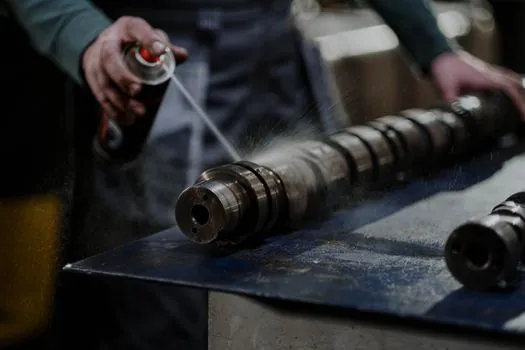
Functional additives must be assessed as part of the polymer-additive system rather than judged independently, because additive loading can alter heat stability, chemical resistance, processing behavior, appearance, and mechanical integrity [S1][S5].
The base resin should meet the primary structural and thermal requirements before an additive package is used to close one or two performance gaps. M. Holland frames the selection questions as application, resin, and required function, with processing conditions, service environment, regulatory requirements, lifecycle cost, and sustainability considered as additional constraints [S5].
Overloading is not a free improvement. Every additive affects overall performance, and excessive loading can reduce properties or create appearance problems [S5]. For coolant-contact parts, validate the final compounded grade because pigments, stabilizers, lubricants, impact modifiers, processing aids, glass fiber, carbon fiber, and mineral fillers can alter permeability, interfacial adhesion, residual stress, and crack initiation [S3][S5].
UV stabilization data from automotive polymer matrices does not establish coolant compatibility. A 2025 review reports HALS and benzotriazole-based UV stabilizers extending accelerated-weathering life by up to 3,000 h without modulus loss, but that result addresses weathering rather than glycol exposure [S1]. The material choice remains available in the engineering plastic selection guide.
Mechanical fit and installation can defeat chemical resistance
Environmental stress cracking can begin where a chemical and tensile stress act together at threads, sharp corners, weld lines, press fits, clamps, or molded-in inserts, even when an unstressed immersion coupon appears unchanged [S3].
Do not approve a polymer family without checking grade-specific evidence. Glass-filled material can expose an interface that permits fluid ingress, while carbon fiber, mineral filler, residual molding stress, machining marks, and sharp notches can change the result [S3]. The same resin may therefore behave differently as an injection-molded housing and a machined reservoir fitting.
For elastomeric seals and hoses, use fluid-specific swelling and extraction data rather than relying on a generic coolant rating. The EPDM rubber selection guide is relevant where EPDM is the specified compound, but compound formulation, coolant chemistry, temperature, and compression set still require validation. For fluorinated elastomers, the fluoroelastomer selection guide applies only after the exact polymer and additive system have been established.
Validate complete assemblies under worst-case conditions
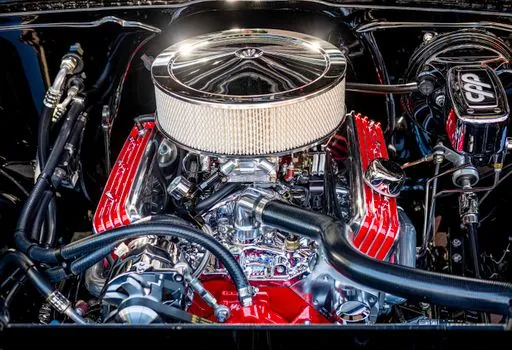
Field compatibility depends on the system, not only on a polymer coupon, because coolant contacts every wetted material and can promote corrosion or fouling that indirectly harms the polymer component [S2]. Junction tubing, manifold ports, and quick-disconnect fittings are critical inspection points [S2].
ASTM D5828 provides a method for determining the compatibility of commercial supplemental coolant additives with commercial ethylene- and propylene-glycol engine-coolant concentrates [S7]. Use the applicable concentrate and additive concentration, but do not treat the standard result as a complete vehicle qualification. Confirm the test scope, test edition, specimen geometry, exposure conditions, and acceptance criterion in the purchased document before generating a release specification.
Define measurable acceptance criteria before testing. Depending on component function, these can include dimensional change, tensile retention, elongation, impact retention, mass change, visual cracking, discoloration, hardness change, swell volume, seal leakage, pressure capability, or post-test functional performance. A chemical and mechanical resistance assessment alone is not sufficient to establish overall usability because service regulations and application requirements also apply [S9].
Design and supplier controls that reduce field failures
Specify the coolant formulation, base-fluid type, additive package, concentration, operating temperature, pressure, pressure cycling, service duration, and prohibited cleaning chemicals as controlled interface requirements. [S3]
Require the supplier to declare the resin grade, filler type and percentage, additive masterbatch, molding or extrusion method, and post-processing operations. This is important because the same polymer family can change behavior with reinforcement, colorants, residual stress, machining, and notch geometry [S3].
Use a change-control process for coolant supplier, additive chemistry, inhibitor package, supplier, formulation, and conversion method. Re-test at the highest specified coolant temperature and under combined mechanical stress rather than relying on a room-temperature immersion result [S3]. For cooling-system interfaces involving adhesives or sealants, the industrial adhesive selection guide applies to the specific adhesive, substrate pair, surface preparation, and coolant exposure rather than to an unqualified generic adhesive.
The decision record should contain a completed material matrix with at least 6 columns: coolant package, concentration, temperature, duration, stress condition, and acceptance result. Track coolant supplier, additive chemistry, inhibitor package, supplier, formulation, and conversion method as traceable signals; any change to one of them requires review against the approved test basis [S3][S7].