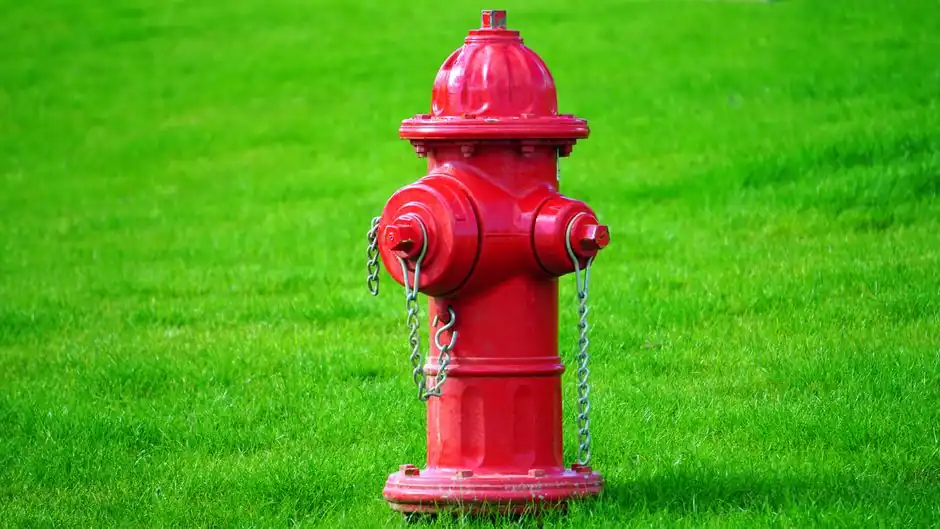
Electroless nickel plating deposits a uniform nickel-phosphorus layer (typically 25-75 µm) by autocatalytic chemical reduction, producing 500-1000 HV post-bake hardness and even coverage on threads, gate faces, and stem bores where electroplating cannot reach [S1][S2]. Fusion-bonded epoxy (FBE), applied as a powder fused at 180-250°C, forms a 150-300 µm (6-12 mil) thermoset film that is the dominant internal coating for water, wastewater, and buried-service gate valves per AWWA practice [S3].
On a gate valve, the two systems answer different questions: ENP protects the metallic wetted surfaces (gate, seat, stem) from corrosion and mild wear at moderate cost; FBE isolates the entire internal cavity from the process fluid, including the cast body wall. Picking the wrong one shows up as blistering FBE on hot service, or as accelerated gate-face wear in an ENP-only valve that was actually facing solids in the flow.
Hardness, Temperature, and Thickness Compared
ENP as-plated is roughly 500 HV; with a 400°C heat treatment for one hour, phosphorus-bearing ENP can reach 900-1000 HV through nickel-phosphide precipitation hardening, while still remaining uniform over complex internal geometry [S1]. FBE does not compete on hardness; its value is chemical barrier, with a 150-300 µm film thickness, no measurable porosity when properly fused, and a continuous service ceiling around 90-120°C depending on formulation and wet/dry exposure [S3].
For comparison, hard chrome plating on a stem runs 65-70 HRC (about 800-900 HV) but throws unevenly on edges and cannot reach internal diameters, while tungsten carbide via HVOF hits 1000-1300 HV but is a line-of-sight thermal spray unsuited to a closed gate-valve body [S1]. ENP is therefore the only realistic plated option for internal wetted surfaces in a knife gate valve or standard gate valve where uniform internal coverage is required.
Corrosion and Chemical Resistance Profile
ENP is a metallic barrier, not a polymer. In acidic streams, the nickel-phosphorus layer is more stable under acid attack than many metallic coatings, and in mixed-corrosive effluents it gives a uniform nickel coating that helps safeguard the substrate from unpredictable corrosion [S2]. High-phosphorus ENP (10-12% P) is essentially amorphous and offers the best chemical resistance in acidic media, while low/medium phosphorus grades (1-9% P) trade some chemical stability for higher as-plated hardness and better alkaline resistance.
FBE resists a wide pH range typical of water, sewage, brine, and many dilute chemicals, and is routinely qualified for cathodic-disbondment resistance on buried ductile-iron gate valves, an environment where organic coatings typically fail at pinholes [S3]. Neither system is the right tool for hot concentrated acids, oleum, or hydrofluoric acid; those services usually call for PTFE lining or a nickel alloy body (Alloy 20, C-276, Monel) rather than a surface coating.
Substrate Prep, Process, and Geometry Limits
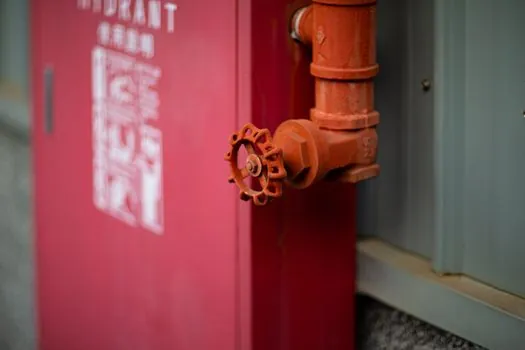
ENP requires a clean, activated steel surface (typically ENP-grade carbon or stainless steel), and the autocatalytic bath plates uniformly into bores, threads, and undercuts at roughly 12-25 µm/hour, so a 50 µm deposit takes 2-4 hours; post-plate baking at 400°C is used when maximum hardness is needed, and is incompatible with finished industrial coating stacks already on the body [S2]. FBE requires abrasive blast to near-white metal (SSPC-SP10), preheat to 180-250°C, and electrostatic or fluidized-bed powder application; the part is then cured during the post-heat, and the resulting film is mechanically tough but not field-repairable.
A practical geometry limit: FBE is line-of-sight only in the sense that any pocket of trapped air, moisture, or blast profile shadow will show as a holiday, and quality is checked with a 1500-2000 V holiday detector; ENP coverage is by chemical reduction, so it will plate into blind features that an electroplated nickel or chrome bath would not reach [S1][S3]. For internal gate-valve cavities with deep body pockets, this is the single most important process difference.
Selection Matrix: ENP, FBE, or Both
On four decision criteria, the two systems rank as follows. (1) Maximum continuous temperature: ENP roughly 400°C in non-oxidizing service vs FBE around 90-120°C wet. (2) Chemical resistance to dilute acids: ENP generally better, especially with high-phosphorus chemistry [S2]; FBE better in neutral-to-alkaline water and brine. (3) Internal coverage of complex geometry: ENP wins, because autocatalytic deposition reaches every wetted face uniformly [S1][S2]; FBE depends on powder access and preheat. (4) Unit cost for a DN300 ductile-iron gate valve body: FBE is the lower-cost option, ENP roughly 1.5-3x the coating cost depending on phosphorus grade and thickness.
Service-by-service recommendation: potable water and buried wastewater duty, use FBE per AWWA with NSF/ANSI 61 certification; mildly acidic process water up to ~150°C, use ENP on the trim plus an external waterproof coating system; dry hydrocarbons, steam, or NACE MR0175 sour service, ENP is the minimum, and Stellite 6 weld overlay on the seat faces is the spec for galling resistance [S1]; scaling-prone cooling water or desalination brine, FBE on the body plus ENP on the gate/stem is a common combined stack.
Quality Control and Failure Modes
Coating thickness should be verified with a calibrated coating thickness gauge; for ENP, X-ray fluorescence on a witness coupon is the standard shop-floor check, while FBE thickness is read with a magnetic pull-off or eddy-current gauge on the body. ENP failure modes include under-plate porosity (visible as pinpoint rust within 1000 hours of salt-spray exposure), phosphorus segregation above 12% P that embrittles the layer, and hydrogen embrittlement on high-carbon substrate if not baked. FBE failure modes are typically blistering from inadequate surface prep, cathodic disbondment at holidays, and thermal softening above the glass-transition temperature of the specific formulation. [S3]
For gate valves that see both buried and hot-internal duty, a stacked system is normal: FBE internal body, ENP on the gate and stem, Stellite 6 hardfacing on the seat faces where galling is a risk, with a coating thickness log attached to the MTR package [S1][S3]. That combination is what shows up in API 6D gate valve MTRs from major foundries when the spec calls out water-service plus light sour hydrocarbons.
Trackable signals to watch for over the next two quarters: revisions to AWWA C550 and C213 covering FBE film thickness and holiday-test voltage for ductile-iron gate valves, and any new high-phosphorus ENP bath chemistry that pushes salt-spray ratings past the current 1000-hour ASTM B117 baseline used for valve internal hardware.
Background reading: DIN-Rail vs 19-Inch Rack Industrial Ethernet Switches: Spec-Level Decision Map.