Industrial Ethernet switches split cleanly into two physical form factors: DIN-rail mount modules designed to clip inside control cabinets next to PLCs and I/O, and 19-inch rack switches built to slide into standardised substation or control-room cabinets alongside IT-class equipment [S5]. The choice is set by where the switch physically lives in the network architecture, not by port count alone [S3].
Field-level aggregation almost always calls for DIN-rail hardware because the cabinet, the backplane, and the wiring topology are already DIN-centric, while plant-level backbone and control-room aggregation lean toward 19-inch rack form factors for port density, hot-swap PSUs, and thermal headroom [S1][S5]. For a primer on the broader device class, see the industrial switch reference page.
Form Factor, Footprint, and Cabinet Integration
DIN-rail industrial switches clip onto a 35 mm top-hat rail inside the same enclosure as the PLC, the 24 VDC power supply, and the terminal blocks, which keeps the field wiring short and lets the switch share the cabinet's existing surge protection and breaker scheme [S1][S6]. The 1000 and 1100 unmanaged series from Phoenix Contact illustrate the pattern: compact, narrow housings, designed to mount flat in the cabinet or on a wall using the same accessories, with DIN-rail as the default fit [S1].
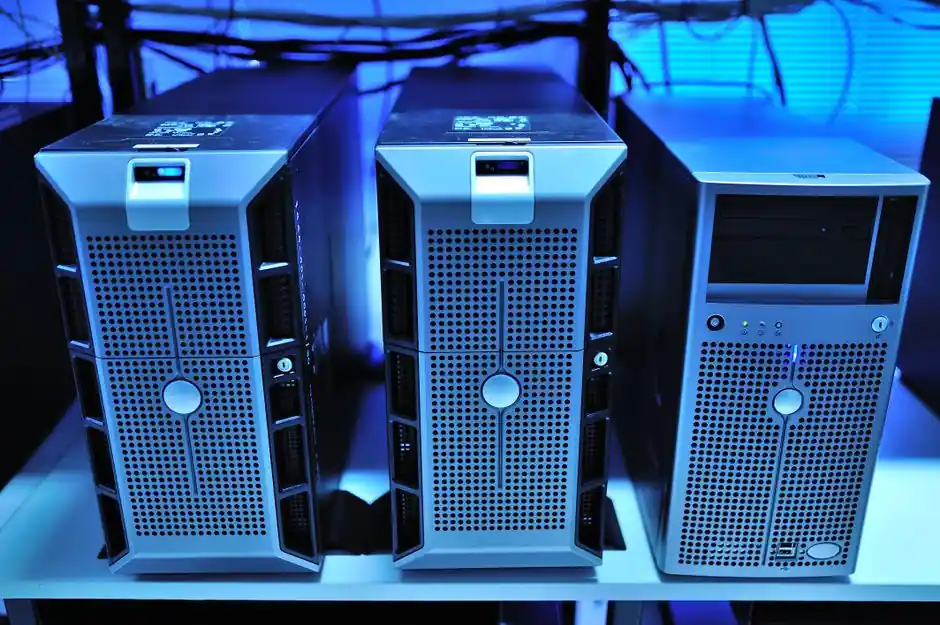
19-inch rack switches, by contrast, are built to the 482.6 mm (19 in) rack width and use 1U or 2U panel heights, which is the same mechanical envelope used by servers, UPS units, and telecom gear in plant control rooms and substation comms racks [S4][S5]. The Westermo Redfox rackmount line and the Phoenix Contact FL SWITCH 5900 series both use this form factor as their aggregation-tier platform [S1][S4]. A field engineer converting a DIN-rail switch into a 19-inch footprint typically bolts it to a 2U adjustable adapter plate, not the other way round [S7].
Port Density, Uplinks, and Backplane Throughput
Port density is the single most cited differentiator: 19-inch rack industrial switches routinely deliver 16 to 48 managed copper or SFP ports per 1U, which is the entire point of a backbone switch [S1]. The FL SWITCH 5900 series is explicitly marketed as a 19-inch backbone switch with high port density and flexible port options, plus an optional redundant power supply for high-availability aggregation roles [S1].
DIN-rail managed switches cluster in the 4 to 16 port range because they share the cabinet with I/O and need to fit alongside wiring ducts; the Phoenix Contact 2000, 2100, 2200, and 2300 DIN-rail managed series and the unmanaged 1000/1100/1600/1700 lines all sit in that band, with the 1800 and 1900 series reserved for the 19-inch format instead [S1]. When a single cabinet needs more than roughly 16 ports, most engineers will move aggregation up to a 19-inch rack rather than stack DIN-rail switches, because stacking reintroduces the single point of failure that managed redundancy is supposed to remove. For adjacent I/O and wiring decisions that sit next to the switch, the industrial adhesive and storage rack references cover related cabinet-level material choices.
Environmental Ratings and Operating Envelope
Rack-mount industrial switches are commonly used in plant-level aggregation nodes where ambient is closer to controlled room temperature, while DIN-rail switches sit in sealed machine cabinets where ambient routinely hits 65°C to 75°C in summer sun [S3]. Phoenix Contact's Raptor portfolio addresses that envelope directly: Layer 2 managed switches rated to an extended temperature range of -40°C to +70°C, with IEC 61850-3 and IEEE 161 certification for substation and traction environments, and flexible installation via either 19-inch rack or DIN-rail mounting [S1].
The temperature gap matters because every 10°C above the rated ambient roughly halves electrolytic capacitor lifetime, so a switch rated to 55°C in a 70°C cabinet is already operating outside its design envelope even though the datasheet looks "industrial" on paper [S3]. A field rule of thumb that holds up across the sources: for sealed cabinets, engine rooms, and outdoor enclosures, treat -40°C to +75°C as the minimum acceptable operating range, and prefer DIN-rail fanless designs over rack switches with internal forced-air cooling, since fans are the dominant failure mode in dusty environments. The pallet rack reference covers a different but adjacent question on environmental and load ratings for warehouse hardware.
Power, Redundancy, and PoE Delivery
19-inch rack switches almost always accept dual redundant AC or -48 VDC supplies, which matches how control-room and substation comms racks are wired, while DIN-rail switches typically take a single 24 VDC input sourced from the cabinet PSU [S1][S5]. The FL SWITCH 5900 explicitly lists an optional redundant power supply, and most other 19-inch industrial backbones follow the same dual-input pattern, which is the prerequisite for protocols like MRP, HSR, or PRP redundancy that the aggregation tier depends on [S1].
PoE is the one area where the two form factors blur: unmanaged PoE switches in the DIN-rail 1000 family can power up to 8 end devices over a single cable, while rackmount PoE switches target higher budgets for groups of cameras or access points in larger deployments [S1][S9]. Both form factors support IEEE 802.3af and 802.3at, so the selection is dominated by how many PoE ports you need in one physical location and whether the local power architecture is 24 VDC or AC [S9]. For comparison context on PoE-powered field devices such as cameras and phones, the industrial buzzer reference covers a different but adjacent 24 VDC signalling load that often shares the same cabinet supply.
Decision Matrix: DIN-Rail vs 19-Inch Rack
The cleanest way to compare the two form factors is criterion by criterion rather than by brand. On physical integration, DIN-rail wins for inside-cabinet use while 19-inch wins for control-room and substation racks [S1][S5]. On port count per device, 19-inch rack switches offer roughly 16 to 48 managed ports versus 4 to 16 for DIN-rail, so aggregation tier goes rack and field tier goes DIN [S1]. On operating temperature, look for a published -40°C to +70°C or wider range on either form factor, and treat anything below -25°C to +60°C as commercial-grade even if it is sold as "industrial" [S1][S3].
On power, dual-input AC/-48 VDC is the rack-switch norm and 24 VDC single-input is the DIN-rail norm, so the cabinet PSU architecture usually forces the choice before the switch model does [S1][S5]. On installation footprint, a DIN-rail switch is a clip-on module next to I/O, while a rack switch needs 1U or 2U of vertical space, 482.6 mm of horizontal rail, and forced-air or convection cooling clearance above and below the chassis [S1][S7]. A field guideline: if the switch is within 10 m of the I/O it serves, DIN-rail; if it is the aggregation point for more than one cabinet or more than 16 ports, rack-mount. The Raptor range from Phoenix Contact is one of the few industrial lines that explicitly ships in both form factors on the same firmware and the same IEC 61850-3 / IEEE 1613 certification, which makes a mixed DIN-rail-plus-rack deployment easier to manage [S1].
Selection Rules and Common Failure Modes
The single most common spec-level failure when picking between the two is choosing a 19-inch rack switch for a sealed field cabinet because the port count was attractive, then watching it cook at 70°C because its convection cooling path was designed for an open control room [S3]. The reverse failure is stacking four 8-port DIN-rail switches in one cabinet to chase port count and creating a single-point-of-failure fan-out that defeats the managed redundancy features that justified the spend in the first place. The decision rule that holds up across Phoenix Contact, Cisco, Westermo, and the integrator case studies is straightforward: DIN-rail inside the cabinet, rack at the aggregation tier, and never assume that "industrial" on a datasheet means the same operating envelope across form factors [S1][S2][S3][S4].
For adjacent coverage on field-level signal and load hardware that often shares the same cabinet as a DIN-rail switch, the industrial borescope reference is a useful cross-check on ingress-rating language used in industrial datasheets. For a different but structurally similar spec-first comparison, see this walkthrough of Brake Resistor vs General Purpose Load Resistor spec differences.
Trackable next signals: confirm the cabinet's measured peak ambient over a full summer cycle before locking the operating-temperature spec, and verify that any 19-inch rack switch selected for a substation or traction role is explicitly certified to IEC 61850-3 and IEEE 1613 rather than only listed as "industrial" on the marketing page [S1][S3].