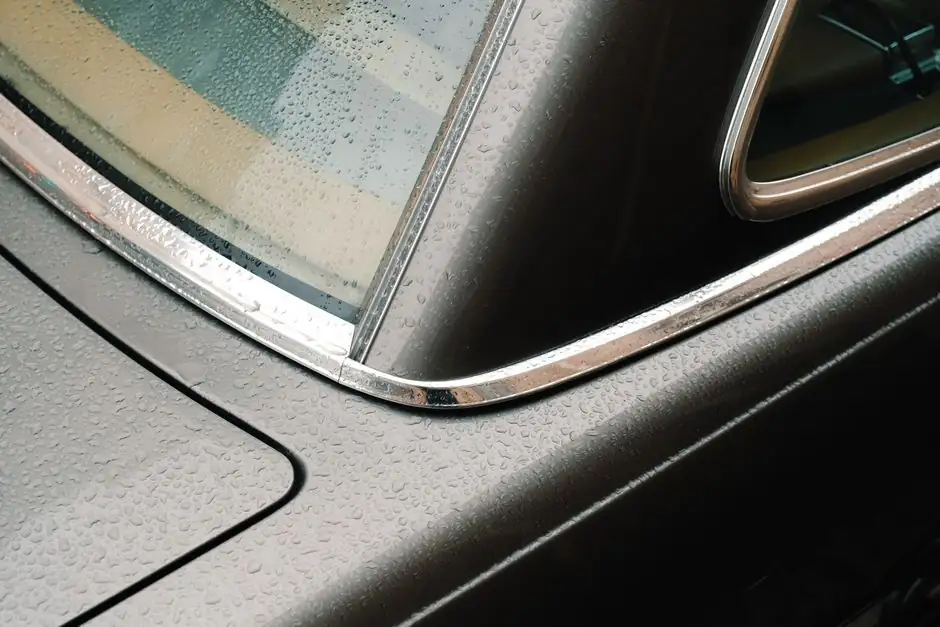
EPDM has displaced neoprene in most pure weather-sealing applications because it offers better ozone and UV performance at a lower material cost [S6], while its water and steam resistance make it the default elastomer for outdoor enclosures, HVAC, and potable-water gaskets [S2].
Standard EPDM compounds deliver tensile strength of 5.0–12 MPa and 250–300% minimum elongation, hardness 40–90 Shore A, and a usable temperature window of roughly -57 °C to +150 °C, with steam service acceptable to 204 °C (400 °F) [S2]. The trade-off is sharp: EPDM swells and degrades rapidly in petroleum oils, hydrocarbon fuels, and mineral lubricants, so any oil-contact seal must go to nitrile or FKM instead [S1][S3].
Backbone Chemistry, Cure System, and What They Buy You
Commercial EPDM contains 45–75% ethylene by weight, with propylene making up most of the balance and a small fraction of a non-conjugated diene (commonly ENB, DCPD, or VNB) that provides the crosslink site [S2][S4]. The saturated backbone has no double bonds along the main chain, which is the structural reason EPDM resists ozone, UV, and oxidation so effectively: there are no reactive sites for these to attack [S2].
Cure-system choice drives the application fit. Sulfur-cured EPDM gives higher initial tensile and tear strength, which suits weatherstrip profiles and dynamic weatherseals. Peroxide-cured EPDM gives better heat aging and lower compression set, which suits static gaskets that sit under sustained bolt load at elevated temperature [S2]. For a peroxide-cured EPDM in hot-air service, a continuous upper limit around 150 °C is a realistic planning number for the compound class [S2].
Weatherseal Service: Dynamic, Exposed, Compressed-and-Released
Weatherseals on doors, windows, curtain walls, and HVAC casings take repeated compression cycling plus full weather exposure. EPDM is the right polymer because its ozone and UV resistance are classified as "very high" against nitrile's "low" rating on the same property axis [S1]. Outdoor EPDM profiles are routinely rated for many years of UV exposure in roofing membranes, vehicle door seals, and façade gaskets [S6][S4].
For weatherseal work, a softer 50–70 Shore A sulfur-cured compound is the common pick: enough elasticity to recover from door slams and thermal movement, with tensile and tear well above what a closed-cell weatherstrip needs. EPDM's water and steam resistance is rated "excellent" against nitrile's "moderate" [S1], so any seal that sees rain, condensation, or wash-down should default to EPDM rather than NBR. Detail trade-offs versus silicone are covered separately in the EPDM modulus and stiffness reference for gasket design.
Gasket Service: Static, Loaded, Often Hot
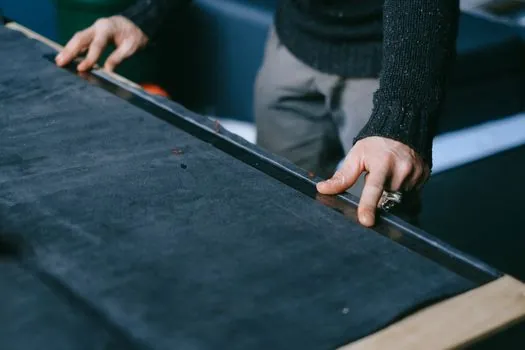
Static gaskets on flanges, heat exchangers, pumps, and water-treatment vessels hold a constant compression between mating faces. The failure mode is compression set, not flex fatigue, so a peroxide-cured EPDM with low compression set is usually specified, often at 60–80 Shore A [S2]. Hardness above ~80 Shore A starts to lose conformability on warped flanges, and below ~50 Shore A the material extrudes under bolt load.
Steam service is EPDM's strongest non-weather application: saturated steam to roughly 204 °C (400 °F) is within published compound capability when the formulation is peroxide-cured and the joint design controls gasket stress [S2]. Hot-water and potable-water service are equally clean fits. EPDM is also the default elastomer for HVAC chiller and cooling-tower gaskets, which is why spec activity around data center chiller backlogs and capacity expansion in 2026 tracks a parallel rise in EPDM compound demand for the sealing packages on those units.
Comparison Matrix: EPDM vs NBR vs Neoprene vs FKM on Selection Criteria
Putting the four common gasket elastomers on the same axes makes the decision tree explicit. Numbers below are drawn from current supplier comparison tables and should be read as compound-class typicals, not a single datasheet [S1][S3][S5][S8].
On petroleum-oil resistance, NBR and FKM are rated "excellent" while EPDM and neoprene are rated "poor" to "fair" [S1][S3]. On weather/UV/ozone, EPDM and silicone lead with "very high" ratings, neoprene is acceptable for moderate exposure, and NBR is unsuitable for prolonged outdoor service [S1][S4]. On temperature, EPDM covers roughly -57 to +150 °C dry and 204 °C in steam [S2], NBR is typically capped near 100–120 °C, neoprene near 100 °C, and FKM extends to roughly 200–230 °C depending on grade [S3]. On compression-set resistance, both EPDM and NBR are rated "good" to "very good" for their preferred cure systems [S1], and on cost, EPDM and NBR sit at the low end, neoprene moderate, FKM 5–10× the price of EPDM for equivalent geometry [S3].
For an oil-and-fuel seal at moderate temperature, NBR is the default; EPDM is the wrong material here and will swell [S1]. For high-temperature chemical service with aggressive media, FKM earns its premium. For anything that lives outside, sees water, steam, or HVAC duty, EPDM is the right answer at the lowest sensible cost [S2][S3][S6]. Background on the broader EPDM composition space is laid out in EPDM synthetic rubber: composition, properties, and selection map, and a head-to-head against natural rubber for elastomer selection is given in EPDM vs natural rubber: backbone chemistry, spec ranges, and selection rules.
Where EPDM Fails and What to Specify Instead

EPDM is not a general-purpose elastomer. Three failure modes dominate field returns, and each has a clean substitute: petroleum-oil exposure (use NBR or FKM), strong solvent or aromatic-fluid exposure (use FKM), and applications requiring FDA food-contact compliance where the chosen EPDM grade is not food-grade (use a specifically certified EPDM, silicone, or a PTFE-jacketed gasket) [S1][S3][S4]. The "EPDM breaks down with exposure to hydrocarbon fuel, grease, and oil" caveat is the single most-cited material miss in seal specification [S1][S4].
Within EPDM, the most common internal mis-spec is cure system: specifying a sulfur-cured grade where heat aging and compression set matter costs service life; specifying peroxide-cured where the seal sees only ambient weather overspends. Form factor also matters: solid EPDM sheet gives the best mechanical and pressure performance, closed-cell EPDM is the right pick for soft gaskets and weatherstripping where compression recovery matters, and open-cell EPDM is used only for dust seals and acoustic isolation, not for liquid service [S2].
Selection Workflow and Sourcing Signals
A practical specification path: confirm the fluid is water/steam/weather and not petroleum, pick the temperature band (ambient outdoor vs steam ≤204 °C), choose cure system (sulfur for dynamic weatherseal, peroxide for static hot gasket), set hardness (50–70 Shore A weatherseal, 60–80 Shore A gasket), and choose form (extruded profile, closed-cell strip, or solid cut gasket) [S2]. Cross-check against ASTM D2000 line callouts, which is the standard designation system EPDM compounds are typically bought under for industrial sealing.
Trackable signals to watch through the rest of 2026: peroxide-cured EPDM price movement relative to sulfur-cured (driven by dicumyl peroxide availability), open orders at HVAC OEMs as data center chiller build-outs pull compound, and any reformulation activity around lower-compression-set EPDM grades for higher-temperature steam service. For background on the broader industrial rubber supply picture, the EPDM rubber material page, and the gasket form-factor reference, the in-house encyclopedias are the next node to consult.