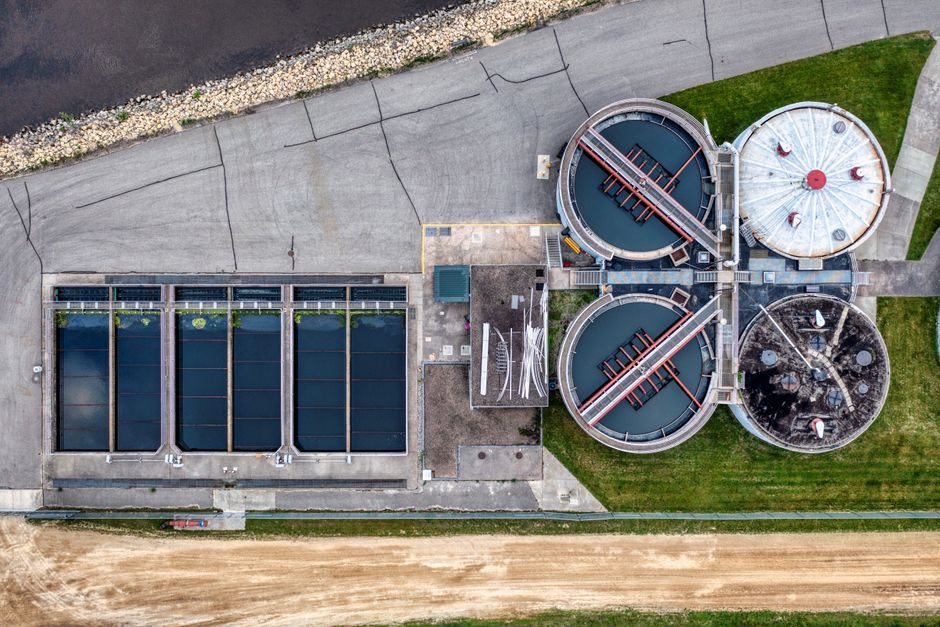
For potable-water reservoirs, wastewater basins, and pond/canal liners, vulcanized EPDM sheet remains the first-pass specification among civil and process engineers because published data on the membrane's working envelope and ageing resistance is unusually well documented [S3][S4].
The commercially available EPDM waterproofing membranes in the 2026 supplier base are produced by continuous extrusion and vulcanization of ternary ethylene-propylene rubber, supplied in rolls 1.2 m / 2 m / 3 m / 4 m wide × 20 m long at thicknesses of 1.2 / 1.5 / 2.0 mm, with a published production capacity of 250,000 m²/month from a single Qingdao-based line and a reference price band starting at $3.00/m² at 3,600 m² MOQ [S4].
Why EPDM Compounds Dominate Water-Containment Lining
EPDM is a saturated-backbone elastomer (typically ENB or DCPD diene content in the 2–5 wt% range for general-purpose waterproofing grades), which gives it a stable ozone and UV resistance envelope that nitrile and natural rubber cannot match in exposed or sunlit service [S1][S3]. Material datasheets for current production EPDM waterproofing membrane cite "excellent anti-aging performance, service life up to 50 years" and a working range of −40 °C to +100 °C, which spans nearly the full operating envelope of cold-region reservoirs and warm chlorinated effluent basins [S3].
Mechanical property claims consistently reported on 2026 supplier listings are high tensile strength, high elongation at break, small dimensional change after heat treatment, and good plant-root penetration resistance — the last of which is the key reason EPDM is specified for green-roof and planted-basin applications rather than PVC or HDPE [S1][S3][S4]. Cross-linked EPDM rubber membranes retain elongation above 300% at break, which is what allows them to absorb substrate movement and thermal cycling in open-air lagoon service without cracking.
Compound Selection: Vulcanized vs Weldable EPDM
The 2026 product mix splits cleanly into two fabrication routes: vulcanized (cured) sheet, and weldable EPDM that can be hot-air or hot-wedge welded on site [S4]. Vulcanized sheet is the default for open reservoirs and potable-water basins where joint integrity is achieved through adhesives and seam tapes; weldable EPDM is specified for large-area industrial lagoons, landfill caps, and tunnel linings where factory seams are impractical.
For chemical or thermal service outside the standard −40 °C to +100 °C window, an EPDM base compound is generally the wrong material — NBR / nitrile rubber handles hydrocarbons and oils better, and silicone rubber is the correct call for continuous service above ~150 °C or for USP/food-contact dry sections. Within water-treatment, however, the chlorine, ozone, and dilute-acid exposure profile stays inside EPDM's published envelope, and specifying anything more exotic adds cost without measurable service-life gain [S3][S4].
Thickness and Roll-Size Sizing Logic
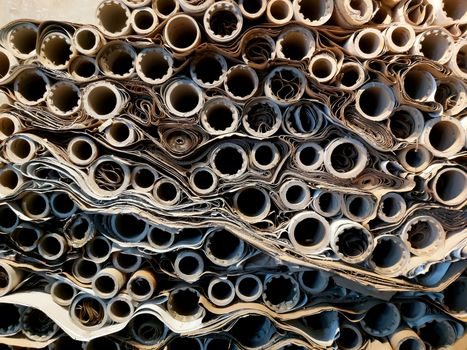
The 1.2 / 1.5 / 2.0 mm thickness band on offer is a direct function of substrate roughness and puncture risk [S4]. 1.2 mm is the standard pick for smooth concrete or compacted-earth substrates under planted or ballast cover; 1.5 mm is the typical municipal-reservoir and waste-water lagoon grade; 2.0 mm is specified where ballast is sharp, where root intrusion is expected, or where the membrane is mechanically fastened and the designer wants extra puncture margin [S1][S4].
Rolls are sold at 20 m length with widths of 1.2 / 2.0 / 3.0 / 4.0 m, and custom widths are available on the same extrusion lines, with the manufacturer noting that "this waterproof coiled material is of high elasticity with best performance among high polymer waterproof coiled material in the world" — a market-positioning claim rather than a tested property, but consistent with the 50-year service-life datum [S2][S5]. For a 1 ha reservoir at 1.5 mm, this works out to ~50,000 m² of membrane and, at the published $3.00/m² reference, roughly $150k of membrane before accessories.
Substrate, Seam and Accessory Stack-Up
No EPDM membrane performs in the field without a correct accessory stack: geotextile underlay, seam tape or weld bead, termination bars at penetrations, and either ballast (gravel, concrete paver) or a UV-stable walkway sheet on exposed roofs [S3][S4]. A common field failure on retrofits is laying 1.2 mm EPDM directly on rough concrete without the geotextile cushion — the membrane survives chemically but punctures mechanically within the first season.
For potable-water service, the membrane should be coupled with a chlorine-resistant liner system and isolated from direct sunlight where possible, since UV accelerates ageing even on an inherently UV-stable polymer; for waste-water and landfill service, a 2.0 mm weldable EPDM with double-track hot-wedge seams and air-channel pressure testing is the 2026 default [S3][S4]. When the project requires oil or hydrocarbon resistance in a mixed-use site, EPDM is the wrong base compound and a nitrile rubber or FKM liner should be substituted upstream of the membrane specification.
Real Use Cases: 2026 Specification Map
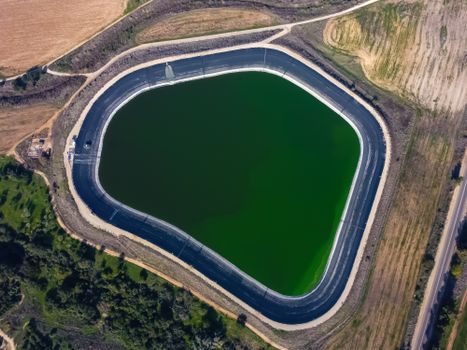
Three application clusters drive most of the 2026 specification volume: (1) municipal potable-water reservoirs and clear-water basins, where 1.5 mm vulcanized EPDM with taped seams is the default; (2) industrial wastewater treatment lagoons, aeration basins, and secondary clarifiers, where 1.5–2.0 mm weldable EPDM with hot-wedge seams dominates; (3) green-roof and planted-basin waterproofing, where 1.2–1.5 mm EPDM is chosen specifically for its plant-root penetration resistance [S1][S3][S4][S6].
For 20-year and 30-year flat-roof guarantees, certified installer networks in markets such as the UK are now offering 20 & 30 year system guarantees on EPDM and GRP roof systems, which is a useful third-party data point when convincing a client to accept a 50-year membrane-life claim in a project document [S6]. On a municipal water-treatment project, the same membrane datasheet's "50 years" figure should be downrated to 25–30 years for budgeting purposes, since seam and accessory ageing typically governs service life, not the membrane sheet itself.
Standards, Sourcing Levers and Failure Modes
The heat-treatment size-change figure on the standard datasheet is the property most often falsified on sub-grade product, and a lab check on a 100×100 mm sample after 24 h at 100 °C is cheap insurance.
Sourcing levers that actually move cost in 2026: (a) MOQ tier — pricing drops materially at 3,600 m² and again at full-container loads [S4]; (b) roll width — custom-width coils from the same continuous-extrusion line avoid on-site seam count and labour, so the small custom-width premium usually pays back in install time [S2][S5]; (c) Qingdao loading port dominates FOB quotes, so for non-Pacific buyers the freight line item is often larger than the membrane itself; (d) capacity is not the constraint — the published 250,000 m²/month line is well above any single-project order [S4]. The dominant failure modes in service are mechanical puncture (poor substrate prep), seam failure (wrong tape or under-cured weld), and UV embrittlement on exposed applications — none of which are membrane-chemistry problems, and all of which are addressable in the spec. For related industrial-rubber sourcing context across the broader elastomer family, see the 2026 silicone rubber supplier map and the industrial rubber reference page.
Trackable signals to watch: 2.0 mm weldable EPDM price moves in the $3.00–$4.50/m² band, and any shift toward halogenated butyl or TPO替代 in municipal reservoir specifications over the next two quarters.