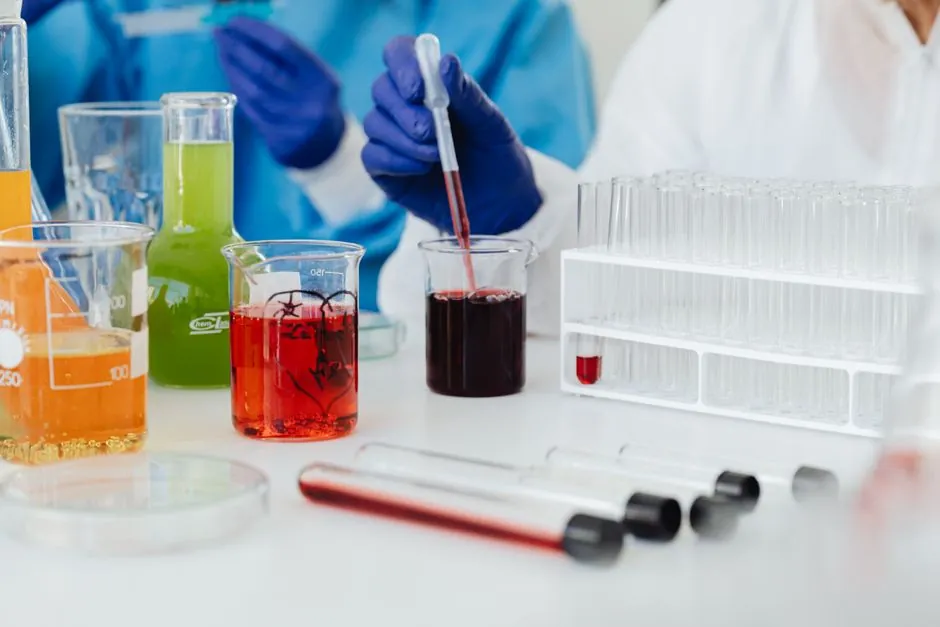
Select vinyl ester for aggressive oxidizing or solvent service; select epoxy for potable water, mild chemicals, strong substrate adhesion, and lower installed cost.
Both systems can serve as chemical tank linings, but performance depends on resin chemistry, hardener, concentration, exposure temperature, and dry-film thickness.
Decision criteria for chemical tank linings
Chemical compatibility is the first gate: standard bisphenol-A epoxy has a 60–80°C continuous immersion limit, epoxy novolac reaches 100–120°C, and epoxy phenolic can operate to 150°C, whereas many vinyl ester formulations are limited to 80–100°C depending on grade and exposure [S2]. These are indicative formulation ranges, not universal product ratings.
Compare adhesion, chemical resistance, temperature, film build, installation, and lifecycle rather than treating resin family names as complete specifications. Epoxy is generally lower to moderate in cost and applies more readily, while vinyl ester costs more and usually needs specialist application [S2].
For broader coating selection, the industrial coating category covers the substrate preparation, reinforcement, primer, and cure controls that determine whether a resin performs as designed.
Chemical resistance comparison
Vinyl ester has the decisive advantage for oxidizing media: it performs well against nitric acid, concentrated sulfuric acid above 70%, bleach, hydrogen peroxide, and hypochlorite, where standard epoxy is rated poor to moderate or poor [S2]. Standard epoxy novolac remains strong against organic solvents and aromatics, while vinyl ester is less resistant to ketones and esters [S2].
For hydrochloric acid and dilute sulfuric acid, both epoxy novolac and vinyl ester are listed as excellent [S2]. Alkalies also suit both systems, although polyamide-cured epoxy should be avoided where caustic exposure is critical [S2]. Hydrocarbon and fuel service favors epoxy novolac, while seawater service favors high-build epoxy because vinyl ester is more permeable [S2].
A practical comparison is therefore straightforward: vinyl ester wins for oxidizers and broad severe-service compatibility; novolac epoxy wins for aromatic and ketone-bearing solvents; standard epoxy wins for potable water and mild-service economics [S2][S3]. Confirm the exact chemical, concentration, temperature, and exposure duration against the selected product data sheet before purchase.
Adhesion, toughness, and failure behavior

Epoxy has the stronger primary adhesion mechanism to properly prepared steel, whereas vinyl ester requires a blasted substrate and may need an epoxy primer [S2].
Vinyl ester generally provides greater elongation and toughness than standard epoxy, while epoxy phenolic is presented as the higher-temperature organic lining for crude oil containing H₂S and concentrated acids [S2][S4]. Toughness does not eliminate chemical attack, however, and a lining with good impact resistance can still be unsuited to oxidizers if the wrong resin is selected.
Primary failure risks include blistering in aggressive service, loss of adhesion, underfilm corrosion, and reduction in protective film thickness [S3]. Thermal cycling, surface preparation, pinholes, incompatible primers, and incomplete curing can turn a chemically suitable resin into a poor installation, so inspection and repair procedures belong in the specification.
Temperature limits and wet service
Continuous immersion limits vary sharply within the epoxy family: standard bisphenol-A epoxy is generally 60–80°C, novolac epoxy 100–120°C, and phenolic epoxy as high as 150°C [S2]. Vinyl ester commonly falls around 80–100°C for continuous immersion, depending on formulation, making an epoxy novolac or phenolic grade the stronger option where temperature exceeds the vinyl ester limit [S2].
Novolac grades extend the epoxy range and are used where product-specific performance is critical;
Vinyl ester remains suitable for many chemical tanks, but it is not the universal higher-temperature answer. Its advantage is corrosion resistance in aggressive media, while the more thermally capable epoxy grades address elevated-temperature immersion.
Film build, installation, and maintenance
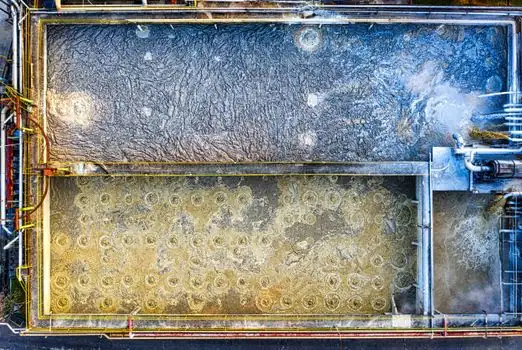
A reinforced system is a composite lining, not simply a thick paint film, and its laminate design must be matched to tank geometry and service loads.
For chemical service, the choice is likely to be 100% volume solid vinyl ester, and both of these products have a tendency to shrink from 3% to 15% during application [S1].
For concrete or steel, the industrial adhesive reference is relevant only where a compatible primer or tie coat forms part of the approved system. Primer compatibility must be confirmed because a separate adhesive product can impair adhesion or chemical resistance.
Service fit and procurement decision
Specify vinyl ester when the service includes concentrated oxidizing acids, bleach, hypochlorite, hydrogen peroxide, strong solvents, or highly corrosive mixtures and the temperature remains within the grade limit [S2][S3]. Vinyl ester is the stronger default for severe chemical containment, reinforced tank linings, and applications where corrosion resistance outweighs application complexity and material cost [S1][S4].
Specify epoxy for potable-water tanks certified for the intended application, mild chemicals, water or seawater exposure, and situations requiring strong direct adhesion or economical field application [S2][S3][S5]. Use novolac or phenolic epoxy when solvent resistance or temperatures above ordinary vinyl ester limits govern the design [S2].
Do not use either family for unidentified chemicals, variable-temperature processes, or aggressive service without immersion testing. Selection must consider stored chemical, concentration, operating temperature, substrate condition, regulatory requirements, and maintenance tolerance [S3].
Sourcing, qualification, and standards
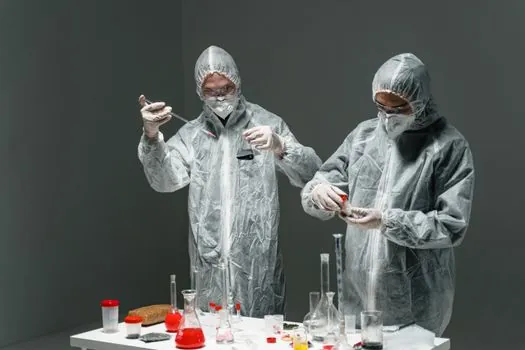
Require the supplier to identify the exact resin family, hardener, reinforcement, expected dry-film thickness, immersion temperature, chemical concentration, and repair compatibility. Tank-lining work requires controlled surface preparation, mixing ratios, induction and pot-life management, curing, pinhole testing, and documented adhesion and holiday checks [S1][S5].
For potable-water applications, select a product carrying the applicable potable-water certification, such as NSF/ANSI 61 where required by the project [S3]. For underground steel tanks, the cited FRP guidance references NACE No. 10 and SSPC-PA 6, but those references do not replace chemical-compatibility testing of the selected liner [S3].
One practical rule from tank-lining guidance is that FRP below 20 mils dry-film thickness will not protect against leakage from exterior corrosion; that system should be restricted to relatively new tanks without internal pitting or underside corrosion [S5].
The procurement record should include the approved product data sheet, chemical-resistance chart, application procedure, curing schedule, surface-preparation specification, inspection plan, and written compatibility statement for every proposed fluid.