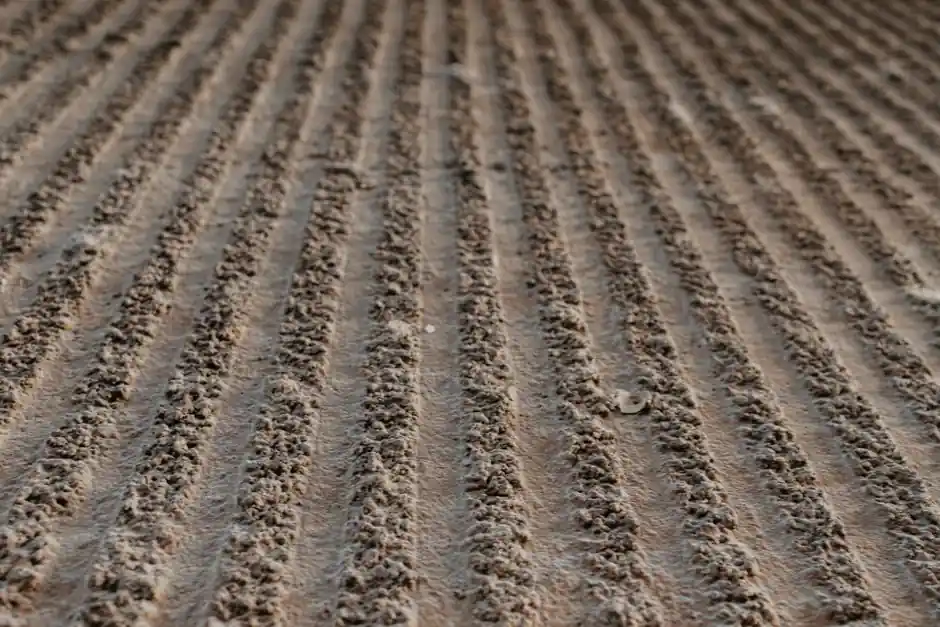
An EPS cement sandwich panel is a three-layer composite, not a foam block: two 5 mm fiber-reinforced calcium silicate or fiber cement face sheets enclose a core of expanded polystyrene (EPS) beads, Portland cement, fine sand, water, and proprietary additives, compounded in a single factory press cycle [S2][S3].
The core is the engineering variable, not the faces. EPS bead density sits at 10-20 kg/m³ as raw granulate, the bead-cement matrix cures to 350-500 kg/m³, and a standard 90 mm panel ends up at 600-750 kg/m³ overall per GB/T 23451, with a 75 mm panel weighing around 45 kg (2270×610 mm) [S2][S3]. For a deeper look at the panel category itself, see the lightweight partition panel reference entry, and the EPS board page for the raw foam stock used in the core.
Core composition: what is actually mixed into the bead-cement matrix
The core is not loose beads poured between two boards; it is a cast composite. Standard formulation across manufacturers calls for expanded polystyrene beads (typically 10-20 kg/m³ bulk density), Portland cement, fine sand, water, and chemical additives that improve bond between the hydrophobic bead surface and the cementitious paste [S2][S4]. Some production lines add a small proportion of fly ash and admixtures to the slurry; the fly ash acts as a supplementary cementitious material, replacing a portion of Portland cement without sacrificing early compressive gain [S6].
The role split is precise. EPS beads (98% air by volume in the raw granulate) carry thermal and acoustic insulation and cut dead load. The cement-sand paste binds the beads into a load-bearing matrix, transfers compressive stress between the two face sheets, and protects the beads from direct flame exposure. Without the cementitious wrap, raw EPS would melt at around 100 °C and ignite near 350 °C, so the matrix is also the fire-retardant envelope around each bead. The bonding between face sheet and core is mechanical, formed during the one-shot press cycle, not adhesive, which is why the cured panel behaves as a monolithic I-beam section rather than a laminated stack [S2][S3][S4]. For the raw foam input, the EPS board encyclopedia entry covers bead classification and grading.
Face sheets, edge profile, and how the three layers act structurally
Face sheets are 5 mm fiber-reinforced calcium silicate board or 5 mm fiber cement board, autoclaved for dimensional stability and rated Class A1 non-combustible [S2][S3]. Mechanically, the face sheets act as the flanges of an I-beam and the bead-cement core as the web; the geometry resists face-sheet buckling under in-plane load and converts the entire panel into a stressed skin. Standard dimensions from Hanmero are length 2270/2440 mm (custom up to 3000 mm), width 610 mm, and thicknesses of 60, 75, 90, 100, 120, 150, 180, 200 mm [S3]. Edges are tongue-and-groove (male-female) for vertical stacking joints, which keeps the core from being exposed at the seam after installation [S3][S5].
Compressive strength is ≥3.5 MPa and bending strength ≥7.0 MPa per GB/T 23451, water absorption is held to ≤10%, sound insulation on a 90 mm panel reaches 35-45 dB per GB/T 19889, and thermal conductivity is 0.12-0.18 W/(m·K) per GB/T 10294 [S3]. A standard 100 mm panel weighs around 65 kg/m² versus roughly 180 kg/m² for a 100 mm brick wall, a 60%+ dead-load reduction that cascades into smaller columns and foundations in the building skeleton [S4].
Production equipment: how the core gets compounded
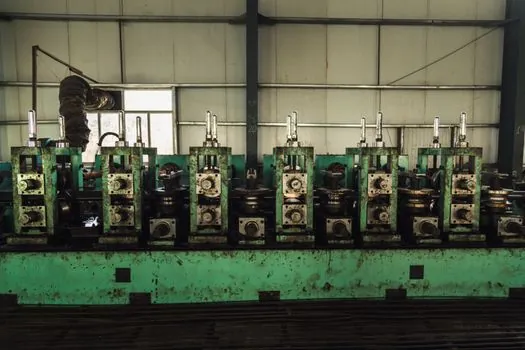
Core compounding runs on a shell core machine class of sand-and-resin slurry equipment in concept, but in practice EPS-cement panels are made on a core machine type line: bead pre-foaming, cement-sand slurry batching, slurry-and-bead mixing, pouring between two face sheets on a pallet, and a single cold-press or hot-press cycle that consolidates the core and bonds it to the face sheets in one operation. Related continuous-flow systems use a shell core shooter architecture adapted for cementitious slurry rather than resin-sand, and high-throughput factories use a cold-box core machine layout where the panels cure in stacked clamping frames without autoclave heat [S6].
Mana Precast's lightweight EPS sandwich wall panel line is a representative reference: fibre-reinforced calcium silicate face sheets, a core of flame-retardant EPS particles, cement, a small share of fly ash, and admixtures, cast as non-load-bearing partition elements [S6]. The same equipment family is used for EPS cement partition panel lines, with throughput scaled to plant output rather than the per-mould cycle of a foundry core shooter. Selection of additives, bead size distribution (commonly 2-6 mm granulate), and slurry water-cement ratio are the three levers that move core density from the low 300s into the high 400s kg/m³, which in turn sets panel weight, thermal conductivity, and compressive class.
Performance envelope: fire, acoustic, thermal, and hanging load
Fire rating is 3-4 hours to GB/T 9978 on a 90 mm panel, Class A non-combustible for the calcium silicate face sheets, with the bead-cement matrix acting as the sacrificial char layer if the surface is breached [S3]. Thermal conductivity of 0.12-0.18 W/(m·K) puts the 90 mm panel in the same insulating range as a 200 mm hollow concrete block, which is the practical reason EPS panels are specified for partition walls in mid- and high-rise residential and hotel builds where the wall must do double duty as thermal break and acoustic separator [S3][S4].
Single-point hanging load is specified at ≥100 kg per anchor point for the standard 90 mm panel, well above the 15 kg toggle-bolt limit of gypsum drywall, so AC brackets, water heaters, and TV mounts are within the panel's working envelope without backing plates [S3][S4]. Seismic performance is listed at ≥8.0 magnitude on the Hanmero data sheet, an unusual claim for a non-load-bearing partition; treat it as a manufacturer-asserted pass on shake-table acceptance rather than a code-listed design value, since the source does not cite a specific seismic standard or test protocol [S3].
Who the panel is for, and where it is the wrong choice

Use case fit: non-load-bearing internal partitions in residential apartments, hotels, hospitals, schools, offices, and prefabricated modular builds where speed of install (40 m²/day with a two-person crew, versus ~10 m²/day for brickwork) and dead-load reduction drive the specification [S4]. Hanmero reports export to 90+ countries including the US, UK, Germany, Australia, Saudi Arabia, UAE, Russia, India, Vietnam, Brazil, and several Belt and Road markets, with CE, ISO9001, ISO14001, and SGS certification on the Hanmero product line [S3][S5].
Wrong choice: any application calling for a load-bearing shear wall, a below-grade foundation wall subject to hydrostatic pressure, or a fire-rated enclosure needing a documented 2 h or 4 h rating to a recognised standard other than GB/T 9978. The panel is also a poor fit where the specifier needs verified seismic qualification to IBC or Eurocode 8 rather than a manufacturer's shake-table data sheet, or where the project specification requires solid concrete/masonry partitions for blast, impact, or forced-entry resistance. The bead-cement matrix is a thermal and acoustic insulator, not a structural wall, and the specifier should not treat it as a substitute for reinforced concrete in primary lateral-force-resisting systems. For cement selection in the core, the EN 197-1 cement strength classes 32.5 vs 42.5 vs 52.5 and the N vs R suffix article covers the binder side of the mix design.
Comparison map: face sheet, core density, weight, and thermal class
Across the published data sets, three decision variables dominate panel selection: face sheet material, total panel weight per m², and thermal conductivity class. Calcium silicate face sheets (Class A1 non-combustible, ~1000-1200 kg/m³ board density) versus fiber cement face sheets (also non-combustible, but heavier per mm) sets the fire and finish behaviour. Core density at 350-400 kg/m³ versus 450-500 kg/m³ moves panel weight from the 45-55 kg/m² range to the 75-90 kg/m² range, which decides whether the partition can be carried by one worker or needs a two-person lift. Thermal conductivity of 0.12 W/(m·K) (lighter core) versus 0.18 W/(m·K) (denser core) is a 50% spread on U-value for the same 90 mm thickness, which is the lever for projects chasing a specific energy code [S2][S3][S4].
The decision grid: pick calcium silicate face sheets for hospital and school interior air-quality specs; pick the lower-density core (350-400 kg/m³) for high-rise partitions where dead load on the slab is the binding constraint; pick the higher-density core (450-500 kg/m³) when hanging load is the priority and ≥100 kg single-point anchors must be guaranteed. Thickness step from 60 mm (single-family interior) to 150-200 mm (hotel corridor and plant room acoustic walls) follows the sound-insulation curve: a 90 mm panel hits 35-45 dB, and a 150 mm panel climbs above that band per GB/T 19889 [S3].
Limits, open questions, and standards gaps to flag in the spec
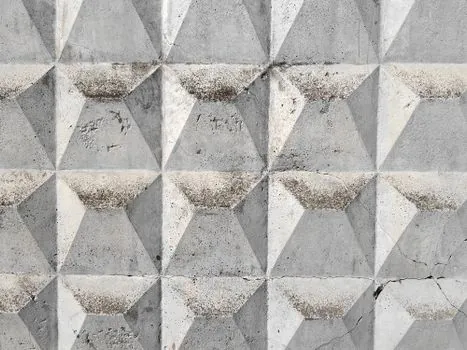
Two limits in the published data are worth flagging to a specifier. First, the ≥8.0 magnitude seismic claim and the 3-4 h fire rating both rest on GB/T standards (GB/T 9978 for fire) and a manufacturer shake-table test rather than on a third-party IBC, Eurocode, or UL listing, so the equivalence statement to Western codes is the engineer's call, not a certification mark [S3]. Second, the EPS bead flame-retardant treatment is referenced generically ("flame-retardant EPS particles") without a specific grade, density class, or test method in the manufacturer data sheets, which means two nominally identical 90 mm panels from different suppliers can have different fire performance if the bead additive package differs [S3][S6].
Track these signals on the next spec cycle: (1) third-party fire test reports to EN 13501-1 or ASTM E119 for the 90 mm and 120 mm thicknesses, which would let the panel cross over from GB/T-listed projects to European and North American code-listed builds; (2) published bead size distribution and additive SDS sheets, which would let mix designers correlate core density to thermal and acoustic values instead of treating the data sheet number as a black box. Until both appear, the specifier should request project-specific test certificates from the panel supplier rather than relying on catalogue performance numbers.