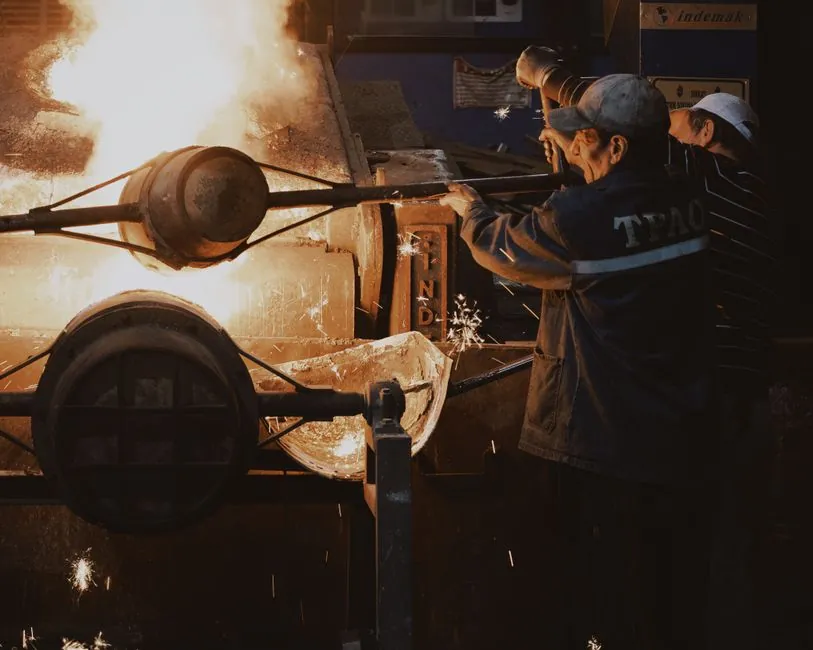
From 1 October 2026, importers must declare where covered steel was first melted and poured, with the heat number and supporting documents required for EU clearance [S4][S5].
The evidence regime covers steel under Regulation (EU) 2026/1384, including 18.3 million tonnes of annual free-of-duty quotas, with imports above the applicable quota facing a 50% duty [S7].
What the melt-and-pour country means
Country of melt and pour, or COM, is the location where raw steel is first produced in liquid state and poured into its first solid form, such as a slab, billet or ingot [S2][S4]. The test identifies the upstream steelmaking site rather than the last processing country, so it can differ from both the customs origin and the country of consignment [S2][S4].
Steel made by remelting scrap falls within the rule [S4]. The distinction matters because hot rolling, cold rolling and slitting can occur in countries other than the melting and casting location. For example, steel melted and cast as slab in Indonesia, rolled in China and slit in Vietnam retains Indonesia as the melt-and-pour country, while the customs-origin and shipping-country questions are answered separately [S4].
Comparison of origin concepts and evidence
The key comparison is between customs origin, country of consignment and country of melt and pour. Customs origin depends on applicable trade rules and whether processing confers origin; country of consignment identifies the shipment source; COM points to the furnace and first casting operation [S2][S4]. A steel product can therefore have three different countries attached to those concepts, and importers must not substitute the shipping country for the melt-and-pour declaration [S4].
Evidence required for EU steel imports
The primary evidence is a Mill Test Certificate stating both the country of melt and pour and the heat number of the imported steel [S5]. The heat number links the product to a specific batch of liquid steel at the mill, which is the traceability link that cannot be replaced by the exporter's country alone [S4].
If the Mill Test Certificate omits either the country or heat number, or cannot be supplied, customs authorities may consider invoices, delivery notes, quality certificates, implemented purchase-order or contract clauses, long-term supplier declarations, cost-accounting and production documents, exporting-country customs documents, commercial correspondence and production descriptions [S5]. Each alternative document must show both the country of melt and pour and the heat number [S4][S5].
Evidence standards do not stop at the mill certificate. Canada's steel import guidance also identifies mill test or material test certificates, certificates of conformance, compliance or analysis, metallurgical test reports, chemical-analysis certificates and commercial invoices as sources of COM information [S2].
Who must use this process and who should not confuse it with another rule
The requirement applies to importers bringing steel products subject to the EU Steel Regulation into the EU market, including products from EEA countries, although the stated quota duty does not apply to those origins [S5]. Importers also need the declaration to support EU clearance when handling cold-rolled, hot-dip galvanised and other covered steel [S1][S4].
The rule is not a substitute for customs-origin classification, anti-dumping qualification or country-of-consignment information. A separate Canadian rule reports COM through the Customs Single Window Integrated Import Declaration for applicable steel goods, with amendments to General Import Permits No. 80 and No. 81 in force from 5 November 2024 [S2]. EU importers should therefore maintain separate records for COM, customs origin and shipment routing rather than collapsing them into one country field.
Operational consequences for steel supply chains
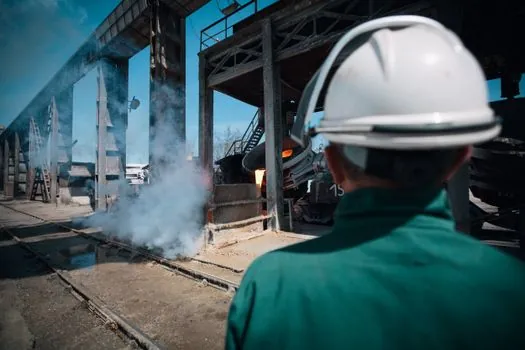
The practical burden falls on importers who cannot trace a heat number back to the mill that first melted and poured the steel. A supply chain involving three countries requires evidence for the upstream melting and casting step, even when the product has been further processed elsewhere [S4]. Procurement teams need supplier commitments, document collection procedures and customs review controls before releasing an order for EU entry.
The origin rule is also intended to reduce circumvention of trade-defence measures. The EU action plan framed the criterion as a way to prevent minimal transformation from avoiding dumping duties and to improve clarity about the origin of goods [S1]. The Commission’s consultation on evidence types received feedback from nearly 170 stakeholders between 2 June and 4 July 2026, including producers, users, traders, importers and industry associations [S5].
Limits and commercial interpretation of the rule
The rule improves upstream traceability, but it does not remove the complexity of steelmaking geography. Industry analysis identified 12 countries outside Europe that melt and pour stainless steel, then argued that sanctions, tariffs, domestic-market orientation and processor-only supply chains leave a much narrower practical supplier set [S3]. The analysis argued that the planned melt-and-pour criterion would curtail competition in the European stainless-steel market and reduce legal certainty [S3].
These figures describe the stainless-steel critique, not every steel category or a universal EU market-share calculation. Importers should still classify the exact product, identify the applicable tariff measure and preserve the documentary chain for each heat. The commercial effect depends on whether the product is quota-eligible, the applicable origin treatment and whether the importer can produce the required evidence before customs release [S4][S5].
Evidence sequencing for compliant imports
The correct sequence starts with the purchase order or technical schedule, continues through mill documentation and ends with the customs declaration. The buyer should obtain the Mill Test Certificate before shipment, verify the melt-and-pour country against the heat number, and retain invoices, production records or other listed evidence for any missing field [S4][S5].
For a regulated supply chain, the measurable tracking signals are the presence of a heat number in the supplier file, the percentage of shipments supported by a Mill Test Certificate, and the number of import entries rejected for missing COM evidence. Canada also requires importers using General Import Permits No. 80 and No. 81 to retain COM documentation and provide it for verification when requested [S2].
For EU steel procurement, the decisive control is not the exporter’s location or final processing country, but the documented first melting and casting operation, linked to the heat number and declared on the customs entry from 1 October 2026 [S4][S5].