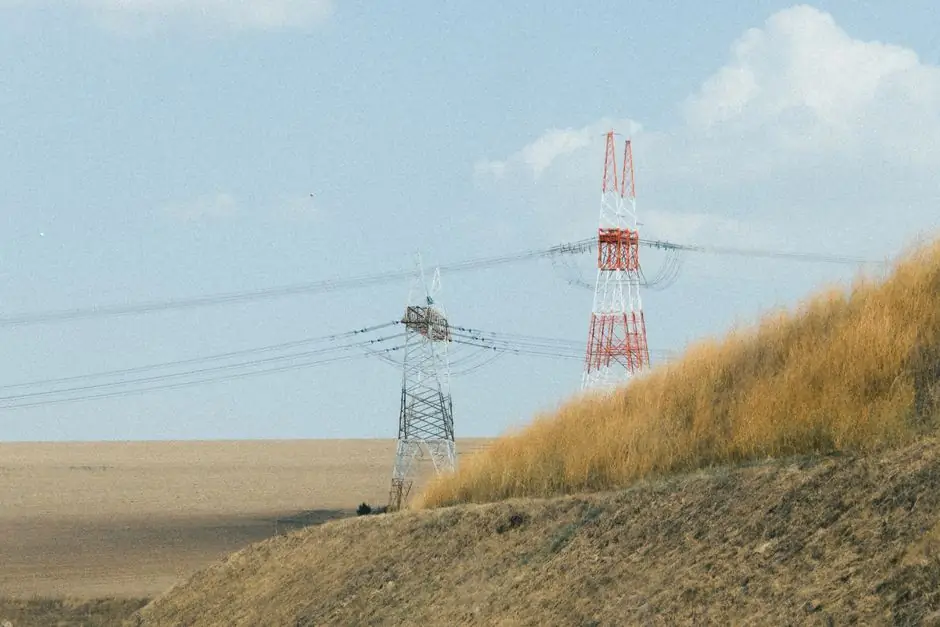
Transmission tower configurations vary with voltage level, span requirements, terrain, and aesthetic or space constraints [S3].
Supply planning must connect structural configuration and material with constructibility, maintenance considerations, tower design, foundations, and construction considerations [S5].
Why Lattice Tower Steel Demand Is Technically Demanding
Lattice steel towers combine a triangulated framework with bolted angle members, a configuration that provides high strength-to-weight ratio and allows towers to accommodate multiple circuits and bundled conductors [S3].
Tower structures differ in configuration and material, and design considerations include loads, structural configuration, foundations, and maintenance [S5].
The tower must also balance structural stiffness against wind exposure. Wind acting on the steelwork and suspended conductors is a major design action, while tower height is commonly several times its horizontal width; lattice framing helps provide flexural rigidity without the projected area of a solid shaft [S4].
Those characteristics create a procurement problem that simple tonne comparison does not capture. A line requiring long spans may need larger angles, more complex joint geometry, or heavier members than a shorter line using the same voltage class. The supply commitment should therefore follow the frozen member schedule, not an early estimate based only on tower count and voltage.
The Main Tower Types Create Different Steel Profiles
Lattice steel towers, tubular steel poles, wood poles, concrete poles, and guyed poles are among the transmission structure families discussed in the design literature [S5].
Comparison of the three principal structure options shows why one steel procurement model cannot fit every transmission project:
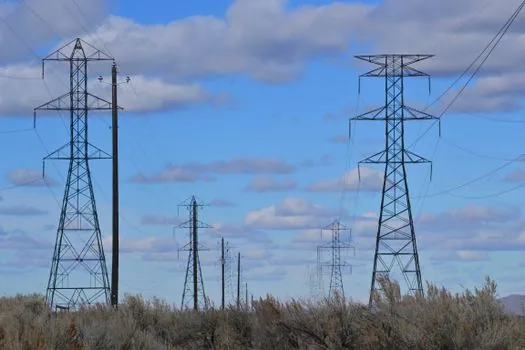
Suspension towers serve straight runs, tension towers resist directional changes and longitudinal stress, and transposition towers rotate conductor positions for line balance. These functional differences change member sizes and steel quantities even when the three structures share one line and voltage class [S3].
The comparison also shows that steel supply risk is not identical to total structure risk. A lattice project may carry more piece-part and interface risk, while a monopole project may depend heavily on coating, large-diameter fabrication, and delivery of a few large components. Buyers should map risk against configuration rather than assume all transmission towers consume steel through the same supply chain.
Define Steel Scope Before Ordering
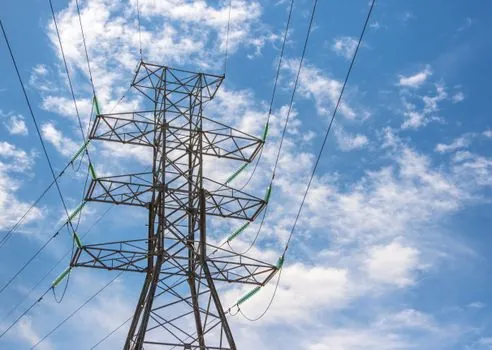
A lattice tower normally comprises more than angle sections: legs, bracing, cross-arms, gusset plates, members, and bolted connection hardware all contribute to structural performance and installation sequence [S2][S3].
The procurement package should separate at least six material streams:
Member availability cannot be judged from nominal angles alone. The design must reconcile grade, thickness, width, cut length, hole layout, and permissible fabrication tolerances with the mill's rolling program. A design that calls for an uncommon angle section may force substitution, redesign, or late procurement even when aggregate steel capacity appears adequate.
Transportability belongs in the steel scope. Towers are sectioned for shipment and erection, and the design is responsible for matching member lengths and joint locations to vehicle limits and site cranes. The supply plan must therefore identify each transport section, its mass, lifting points, and assembly sequence before a mill allocates production capacity.
Lock Order, Galvanizing, and Delivery Together
Steel procurement becomes schedule-sensitive when the tower order, corrosion protection, and site delivery are treated as separate commercial transactions. A member released for fabrication is not fully protected against project delay if galvanizing or transport remains open. [S2]
Galvanizing must be coordinated with connection design because the processing route can affect fit-up at the site. The design should identify the required surface condition, coating or zinc system, and any project-specific acceptance criteria before the steel order is released. Corrosion protection is also a maintenance issue, not merely a finishing operation, and should be reviewed for the environmental exposure of the line route [S4].
Delivery should be sequenced by erection, not by geographic convenience alone. A batch strategy can divide shipment into foundation-ready sets, tower-section sets, and hardware packages, provided the receiving contractor has the storage, cranes, and assembly labor required at each stage. Early partial delivery creates handling cost and inventory risk if foundations or line construction are not ready.
Steel lattice-tower design includes tower geometry, analysis and design methodology, allowable stresses, connections, detailing considerations, and tower testing [S5]. That test article can consume fabrication capacity and delay engineering release. Supply planning should therefore include prototype or test-status information when it affects the fabrication sequence.
Match the Contract to the Delivery Risk
The appropriate commercial model depends on design stability, market conditions, and the tolerance for schedule risk.
A fixed-quantity release schedule is strongest when the tower design is frozen, the member list is mature, and the line has predictable phasing. It gives the fabricator and mill a stable production sequence and permits clearer allocation of rolling and galvanizing capacity.
A call-off or indexed schedule is more appropriate when tower quantities are still being revised by route, landowner, or construction decisions. It preserves purchasing flexibility, but it can reduce priority for less certain call-offs and transfer more schedule exposure to the project.
Spot purchasing should be limited to genuinely standardized members or approved alternates, not used to disguise an incomplete design. The engineering risk is that a substitute angle changes bolt gauges, gusset geometry, member weight, or structural capacity. Any approved substitution must therefore be checked against the complete member and joint design rather than accepted on grade and nominal section alone.
Control Qualification and Substitution Risk
Steel qualification affects more than incoming certificates. For lattice towers, consistency between angles, plates, gussets, bolts, and holes determines whether shop assembly and field bolting proceed without rework [S3][S4].
Incoming inspection should check the specified grade, dimensions, thickness, straightness, cut length, hole position, surface condition, and traceability against the approved drawings. The source material establishes that lattice towers are built from bolted angle sections and highlights the need for detailed connection design, including the effects of joint eccentricity [S3][S4].
Fastener compatibility is a measurable control point rather than a paperwork issue. Bolt diameter, grade, length, washers, and the faying surface condition must align with the approved connection design. An apparently equivalent bolt can create hole mismatch, altered bearing behavior, or field modification if its dimensional and material specification differs.
Nonconforming steel should be sorted before shipment, not discovered at the tower assembly pad. Traceability records should connect the member mark on each angle and plate to its heat, coating batch, inspection record, and transport section. This approach limits ambiguity when a member is rejected or replaced after delivery.
Use Project Interfaces as Supply Signals

Foundation readiness is the clearest external signal for tower steel delivery because a lattice tower is commonly erected on concrete foundations and cannot be assembled into service without them [S5].
Track at least four dates against the steel plan: design freeze, first-article or test approval, steel release, and delivery-by-erection-zone. If a test tower must be fabricated, its approval date should precede the production release assumed by the supplier. If foundations slip, the delivery sequence should change before inventory accumulates at site.
Procurement should also record the approved alternatives. Keeping a list of technically acceptable angle or plate substitutes, including dimensional and structural consequences, is more useful than maintaining several unapproved grades. The project team can then authorize a documented substitution without restarting the complete structural review.
Supply risk becomes manageable when engineering decisions create stable batches and commercial terms match that stability. For a deeper framework on linking component exposure to sourcing decisions, build a product-line supply risk heat map. The next practical control is to reconcile every tower drawing, transport section, foundation zone, and delivery date before committing mill capacity.